Your House May Look Clean, But What Does the Air Test Like?
A freshly cleaned home feels reassuring. Floors shine, counters sparkle, and everything smells “fine.” But a clean-looking home doesn’t always tell you what’s happening in the air you’re actually breathing. That’s where a clean house indoor air test becomes a practical next step—not because something is “wrong,” but because some of the most useful home facts are invisible.
At A1 House Prep, we work with homeowners, home buyers, sellers, and real estate professionals across Pennsylvania—especially Montgomery County and Bucks County, including Harleysville, Lansdale, Hatfield, Souderton, North Wales, and Blue Bell. Our approach is calm and practical: testing replaces guessing. When you know what your indoor air looks like on a report, you can make smart decisions about maintenance, moisture control, ventilation, and next steps—without scare tactics.
This article will help you understand why a home can appear spotless yet still benefit from testing, what an indoor air test can reveal, and how to use results as helpful information during everyday homeownership or a real estate transaction.
Curiosity Marketing, the A1 Way: “What does your home look like on paper?”
A clean home is an excellent start. Testing simply adds a layer of clarity. Indoor air, water, and radon are “quiet” parts of a home—easy to overlook because they don’t always announce themselves. If you’ve ever wondered whether your home environment matches the effort you put into keeping it clean, an Air Quality Testing appointment can answer that curiosity with real measurements.
Why a Home Can Look Clean Yet Still Have Indoor Air Questions
Cleaning targets what you can see and touch: dust on surfaces, residue on floors, smudges, clutter. Indoor air quality, on the other hand, is shaped by factors that don’t always leave obvious clues.
- Air moves through a home differently than people do. Bedrooms, basements, and closed-off rooms can behave like their own micro-environments.
- Particles and odors don’t always correlate. A home can smell pleasant yet still have elevated airborne particulates; or it can smell “musty” due to humidity and ventilation patterns rather than visible mold.
- Seasonal changes matter. Pennsylvania’s swings—humid summers, closed-window winters—can change how air circulates and what accumulates indoors.
- “Normal” living creates indoor byproducts. Cooking, showering, fireplaces, hobbies, pets, stored items in basements/attics, and even new furniture or renovations can influence indoor air.
None of this means you should assume a problem. It means your home is a system. A clean house indoor air test is a way to see what that system is doing under real conditions.
Common Reasons Homeowners in Montgomery & Bucks Counties Choose Air Testing
In our local area—older housing stock mixed with renovations and newer builds—people request indoor air testing for a range of practical reasons:
- Pre-purchase confidence. Buyers want baseline data before they move in—especially if the home has a finished basement or recent renovations.
- Pre-listing preparation. Sellers want to address preventable concerns proactively and avoid surprises during negotiations.
- After a leak or moisture event. Even if everything looks dry, homeowners want reassurance and data to guide follow-up steps.
- Persistent odors. “Basement smell,” pet odor, smoke residue, or cooking odors may linger even in a clean home.
- Post-renovation curiosity. New materials can have temporary odors; testing can help establish a baseline.
- Seasonal comfort issues. Rooms that always feel stale, stuffy, or “off” might benefit from assessment and ventilation adjustments.
If you’re in Harleysville, Lansdale, Hatfield, Souderton, North Wales, or Blue Bell, these scenarios are especially common due to basements, variable insulation levels, and the way homes are sealed for energy efficiency.
What an Indoor Air Test Can Tell You (Without Guessing)
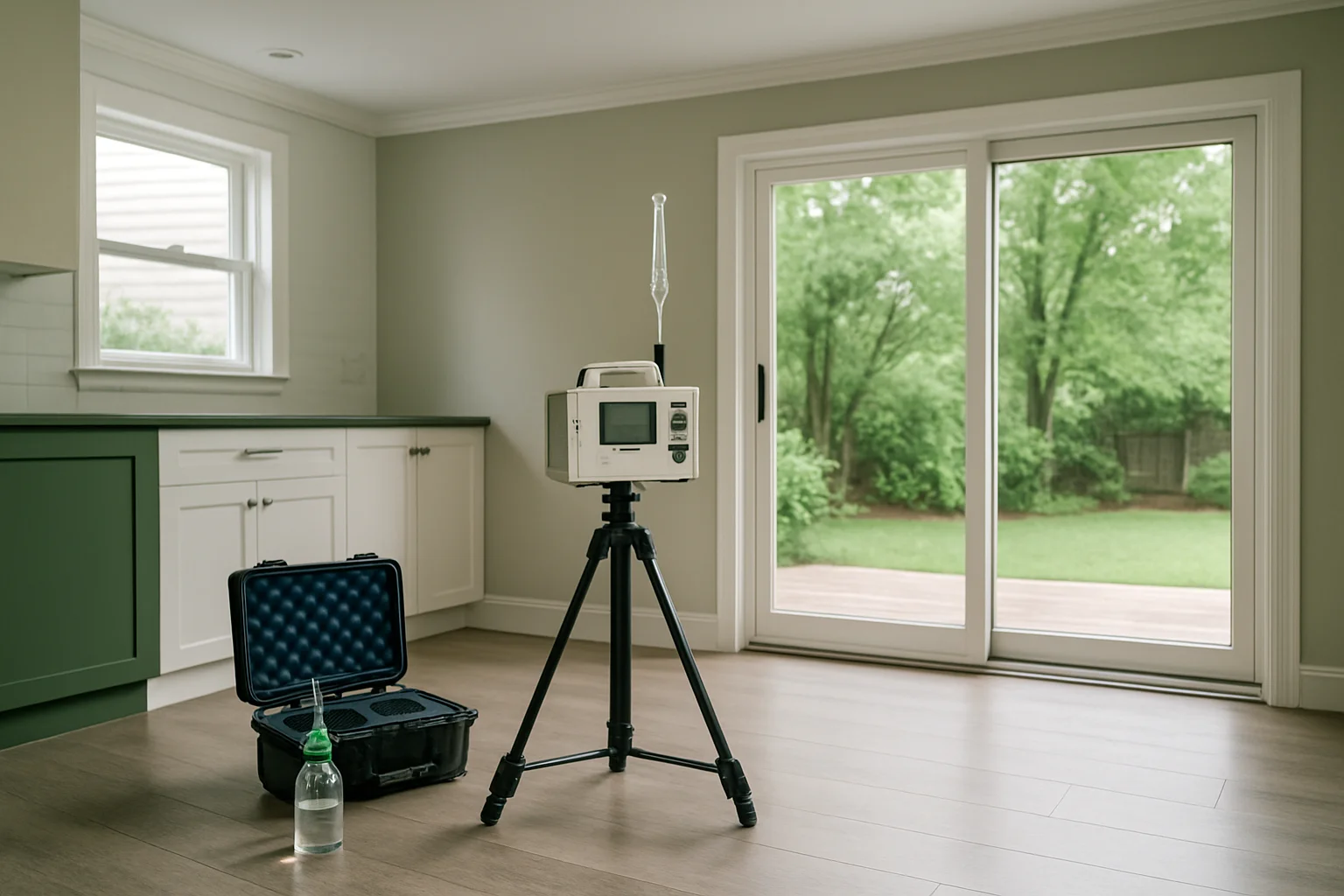
Indoor air testing is best understood as measurement. It helps identify patterns and possible sources so you can make informed choices. Depending on the situation and test approach, an air quality assessment may provide insight into:
- Airborne particles that may increase with dust, construction activity, inadequate filtration, or high traffic areas.
- Moisture-related indicators that may align with ventilation issues, humidity, or hidden dampness (even when surfaces look clean).
- Room-to-room differences that hint at airflow, pressure, or HVAC distribution patterns.
- Basement vs. living space conditions that can influence the overall “feel” of the home.
The real value is not a single number—it’s how results help guide next steps. Sometimes the next step is as simple as adjusting humidity targets, improving filtration, changing habits (like running bath fans longer), or evaluating ventilation. In other cases, testing results can suggest where additional investigation may be helpful.
If your goal is to stop wondering, start with Air Quality Testing and get a clear snapshot of what’s happening.
“My House Smells Clean.” Odors vs. Air Quality: What’s the Difference?
Odor can be useful information—but it isn’t the whole story. Many homeowners associate “good indoor air” with “no smell,” yet:
- Some odor sources are intermittent. A basement may smell fine on a dry day and change after rain.
- Some odors are absorbed and re-released. Soft materials can hold onto past smoke, pet odor, or cooking oils.
- Some air concerns don’t have a strong odor. A home can feel normal but still benefit from establishing a baseline, especially during a real estate transaction.
That’s why curiosity-based testing works so well: you don’t have to debate what your nose is telling you. You can look at objective data and decide what to do with it.
Real Estate Uses: Testing as a Professional, Low-Drama Step
For buyers, sellers, and real estate professionals, indoor air testing can be a calm, practical tool—especially in competitive markets where confidence matters.
For sellers
- Reduce uncertainty. If a buyer asks questions about a basement, pets, or past leaks, testing helps keep the conversation grounded.
- Support disclosures and transparency. Having documentation can simplify decision-making during inspection periods.
- Show preparation. A “we tested it” approach signals care and professionalism.
For buyers
- Baseline your new home. Testing creates a starting point for future improvements.
- Prioritize improvements wisely. Instead of upgrading everything at once, you can focus on what the data suggests.
For agents
- Keep negotiations factual. Testing can reduce speculation and emotionally charged assumptions.
- Support smoother closings. When questions are answered early, deals tend to move with fewer last-minute surprises.
If you’re coordinating a transaction timeline, A1 can help you plan testing alongside other due diligence services.
Don’t Forget the Other “Invisible Home Facts”: Radon & Water
Indoor air is one part of a bigger picture. Many Pennsylvania homeowners bundle testing for a more complete understanding of the property.
- Radon Testing: Radon is a naturally occurring gas that can vary from home to home—even on the same street. Testing is the only way to know a home’s level.
- Water Testing: Especially for well water or older plumbing, water testing can provide clarity about quality and help guide maintenance decisions.
Testing doesn’t have to be dramatic. It’s simply information—useful, homeowner-focused information.
What Homeowners Can Do Before an Indoor Air Test (Simple, Practical Prep)
You don’t need to deep-clean or change your routine dramatically. In fact, keeping conditions “normal” often provides the most useful snapshot. If you want to prepare in a practical way:
- Make notes. Which rooms feel musty, stale, or dusty? When is it most noticeable—after rain, in winter, when the HVAC runs?
- List recent changes. New flooring, painting, basement finishing, new furniture, or a recent leak all help add context.
- Keep access clear. Ensure easy access to the basement, HVAC equipment, and any rooms of concern.
- Don’t mask odors right before testing. Heavy fragrances and aggressive air fresheners can complicate interpretation of conditions.
If you’re unsure what’s helpful, A1 can guide you when you Request Service.
Odor Reset Options: Where Ozone Rentals Fit (And Where They Don’t)
Some homeowners are primarily trying to address stubborn odors after a tenant move-out, pet accident history, smoke residue, or a house that sat closed up. In those cases, Professional Ozone Machine Rentals may be part of an odor treatment plan—but it must be used responsibly.
Important safe-use principles:
- Unoccupied spaces only. People, pets, and plants should not be present during ozone treatment.
- Follow setup and timing instructions. Use the recommended cycle duration and placement guidance.
- Ventilate thoroughly after treatment. Allow time for the space to air out before re-entry.
- Ozone is for odor treatment, not “proof” of air quality. If you want to understand what’s in the air, testing provides measurements; ozone is a separate tool for odor-related situations.
For many homes, pairing odor management with objective testing creates the most confidence: you can address what you notice and also learn what you can’t see.
A Clean Home Maintenance Tip That Often Gets Missed: Water Heater Flushing
When homeowners think “clean,” they usually focus on living spaces. But “clean home prep” also includes behind-the-scenes maintenance that supports overall comfort. A routine water heater flushing can help remove sediment buildup and support efficient operation—especially in homes with hard water or older systems.
It’s not an air-quality service, but it fits the same A1 philosophy: treat your home like a system, and keep small issues from becoming bigger surprises.
Ready to Replace Guessing with a Clean House Indoor Air Test?
If your home looks spotless but you’re curious about what the indoor environment looks like on a report, A1 House Prep can help. We serve homeowners and real estate professionals across Montgomery County and Bucks County, including Harleysville, Lansdale, Hatfield, Souderton, North Wales, and Blue Bell.
- Primary service: Air Quality Testing
- Also available: Radon Testing, Water Testing, Professional Ozone Machine Rentals, Water Heater Flushing
Call: 215.853.8226
Schedule: Request Service
FAQ: Indoor Air Testing for Clean-Looking Homes
1) If my house is clean, do I really need an indoor air test?
Not everyone needs one, but many homeowners choose testing because indoor air quality isn’t fully reflected by cleanliness. A clean house indoor air test can provide a baseline and reduce uncertainty—especially if you have a basement, recent renovations, seasonal humidity swings, or you’re buying/selling.
2) What’s the best time of year to test indoor air in Pennsylvania?
Any time can be informative. Seasonal differences can affect ventilation and humidity, so some homeowners test when issues feel most noticeable (humid summer, closed-window winter). If you’re testing for a real estate transaction, the best time is usually “as soon as practical” within your timeline.
3) Can I just run an air purifier instead of testing?
Air purifiers can be helpful for general filtration, but they don’t tell you what your indoor environment looks like before and after changes. Testing provides data so you can decide whether filtration, ventilation, humidity control, or other steps are worth prioritizing.
4) Does a musty smell always mean mold?
Not always. Musty odors can be linked to humidity, ventilation patterns, stored materials, or past moisture events. Testing can help you move from assumptions to evidence and guide reasonable next steps.
5) Is ozone treatment a substitute for air quality testing?
No. Ozone is typically used for odor treatment under strict safe-use rules (unoccupied spaces only, followed by thorough ventilation). If your goal is to understand indoor air conditions, Air Quality Testing provides measurements; ozone is a separate tool for specific odor situations.
6) I’m selling a home—should I test before listing or wait for the buyer?
Many sellers prefer testing before listing because it can reduce uncertainty and keep conversations factual. In other cases, sellers wait and respond if a buyer requests it. If you want a smoother process, proactive testing can be a professional, low-drama step.
7) Can A1 help me coordinate multiple tests for one property?
Yes. Many clients combine air quality testing with radon testing and/or water testing to build a fuller picture of the home’s “invisible facts.” To coordinate, call 215.853.8226 or use the Request Service form.
Clean is excellent. Clear is even better. If you’re ready to satisfy your curiosity with real-world measurements—without alarmism—A1 House Prep is here to help Pennsylvania homeowners make informed decisions with confidence.