Would You Rather Guess Your Radon Level or Know It?
There are plenty of things you can safely “eyeball” in a home. Paint color. Cabinet hardware. Whether the backyard gets afternoon sun. Radon isn’t one of them.
If you’ve ever caught yourself thinking, “Do we really need to test, or can we just assume we’re fine?” you’re not alone. In Pennsylvania—especially across Montgomery County and Bucks County—radon is one of those invisible home facts that sparks curiosity. It’s odorless, colorless, and it doesn’t announce itself with a leak, stain, or sound. That’s exactly why homeowners, buyers, sellers, and real estate professionals end up at the same crossroads: guess radon level or test.
This article keeps it calm, practical, and useful—no scare tactics. You’ll learn why testing replaces guessing, what the process looks like, and how to make a confident decision for your home in Harleysville, Lansdale, Hatfield, Souderton, North Wales, Blue Bell, and nearby communities.
Curiosity check: If radon had a smell, most homes would have been tested decades ago. Because it doesn’t, the only reliable way to “know” is to measure it.
Why guessing doesn’t work (and why radon is easy to overlook)
Homes give you feedback all the time: a drafty room, a musty basement, a spike in the water bill. Radon doesn’t behave that way. It can be present whether your basement feels dry or damp, whether your home is new or older, whether you have a sump pump or not.
Here’s why “we’ll just assume” often leads to the wrong conclusion:
- Radon is invisible. No smell, no color, no taste.
- It varies house-to-house. Two neighboring homes can test differently due to construction details, foundation pathways, soil conditions, and how the home operates.
- It changes over time. Weather, seasons, HVAC operation, and how often you open windows can influence results.
- Home improvements can change readings. Finishing a basement, sealing areas, adding ventilation, or changing mechanical systems can alter airflow and pressure in ways that affect radon entry.
That’s the core of the “guess radon level or test” decision: guessing relies on cues that radon simply doesn’t provide.
Radon in Pennsylvania: why local homeowners ask the question
Pennsylvania has many areas where radon testing is common, and homeowners in Montgomery County and Bucks County often encounter radon questions during real estate transactions, remodels, or routine home maintenance. If you’re in Harleysville, Lansdale, Hatfield, Souderton, North Wales, or Blue Bell, you’ve likely heard radon mentioned by a neighbor, an inspector, or an agent.
The key takeaway is local but not alarmist: radon is a normal part of the home-testing conversation in our region. That’s why confident homeowners test—so they can make decisions based on numbers, not assumptions.
What radon testing actually tells you
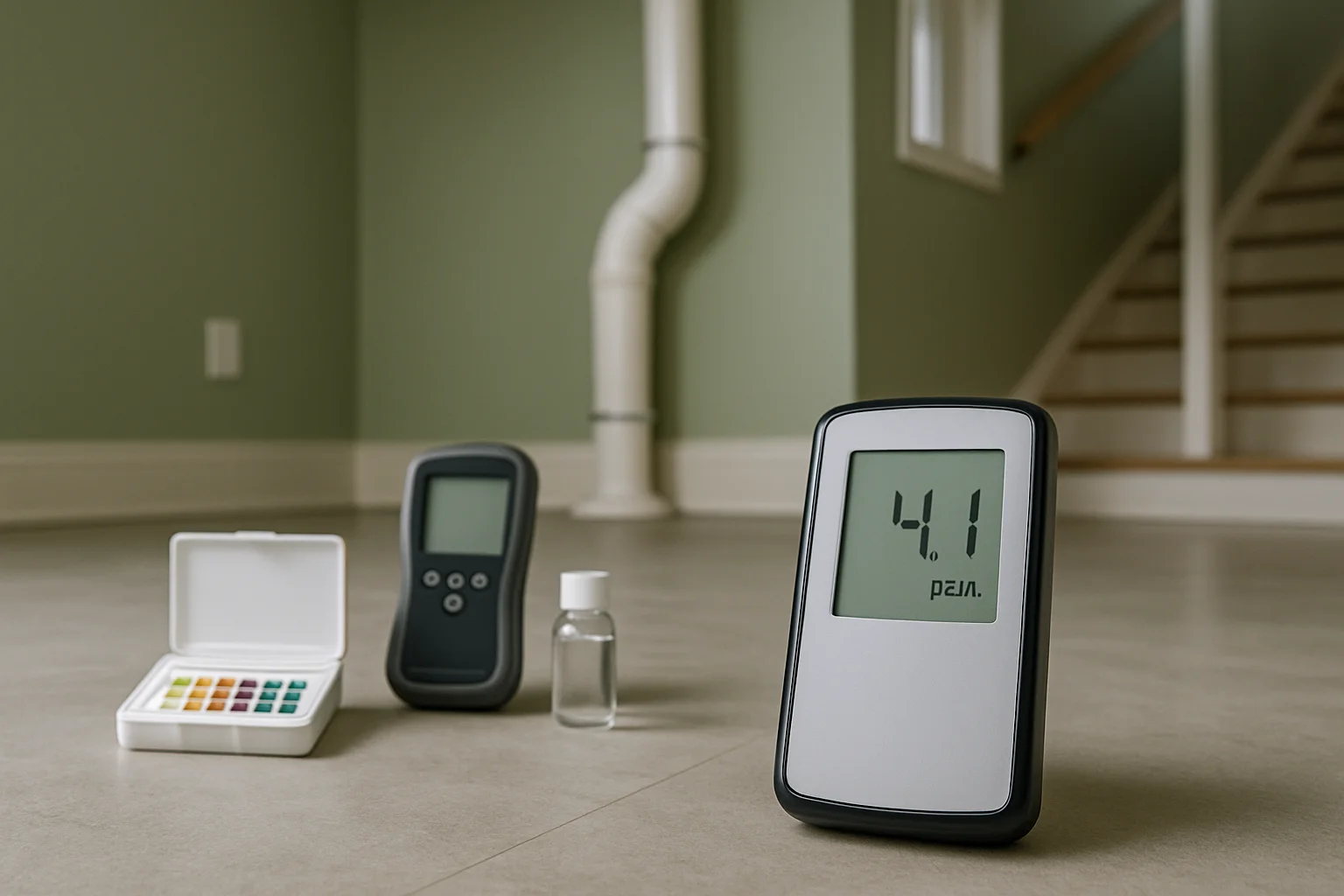
Radon testing provides a measurement of radon concentration in the air over a defined period of time. Instead of debating whether the home “seems fine,” you get a real data point you can use for:
- Peace of mind as a homeowner.
- Negotiations and transparency during buying/selling.
- Planning improvements (especially basements and lower levels).
- Establishing a baseline after major renovations or HVAC changes.
If your goal is to replace uncertainty with clarity, professional radon testing is the straightforward next step.
Common moments when people stop guessing and choose to test
Radon testing isn’t just a “problem-home” thing. In practice, it often comes up in very normal situations:
1) You’re buying a home
Buyers want to know what they’re moving into. A radon test is a practical part of due diligence—right alongside evaluating the roof, HVAC, and electrical.
2) You’re selling a home
Sellers often test proactively to reduce uncertainty, help keep deals smoother, and show good faith. Even if you’re confident in your home, testing puts a number to that confidence.
3) You’re finishing or renovating a basement
If you’re investing in additional living space, it makes sense to understand what you’re breathing at the lowest levels of the home—before you furnish, carpet, or build out rooms.
4) You’ve changed how the house “breathes”
New windows, weatherization, HVAC changes, or adding exhaust fans can alter airflow and pressure. Testing gives you an updated snapshot.
5) You simply want to know
Sometimes the best reason is that you don’t like unanswered questions about your home.
Short-term vs. longer-term radon testing: what’s the difference?
Homeowners often hear “radon test” and assume there’s only one type. In reality, test duration can vary, and the best approach depends on why you’re testing.
- Short-term testing is commonly used when time matters (for example, in a real estate transaction). It provides a snapshot under the conditions of the test period.
- Longer-term testing can be useful if you want a broader view that accounts for daily and seasonal variations.
Not sure which route fits your situation in Montgomery County or Bucks County? The simplest answer is to talk it through. A1 House Prep can help you choose a testing approach that matches your timeline and goals. Start with Radon Testing or go straight to Request Service.
“But my basement doesn’t smell musty…” (and other myths that keep people guessing)
It’s easy to attach radon to other home signals—humidity, odors, or visible cracks—but those connections can be misleading. Here are a few myths worth clearing up:
- Myth: “A dry basement means low radon.”
Reality: Moisture and radon are separate issues. You can have one without the other. - Myth: “New construction doesn’t need testing.”
Reality: New homes can test with elevated readings too, depending on site conditions and how the home is built and operated. - Myth: “If the neighbor is fine, we’re fine.”
Reality: Houses can vary dramatically even on the same street. - Myth: “If we open windows a lot, we don’t need a test.”
Reality: Lifestyle and ventilation can change readings, but they don’t replace measurement—especially because conditions vary.
If you’re still weighing guess radon level or test, myths tend to keep you in the “guess” lane. A measurement moves you into the “know” lane.
How professional radon testing fits into a bigger home “truths” plan
Radon is one part of understanding your home environment. Many homeowners in the Harleysville–Lansdale–Hatfield corridor and surrounding communities choose to bundle information-gathering so they can make better decisions about comfort, maintenance, and future upgrades.
Depending on your home and concerns, you may also consider:
- Air Quality Testing for broader indoor air insights (especially after renovations or persistent odor concerns).
- Water Testing if you’re on well water, have older plumbing, or want clarity on baseline water quality.
- Water Heater Flushing as a practical maintenance step that can support system performance and reduce sediment buildup over time.
Think of it as a homeowner’s approach to confidence: fewer assumptions, more data.
Odors, “stale basement air,” and where ozone rentals fit (carefully)
Radon is odorless, so a smell is not a radon indicator. However, homeowners often start exploring radon testing because they’re also thinking about basement air quality in general. If your main concern is stubborn odor (smoke, musty smells, pet odors), that’s a separate track from radon measurement.
For certain odor situations, Professional Ozone Machine Rentals can be an option—with strict safety rules:
- Use only in unoccupied spaces. People and pets must be out of the treated area.
- Follow all instructions regarding runtime, placement, and re-entry time.
- Ventilate thoroughly before re-occupying the space.
- Remove or protect sensitive items as directed (certain materials can be affected).
If you’re unsure whether your concern is “odor cleanup” or “air measurement,” that’s a great time to ask questions first. The goal is the right tool for the right job—without mixing up radon (measured) and odors (treated).
A practical homeowner’s checklist: from curiosity to clarity
If you’re ready to stop circling the question and move forward, here’s a simple path that works whether you’re a homeowner, a buyer, a seller, or an agent coordinating next steps.
- Decide what you want from the result. Transaction timeline? A baseline for your family? A post-renovation check?
- Schedule professional testing. Use a local company that works in Pennsylvania and understands the pace of real estate and homeowner needs.
- Follow any pre-test guidance. Small steps can help ensure the test reflects typical conditions.
- Review the report. The value of testing is having a clear number and documentation.
- Plan next steps calmly. “Know” is always better than “wonder,” even when results prompt more questions.
A1 House Prep keeps the process clear, documented, and homeowner-friendly across Montgomery County, Bucks County, and nearby towns.
Ready to stop guessing?
Get a professional radon measurement for your Pennsylvania home and replace uncertainty with a clear, documented result.
Prefer to talk it through? Call A1 House Prep at 215.853.8226.
FAQ: Radon testing for Pennsylvania homeowners
1) Is it better to guess radon level or test?
Testing is the only reliable way to know your radon level. Because radon is invisible and varies from home to home, guessing is based on assumptions that often don’t match the actual measurement.
2) Can two homes in the same neighborhood have different radon results?
Yes. Even next-door homes can test differently due to differences in foundation details, soil pathways, airflow patterns, and how the home is operated (HVAC, exhaust fans, window habits).
3) Does a musty smell mean radon is high?
No. Radon is odorless. A musty smell typically points to moisture or microbial growth concerns—separate issues from radon measurement. If you want broader insight beyond radon, consider Air Quality Testing.
4) When should I test for radon—during buying, selling, or after moving in?
Any of those can be appropriate. Buyers often test during inspections. Sellers may test before listing to reduce uncertainty. Homeowners may test after renovations or HVAC changes, or simply to establish a baseline.
5) If my home is new, do I still need radon testing?
New construction can still have measurable radon. The only way to confirm your specific home’s level is to test.
6) Can I combine radon testing with other home testing services?
Yes. Many homeowners prefer an efficient, “whole-home clarity” approach. Depending on your needs, you might also consider Water Testing or routine home prep services like Water Heater Flushing.
7) Are ozone machines the same thing as radon testing or radon treatment?
No. Ozone machines are used for certain odor treatment situations and must be used only in unoccupied spaces with careful adherence to instructions. They do not measure radon and are not a substitute for radon testing. For odor-focused help, see Professional Ozone Machine Rentals.
Bring curiosity home—then verify it
Good homeownership is a balance of intuition and information. Intuition helps you notice changes. Information helps you decide what to do next. Radon is one of the clearest examples of why measuring beats guessing: there are no reliable sensory clues, and local conditions across Pennsylvania can vary widely.
If you’re in Montgomery County or Bucks County—whether you’re in Harleysville, Lansdale, Hatfield, Souderton, North Wales, or Blue Bell—A1 House Prep can help you replace the “we’re probably fine” feeling with a clear result you can document and act on.
Learn more about Radon Testing, request service online, or call 215.853.8226 to schedule.