Why Sellers Should Address Odors Before Showings
When you’re preparing to sell a home in Pennsylvania—especially in competitive areas like Montgomery County and Bucks County—buyers don’t just evaluate square footage and finishes. They evaluate how a home feels the moment they step inside. Odors play an outsized role in that first impression, and the challenge is that many sellers stop noticing everyday smells that visitors immediately pick up.
If you’re aiming to address odors before home showings, the goal isn’t to “mask” the home with heavy fragrances or hope the smell disappears on its own. A more premium, reliable approach is to treat odors like useful data: they can be clues about the home’s history, air movement, moisture patterns, or even water quality. When you replace guessing with targeted steps—cleaning, ventilation, and (when appropriate) professional-grade odor treatment—your home shows better, feels more trustworthy, and helps buyers stay focused on what matters.
A1 House Prep helps homeowners and real estate professionals across Harleysville, Lansdale, Hatfield, Souderton, North Wales, and Blue Bell make smart, practical decisions with testing and property-prep services. This guide explains why odors matter, what they commonly indicate, and how to address them calmly and effectively—without scare tactics.
Odors Are “Invisible Home Facts” Buyers React To
Odors are a form of invisible information. Buyers might not say, “This house has trapped humidity in the lower level,” but they will say, “It smells musty,” and their confidence can drop instantly. When a buyer senses something they can’t see, they start imagining what else might be hidden.
- Odors shape the first 30 seconds. That initial emotional response influences how buyers view everything else—layout, finishes, even price.
- Odors trigger “what’s wrong here?” questions. Even if the cause is minor, uncertainty can feel like risk.
- Odors can make spaces feel smaller. Stale or heavy air often makes rooms feel less bright and less clean, even when they are.
Addressing odors doesn’t mean promising perfection. It means reducing doubt and presenting the home as well-maintained and thoughtfully prepared.
Common Odor Types in Pennsylvania Homes (and What They May Suggest)
Homes in our region experience distinct seasonal patterns—humid summers, heating season dryness, wet springs—that can influence how a home smells. Below are common odor categories and what they may indicate. Think of these as curiosity prompts, not diagnoses.
Musty / Basement Odors
- Often associated with dampness, stored items, or low airflow
- Can intensify after rain events or during high humidity
- May be worse in finished basements where materials hold odor
Pet Odors
- Frequently tied to soft materials (carpet pad, upholstery) rather than the visible surface
- Can reappear on humid days even after cleaning
- May be concentrated near doors, litter areas, or favorite pet spots
Cooking / Grease Odors
- Can cling to cabinets, range hoods, and HVAC filters
- Often strongest in open-concept homes where kitchens and living rooms share air
Smoke Odors (Fireplace, Tobacco, Candles)
- May linger in porous surfaces and ductwork
- Can be noticeable to non-smokers even when “light”
“Chemical” or Stale Air
- Sometimes linked to recent painting, stored products, or limited ventilation
- Can be more noticeable in closed-up homes during listing prep
If you’re unsure whether an odor is “just a smell” or a signal worth investigating, that’s exactly where a calm, testing-first mindset helps.
Why Masking Odors Can Backfire During Showings
Sellers often reach for air fresheners, plug-ins, scented candles, and strong cleaning fragrances right before showings. While a light “clean” smell can be pleasant, heavy fragrance can cause buyers to wonder what you’re trying to cover up. It can also overwhelm sensitive visitors and distract from the home.
Instead of masking:
- Remove the source when possible. Clean, launder, declutter, and replace filters.
- Control moisture and airflow. Ventilation is often the simplest improvement.
- Use neutral, low-residue products. The best “scent” is a home that smells like nothing.
Premium Prep Principle: Treat Odor Like a Clue
When a home has an odor, your job isn’t to panic—it’s to get curious. Is it seasonal? Is it localized to one room? Does it change after rain, cooking, or HVAC cycles? That curiosity can guide practical next steps, and when testing is appropriate, you can replace assumptions with real information.
A Practical, Seller-Friendly Plan to Address Odors Before Home Showings
Here’s a step-by-step approach used by many careful sellers and real estate pros in Montgomery County, Bucks County, and surrounding communities. You can do many of these quickly, and they stack together for better results.
1) Identify “Where” and “When”
- Walk the home as if you’re a first-time visitor—starting outside, then stepping in and pausing.
- Check specific zones: entryway, basement steps, kitchen, powder room, laundry, bedrooms, and closets.
- Note timing: morning vs. evening, after rain, after HVAC runs, after cooking.
2) Remove Odor Reservoirs
Odor often lives in soft materials and hidden dust, not on the obvious surface.
- Wash curtains, throws, and pet bedding.
- Vacuum with a clean filter; consider deep-cleaning carpets and rugs.
- Wipe cabinet faces, baseboards, doors, and walls where cooking residue can cling.
- Declutter closets and remove stored items with strong odors (sports gear, old paint, damp boxes).
3) Refresh Airflow the Right Way
- Replace HVAC filters (and confirm the correct size and fit).
- Run bathroom fans during and after showers; use the range hood while cooking.
- On mild days, air out the home strategically: open windows on opposite sides for cross-ventilation for short intervals.
4) Address Moisture Patterns (Without Guesswork)
Musty smells and damp air can be frustrating because they fluctuate. If you suspect moisture is involved:
- Use a dehumidifier in lower levels if humidity runs high.
- Keep basement items off floors and away from walls where air can stagnate.
- Confirm downspouts and grading direct water away from the foundation.
If you want more confidence about what’s in the air, consider objective information. A1 House Prep offers Air Quality Testing for homeowners who prefer facts over hunches.
When Odors Persist: Professional Ozone Machine Rentals (Used Correctly)
Some odors hold on even after cleaning and ventilation—especially those embedded in fabrics, unfinished surfaces, or spaces that have been closed up. In those cases, sellers and real estate professionals sometimes explore professional-grade odor treatment options.
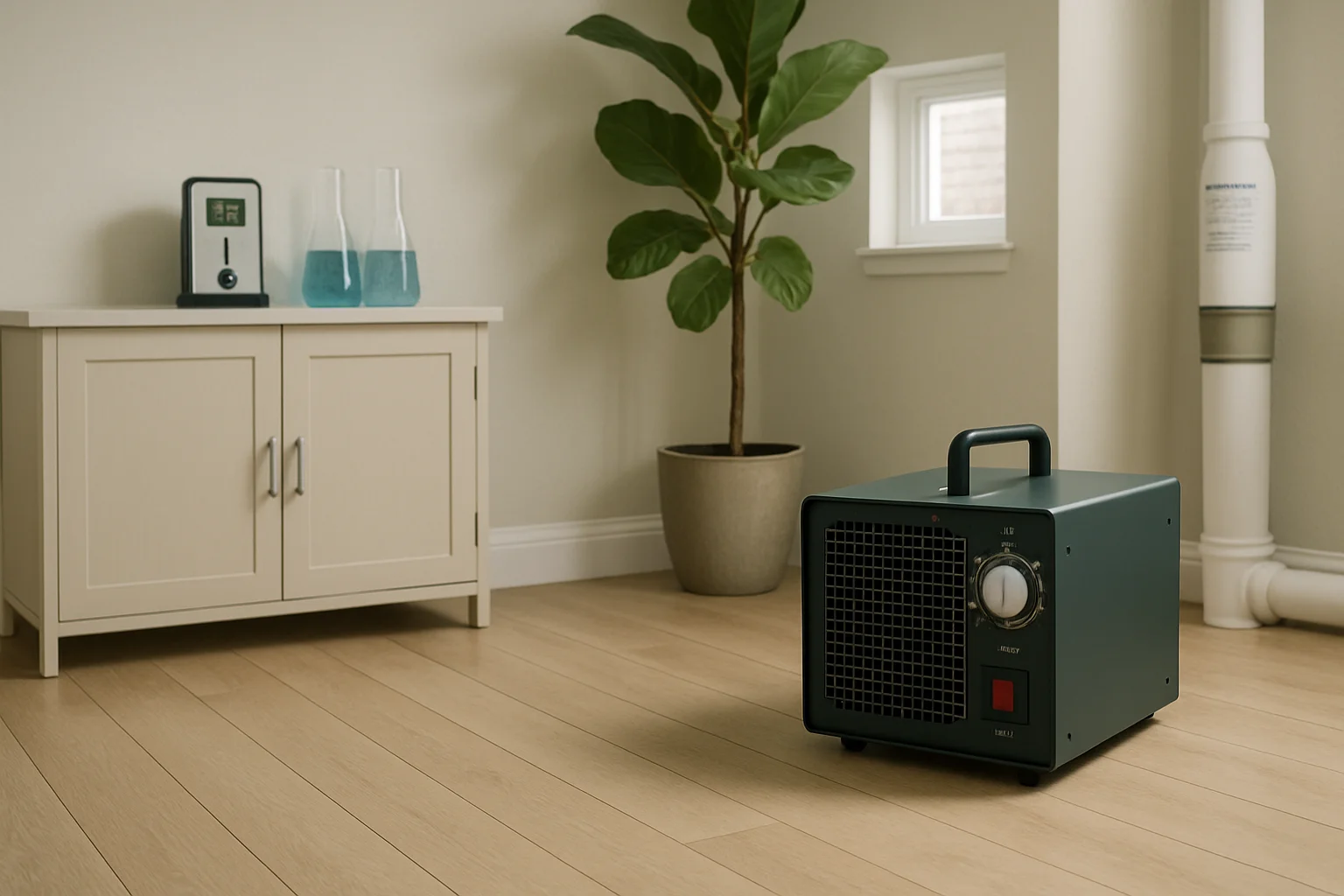
A1 House Prep offers Professional Ozone Machine Rentals to help address stubborn odors as part of listing prep. Ozone can be effective for odor treatment in unoccupied spaces, but it must be used responsibly and according to instructions.
Safe-use fundamentals (unoccupied spaces only)
- No people or pets present during operation. Plan the treatment when the home can remain vacant.
- Remove or protect sensitive items. Certain materials can be affected; follow rental guidance on what to remove or cover.
- Run for the recommended duration only. More is not always better; use settings and timeframes provided.
- Ventilate thoroughly afterward. Allow time for air exchange before anyone re-enters.
- Coordinate with showings. Build in a buffer for treatment and ventilation so the home is ready and neutral-smelling for visitors.
Ozone is not a substitute for fixing moisture sources, cleaning pet accidents, or maintaining HVAC systems—it’s best viewed as a targeted tool in a larger prep plan.
Curiosity Marketing for Sellers: What Odor Questions Help You Prepare Smarter?
Instead of trying random products, ask a few curiosity-driven questions that lead to practical action:
- Does the odor return after rain? Consider lower-level airflow, storage habits, and moisture management steps.
- Is it strongest near a sink, drain, or laundry area? Cleaning, ventilation, and confirming proper drainage can help.
- Does it spike after HVAC runs? Filter replacement and general HVAC cleanliness may be a factor.
- Is it localized to one room? Focus your effort: soft furnishings, closet contents, and flooring layers.
- Is the home closed up most days? Stale air is common in vacant or lightly occupied listings; controlled ventilation is key.
When you use curiosity instead of worry, your prep becomes calmer—and more effective.
Don’t Overlook Water and Air as Contributing Factors
Odors sometimes have less to do with “cleanliness” and more to do with what’s happening in the home’s air and water systems. If you’re preparing a property for sale and want to reduce uncertainty for buyers, testing can be a premium, confidence-building step.
- Air: If the home has persistent stuffiness, unusual odors, or you want clearer information during prep, explore Air Quality Testing.
- Water: Some odors are associated with water quality, plumbing patterns, or hot water conditions. A1 offers Water Testing, and routine maintenance like Water Heater Flushing can support overall home performance during listing season.
For sellers, the advantage is simple: testing gives you clearer answers, and clearer answers support smoother conversations with buyers and agents.
Showing-Day Odor Checklist (Simple and Effective)
Use this practical list the day of a showing or open house:
- Take out trash and recycling; wipe the inside of the trash can lid.
- Avoid running the dishwasher right before showings—a wet interior can smell.
- Quick-clean sinks and disposals; flush with water (skip heavy perfumes).
- Open windows for a short cross-breeze (weather permitting), then close them for comfort.
- Replace litter box liners and remove pet items from main living areas when possible.
- Set HVAC to a comfortable temperature; stale air is often worse in warm, closed spaces.
- Avoid strong candles or plug-ins—aim for neutral “clean air.”
Local Perspective: Why Odor Prep Matters in Montgomery & Bucks County Listings
In communities like Harleysville, Lansdale, Hatfield, Souderton, North Wales, and Blue Bell, buyers often tour multiple homes in a short window. Many are looking for “move-in ready” confidence—even in older, well-built Pennsylvania homes. Odor issues can make a property feel less maintained, even when it’s structurally sound.
Odor preparation is one of the highest-impact, lowest-drama upgrades you can make. It supports photography, reduces distracted feedback, and helps serious buyers linger long enough to appreciate the home’s features.
FAQ: Addressing Odors Before Home Showings
1) What’s the best way to address odors before home showings without using heavy fragrance?
Start with source control: remove trash, clean soft materials, wipe residue-prone surfaces, and replace HVAC filters. Add controlled ventilation for fresh air exchange. The goal is a neutral-smelling home that doesn’t raise questions.
2) Why do sellers often not notice their home’s odor?
It’s normal to become “nose-blind” to everyday smells—especially pets, cooking, and basement air. A helpful trick is to step outside for a few minutes, then re-enter as if you’re a buyer and pause in the entryway.
3) Are ozone machines a good option for stubborn listing odors?
They can be helpful for certain persistent odors when used properly as a targeted tool. Ozone treatment should be done only in unoccupied spaces and followed by thorough ventilation. For guidance and rental options, see A1’s Professional Ozone Machine Rentals.
4) How far in advance should I treat odor issues before photos and showings?
Ideally, begin 1–2 weeks before photography so you have time to identify the source, deep clean, and confirm the odor doesn’t return. If you’re using an ozone machine, plan additional time for vacancy and ventilation.
5) Could an odor indicate an air quality issue worth testing?
Sometimes odors correlate with ventilation, humidity, or other indoor air factors. If you want a data-based approach during prep, consider Air Quality Testing to replace uncertainty with clearer information.
6) What if a buyer asks about odors during a showing?
Stay calm and practical. Share what you’ve done (cleaning, filter changes, ventilation, maintenance). If you’ve chosen testing, you can note that you pursued objective information rather than guesswork.
Sell With Confidence: Get Odor Prep Help From A1 House Prep
If you’re preparing a home for sale in Pennsylvania and want to address odors before home showings with a premium, practical approach, A1 House Prep can help you plan smart next steps—especially when you’d rather rely on facts than assumptions.
Ready to prepare your home for showings?
Call A1 House Prep: 215.853.8226
Explore: Professional Ozone Machine Rentals (unoccupied spaces only, with safe-use guidance)
Prefer a testing-first plan? Consider Air Quality Testing or Water Testing.
Request service online: /request-service/
Whether you’re a homeowner, listing agent, or investor, addressing odor proactively is one of the simplest ways to protect first impressions—and keep buyer attention on the home’s best features.