Why Ozone Should Only Be Used the Right Way
Ozone has an almost magnetic reputation in home care: it’s invisible, powerful, and often described as a “reset button” for odors. That mystery makes homeowners curious—especially in Pennsylvania where homes in Montgomery County and Bucks County frequently face odor challenges from pets, basements, seasonal humidity, smoke, cooking, and long-closed rooms after a move-out.
But here’s the key: ozone should be used safely. Ozone is not a casual air freshener. It’s a tool that belongs in a clear process—with the right equipment, the right setup, and the right precautions—used only in unoccupied spaces for odor treatment. When used correctly, it can be a practical option for certain situations. When used casually or incorrectly, it can create unnecessary risk and confusion.
At A1 House Prep, we help homeowners, buyers, sellers, and real estate professionals across Harleysville, Lansdale, Hatfield, Souderton, North Wales, Blue Bell, and surrounding Pennsylvania communities make informed decisions—because the best home decisions start with understanding what you can’t see or smell clearly. Sometimes that means confirming indoor conditions through Air Quality Testing. Sometimes it means clarifying water concerns through Water Testing. And when odor is the main issue, it may mean exploring Professional Ozone Machine Rentals—with safe-use instructions and a careful plan.
The curiosity factor: why ozone gets attention
Homeowners are naturally curious about “invisible home facts.” You can’t always see what’s in the air. You can’t always pinpoint why a room smells stale. And you can’t always tell whether an odor is just a surface issue (like an old sofa) or a deeper home condition (like dampness in a basement or a lingering smoke film).
Ozone adds to that curiosity because:
- It’s invisible. You won’t “see” it working, which can make it feel mysterious or misunderstood.
- It’s associated with odor removal. People hear success stories and assume it’s universal.
- It sounds scientific. That can lead to overconfidence—using it without a real process.
A premium home decision doesn’t come from hype. It comes from clarity: what is the goal, what’s the safest method, and what’s the right order of steps?
What ozone is (and what it’s for in a home)
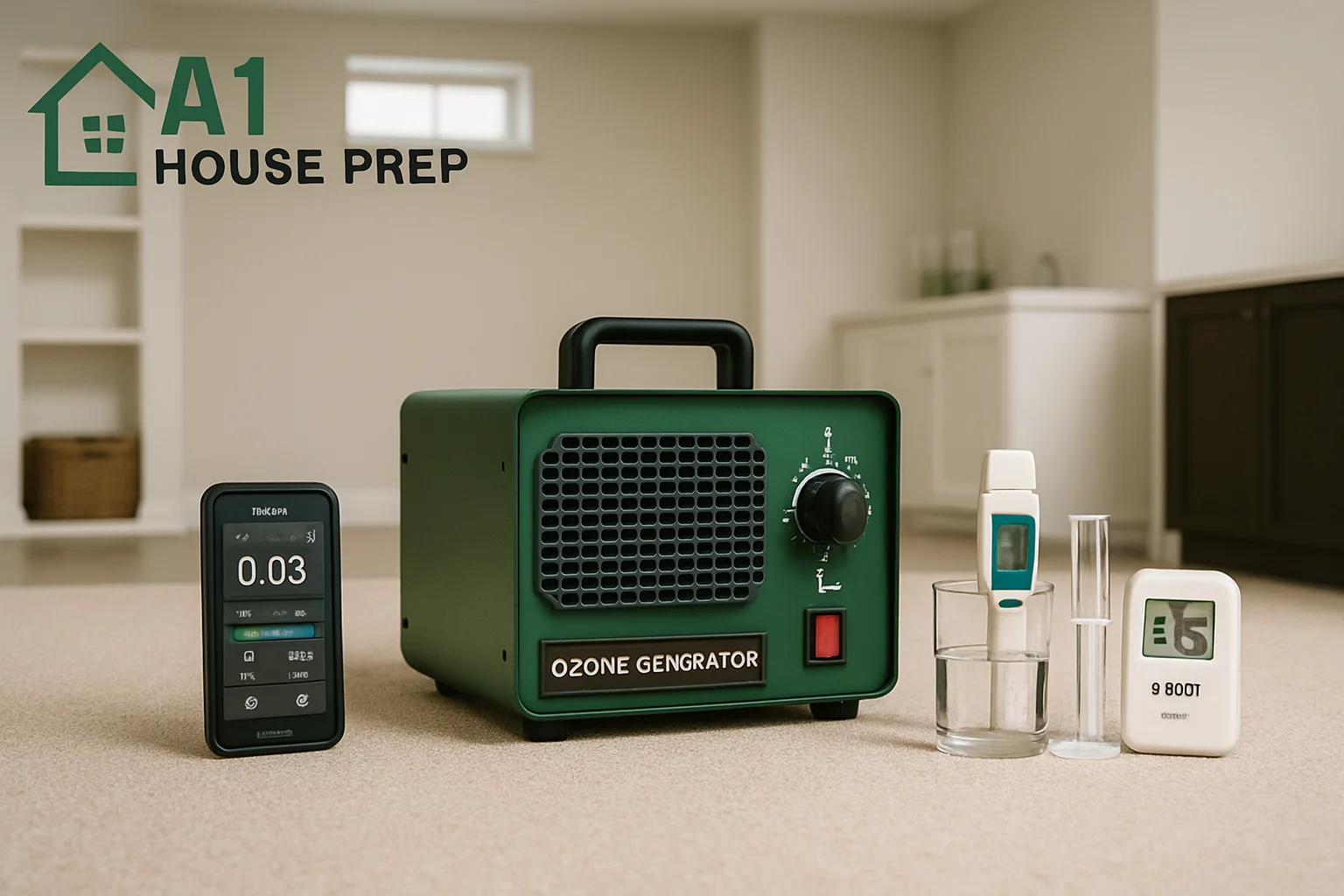
Ozone is a reactive form of oxygen. In practical home terms, ozone generators are sometimes used to address certain odors in a space. Think of it as a specialty tool—closer to a piece of equipment than a plug-in scent product.
What it’s commonly used for:
- Odors after a vacancy (stale, “closed up” smell)
- Some smoke-related odor situations (after proper cleaning)
- Pet odor in specific circumstances (after source cleanup)
- Musty smells where the moisture issue has already been corrected
What it is not:
- A substitute for cleaning
- A substitute for fixing moisture intrusion, leaks, or ventilation issues
- A way to “treat” occupied rooms while people or pets are present
- A guarantee that a problem is solved (especially if the source remains)
If you’re unsure whether a smell is simply “odor” or a sign of an indoor air concern, start with information. A targeted Air Quality Testing plan can help reduce guesswork and guide next steps without turning the situation into a high-stress guessing game.
Premium homeowner mindset: treat the source first, then treat the space
Ozone can be a finishing tool—not a first step. The best results typically come after you’ve removed the odor source (trash, smoke film, wet carpet padding, pet accidents, damp cardboard, etc.) and corrected contributing conditions (humidity, airflow, leaks). Then, and only then, an ozone treatment in an unoccupied space may help with lingering odor molecules that normal cleaning didn’t fully address.
Why ozone should be used safely (and only in unoccupied spaces)
When people say “ozone should be used safely,” they’re pointing to a simple, homeowner-friendly truth: ozone is not designed for you to breathe. That’s why safe use centers on two non-negotiables:
- Run ozone only in an unoccupied space. That means no people, no pets, and no plants in the treatment area.
- Allow time to clear the space afterward. Proper wait time and ventilation are part of the process, not an optional add-on.
In real estate contexts—pre-listing odor removal, post-tenant turnover, or preparing a property for showings—this matters even more. You want the home to feel clean and neutral, but you also want the process to be responsible and professional. That’s where a clear plan and straightforward instructions make all the difference.
Common homeowner misconceptions (and what to do instead)
Misconception #1: “If I can smell it, it must be working—so I should run it longer.”
Not necessarily. Longer isn’t always better. The goal is an appropriate treatment cycle paired with a safe clearing period. Overdoing it can create an unpleasant experience and complicate the “fresh, neutral home” outcome you’re aiming for.
Misconception #2: “Ozone replaces cleaning.”
If odors are embedded in soft materials or on surfaces, cleaning and source removal are still the foundation. For example, smoke odor often requires thorough cleaning of films on walls, ceilings, and HVAC returns. Ozone may help after that work—but it’s not a shortcut.
Misconception #3: “I’ll just run it in the basement while we’re upstairs.”
Homes share air pathways—stairwells, returns, gaps, and sometimes duct systems. Treat the home as one connected environment. If ozone is being used, plan for the treated space to be fully unoccupied, with doors closed as appropriate and a clear post-treatment ventilation plan.
Misconception #4: “Any odor means I need ozone.”
Sometimes the best move is to learn more first. If the odor seems tied to humidity, dampness, or a recurring pattern, consider evaluating indoor conditions through Air Quality Testing. If the concern is water-related (sulfur smell, metallic taste, staining), Water Testing can provide clarity without guesswork.
A practical checklist: safe-use plan for ozone odor treatment
Every home is different, but responsible ozone use tends to follow a consistent structure. If you’re considering an ozone generator for odor treatment, use this homeowner-friendly checklist:
- Define the goal. Are you treating a single room, a basement, or a whole level? What odor are you trying to address?
- Remove the source first. Dispose of odor contributors, deep-clean surfaces, and address damp items. If a leak or moisture issue is present, correct that first.
- Pick the right timing. Plan a window when the space will be truly unoccupied—no quick errands, no overnight “we’ll be back soon.”
- Remove living things. People, pets, and plants should not be in the treatment area.
- Close off the space. Shut doors and limit airflow to other areas as appropriate for the layout.
- Run for a controlled cycle. Follow the rental instructions for the appropriate duration and placement.
- Allow a clearing period. After the cycle, wait the recommended time, then ventilate the space by opening windows/doors as appropriate.
- Re-enter thoughtfully. Confirm the space is ready before resuming normal use.
- Reassess. If odors return, it may indicate the source remains or conditions (like humidity) are still present.
If you’re coordinating a treatment for a listing in Blue Bell or a move-in in Lansdale, this checklist helps keep the process predictable, professional, and homeowner-safe.
Ozone vs. “cover-up” solutions: why neutral is the premium result
Most buyers and guests can tell when a home has been “scented.” Strong fragrances often raise questions: What are we not supposed to notice? The premium goal is a neutral home—clean, calm, and fresh without perfume.
That’s one reason ozone gets attention. When used correctly, it aims to address odor rather than mask it. But the keyword is correctly. The right way respects the space and the people who will live in it afterward.
Where ozone fits in a smarter “test, don’t guess” home plan
A1 House Prep is built around a simple principle: homeowners make better decisions with better information. Odor issues can sit at the intersection of comfort, property condition, and buyer confidence—especially during a sale.
Here’s how a smart plan often looks in Montgomery County and Bucks County homes:
- If you’re noticing persistent mustiness: address moisture/humidity first; consider Air Quality Testing to better understand indoor conditions.
- If the home has been closed up or vacant: a targeted cleaning plus an ozone treatment in an unoccupied space may be a reasonable finishing step.
- If you’re preparing for showings: prioritize neutral results—cleaning, HVAC filter replacement, and controlled odor treatment rather than heavy fragrances.
- If you’re troubleshooting “mystery smells”: confirm basics—plumbing traps, sump areas, damp storage, and water-related odors; when appropriate, use Water Testing to eliminate uncertainty.
And if you’re also maintaining home systems as part of a property prep plan, services like Water Heater Flushing can be a practical step toward overall home performance and buyer confidence—separate from odor concerns, but often part of a comprehensive approach.
Pennsylvania-specific scenarios where homeowners ask about ozone
In Harleysville, Hatfield, Souderton, and North Wales, we often hear similar questions—because the housing stock, weather patterns, and everyday life create repeating themes.
- Finished basements with seasonal humidity: A musty odor might improve temporarily, then return if moisture control isn’t addressed.
- Move-out or estate transitions: Long-closed rooms can trap odors in fabrics and porous materials.
- Pet zones: Odor can live below the surface (padding, subfloor seams, baseboards) even after cleaning.
- Cooking odor buildup: Especially in homes with limited ventilation or heavy use of spices/frying.
- Smoke-related odors: Often requires thorough cleaning; ozone may be considered afterward for lingering odor notes.
In each case, it helps to stay calm and methodical. Odors can be frustrating, but they’re also solvable when you approach them with the right sequence and expectations.
Professional ozone machine rentals: what “professional” should mean
Not all ozone machines (or instructions) are equal. A professional rental experience should make things simpler, not more confusing. At a minimum, you should expect:
- Clear safe-use instructions focused on unoccupied treatment and proper ventilation afterward
- Practical guidance on placement based on room size and airflow
- A realistic conversation about results and what ozone can and can’t do if the odor source remains
- A plan that fits real life (timing, pets, access, and property schedules)
If you’re exploring an ozone treatment for a property in Montgomery County or Bucks County, A1 House Prep’s Professional Ozone Machine Rentals are designed to support a responsible, homeowner-friendly process—especially for pre-listing preparation and post-event odor situations.
Need an odor plan that’s practical and responsible?
If you’re in Harleysville, Lansdale, Hatfield, Souderton, North Wales, Blue Bell—or anywhere in Montgomery County or Bucks County—A1 House Prep can help you choose the right next step, from testing to professional ozone machine rentals.
Call A1 House Prep: 215.853.8226
Request service online: /request-service/
Explore rentals: /services/ozone-machine-rentals/
FAQs: Using ozone the right way
1) Is ozone safe to use in a home?
Ozone should be used safely, which means using it only for odor treatment in unoccupied spaces, following the equipment instructions, and allowing time and ventilation after the treatment. If you have questions about whether ozone fits your situation, it’s worth getting guidance before you run a cycle.
2) Can I run an ozone machine while I’m home if I stay in another room?
It’s best to plan ozone use when the treatment area is truly unoccupied and separated. Homes share airflow through doorways, gaps, and sometimes HVAC pathways. A clear, conservative plan protects everyone in the home—including pets.
3) Does ozone remove pet odors or smoke odors permanently?
Results depend on whether the source of the odor has been removed. If odors are embedded in porous materials or below flooring, ozone may not be a stand-alone answer. In many cases, the most effective approach is source cleanup first, followed by a carefully planned ozone treatment as a finishing step.
4) How do I know whether I should use ozone or start with air quality testing?
If the concern is primarily an odor after a vacancy or a specific event, ozone may be an option. If you’re dealing with ongoing mustiness, recurring irritation concerns, or you want clearer insight into indoor conditions, Air Quality Testing can help you make decisions based on information rather than assumptions.
5) How long should I wait before re-entering a space after ozone treatment?
Follow the rental instructions for both the treatment duration and the post-treatment clearing period. Plan for ventilation afterward (opening windows/doors when appropriate) so the space can return to normal before it’s occupied again.
6) Is ozone a good idea for pre-listing preparation?
It can be, when used correctly and conservatively—especially if the home has a stale, closed-up odor that remains after cleaning. Pre-listing prep works best when the goal is a neutral, clean impression, not a strong fragrance. Real estate professionals often prefer an approach that’s practical, scheduled, and consistent.
7) What if the odor comes back after using ozone?
A returning odor often points to an ongoing source (hidden dampness, residue on surfaces, contaminated soft goods, or a ventilation issue). At that point, it may be smarter to reassess the underlying cause and, when appropriate, use testing services like Water Testing or Air Quality Testing to reduce guesswork.
Closing thought: powerful tools deserve calm, informed use
Ozone is a tool—nothing more, nothing less. The premium approach is to stay calm, follow a process, and keep the goal clear: a home that feels clean and neutral for the people who will live in it next. If you’re curious about whether ozone fits your situation in Montgomery County or Bucks County, A1 House Prep can help you choose a responsible plan that respects both the home and the homeowner.
To get started, explore Professional Ozone Machine Rentals or request service. If you’d rather talk it through first, call 215.853.8226.