When Was the Last Time Your Home Had a Radon Checkup?
If you’re like most Pennsylvania homeowners, you keep a mental list of routine “checkups” around the house: HVAC filter changes, smoke detector batteries, maybe even a seasonal sump pump test. But there’s one home health metric that often slips off the list because it’s invisible and quiet: radon.
A radon checkup for home isn’t about panic or worst-case headlines. It’s about replacing guessing with a simple measurement—learning one more “invisible fact” about the place you live (or are about to buy or sell). In Montgomery County and Bucks County—especially communities like Harleysville, Lansdale, Hatfield, Souderton, North Wales, and Blue Bell—radon testing is a practical way to understand your indoor environment with confidence.
This guide explains what a radon checkup is, when to schedule one, what to expect, and how A1 House Prep supports homeowners, buyers, sellers, and real estate professionals with clear, professional testing.
Curiosity-first homeowner tip: Think of radon testing like checking the “mileage” on your indoor air—an objective number that helps you make informed decisions. No drama. Just data.
What a “Radon Checkup” Actually Means
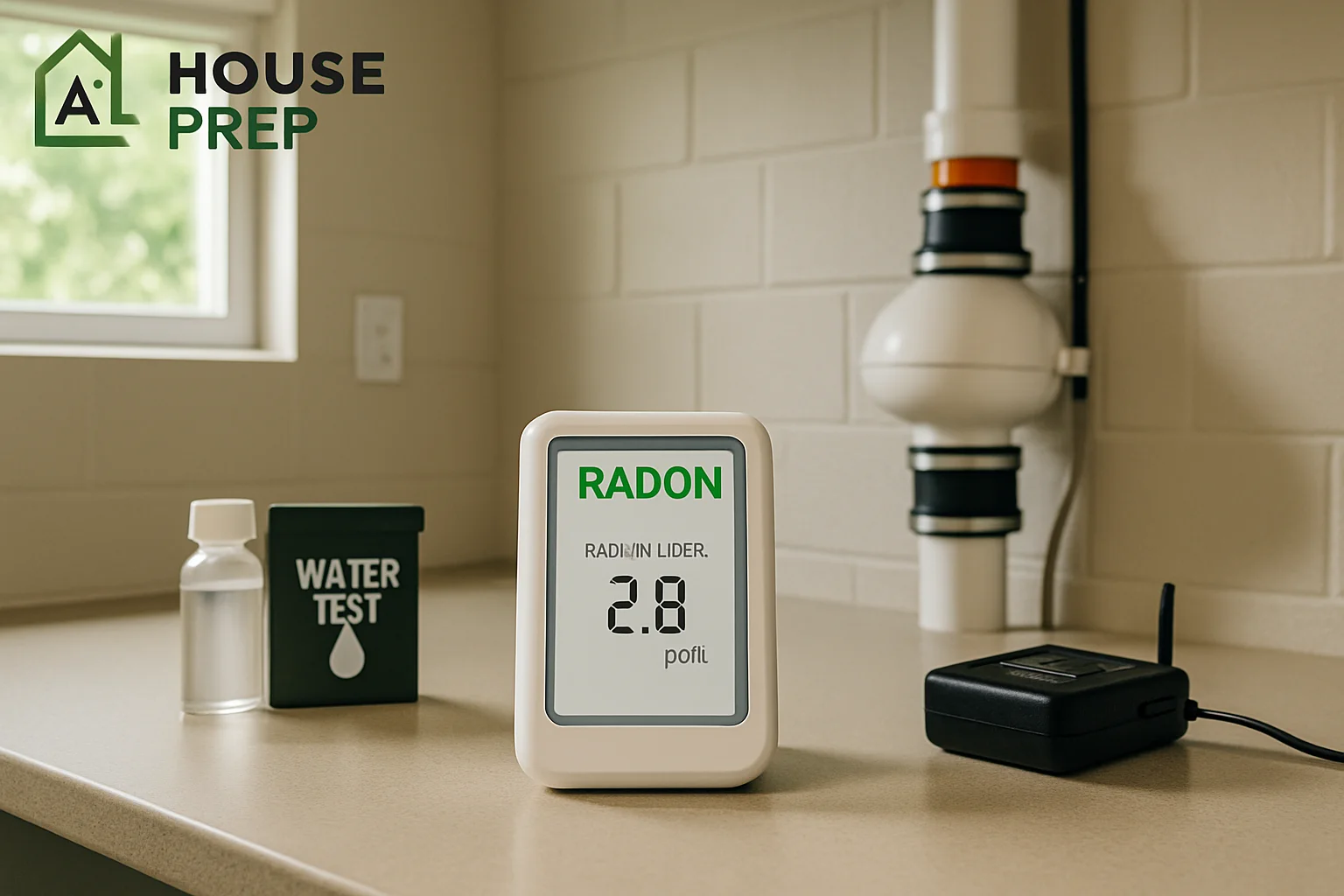
A radon checkup for home is simply a professional measurement of radon levels in the areas where people spend time—often the lowest livable level of the home. Radon is a naturally occurring gas that can enter through small openings and pathways in a home’s foundation and lower levels. Because you can’t see or smell it, the only reliable way to know your home’s level is to test.
Homeowners sometimes assume that newer construction, a tidy basement, or a great HVAC system automatically means radon won’t be a concern. The truth is more nuanced: radon levels can vary from one home to the next—even on the same street—based on soil composition, foundation characteristics, ventilation patterns, and other factors. That’s why a routine “checkup” is helpful: it turns uncertainty into a measurable result.
Why Radon is Easy to Miss (and Why That’s the Point)
Many home issues announce themselves: a leak stains a ceiling, a furnace gets noisy, a musty odor suggests moisture. Radon doesn’t behave like that. It has no odor and no visible sign in a typical home. That’s exactly why a calm, educational approach works best: you’re not looking for symptoms—you’re gathering information.
For homeowners who enjoy understanding how their property works, radon testing fits right in with other knowledge-based home habits, like:
- Tracking humidity levels to help protect wood floors and furniture
- Testing water quality when moving in or updating plumbing
- Checking indoor air quality when comfort or odors change
- Monitoring basement conditions after heavy Pennsylvania rain cycles
If you’re already the kind of homeowner who likes clear answers, a radon checkup is a smart addition to your routine.
How Often Should You Schedule a Radon Checkup for Your Home?
There isn’t one perfect schedule for every property, but there are several common times when testing is especially useful. Consider a radon checkup if any of these apply:
- You’ve never tested this home (or you don’t have a reliable record of past results).
- You’re buying a home in Montgomery County or Bucks County and want clear information before closing.
- You’re selling a home and want to reduce surprises during the transaction.
- You finished a basement or started using a lower level as an office, bedroom, gym, or playroom.
- You’ve made energy-efficiency upgrades (new windows, added insulation, air sealing) that may change ventilation patterns.
- You installed or changed HVAC equipment or adjusted how the home is conditioned.
- It’s been a few years since your last test and you’d like an updated snapshot.
In short: test when you move in, test when the home changes, and re-test periodically for peace of mind. A1 House Prep can help you choose a testing approach that matches your timeline and goals. Learn more on our Radon Testing service page.
What to Expect During Professional Radon Testing
Most homeowners appreciate testing because it’s straightforward and low-disruption. While specific steps can vary by home and test type, a typical appointment involves:
- Placement strategy: Selecting the appropriate level and location, often the lowest livable area.
- Proper setup: Ensuring the device is placed away from drafts, exterior doors, and direct sunlight where possible.
- Clear guidance: A brief explanation of any temporary conditions needed during the test window.
- Results and next steps: After the test period, you receive your results and practical guidance on what they mean.
For real estate transactions, timing matters. For homeowners, comfort matters. A1 House Prep approaches both with the same priorities: a clean process, clear communication, and professional documentation.
Why Radon Levels Can Differ Home-to-Home in Pennsylvania
Radon is influenced by what’s under and around the home as well as how the home is built and operated. In Pennsylvania, it’s common for radon levels to vary based on:
- Soil and geology in the immediate area
- Foundation type (basement, slab, crawlspace, combination)
- Openings and penetrations (sumps, cracks, utility entries)
- Stack effect (pressure differences that can draw soil gases into the home)
- Ventilation patterns (how air moves through the home over time)
- Seasonal conditions that may influence airflow and indoor/outdoor pressure
This variability is precisely why “my neighbor tested low” doesn’t tell you what’s happening in your own home in Harleysville, Lansdale, Hatfield, Souderton, North Wales, or Blue Bell. Curiosity and measurement are more reliable than assumptions.
Home Buyers & Sellers: A Radon Checkup Can Reduce Transaction Stress
In real estate, certainty is valuable. A radon checkup helps replace vague concerns with documented results, which can keep negotiations focused and practical.
For home buyers
- Helps you understand the property’s current radon measurement before you finalize the purchase
- Supports informed decision-making without relying on guesswork
- Creates a clear record for your home file as you move in
For home sellers
- Reduces the chance of last-minute surprises
- Shows proactive home stewardship and preparedness
- Helps your agent answer questions with clarity
For real estate professionals
- A reliable local testing partner supports smoother scheduling
- Clear communication helps keep expectations aligned
- Professional documentation supports confident client guidance
If you’re coordinating multiple prep items during a sale, A1 House Prep can also support additional property data points through Air Quality Testing and Water Testing.
Testing Replaces Guessing: Pairing Radon with Other “Invisible Facts”
Many homeowners are surprised by how empowering it feels to collect a few key measurements about their property. A radon checkup often fits into a broader “home facts” approach—especially for people who want a comfortable, well-understood space.
Consider pairing radon testing with:
- Indoor air quality testing if you’re curious about overall indoor conditions, comfort, or ventilation patterns (learn more).
- Water testing if you use well water, recently changed plumbing components, or want baseline data after moving (learn more).
- Water heater flushing as a practical maintenance item that supports system performance over time (learn more).
Each service answers a different question, but the theme is the same: know your home, don’t guess.
What About Odors? Where Ozone Rentals Fit (and Where They Don’t)
Sometimes homeowners who are thinking about “invisible issues” are also curious about lingering odors—smoke, pet odors, musty smells, or odors left behind after a vacancy. While this is a different topic than radon, it often comes up during move-in/move-out prep.
A1 House Prep offers Professional Ozone Machine Rentals for odor treatment, with an important boundary: ozone use is for unoccupied spaces only and must be handled carefully according to instructions.
- Ozone machines should only be run when people and pets are out of the space.
- Follow all provided safety steps, including airing out the area before re-entry.
- Ozone is not a substitute for identifying and addressing underlying moisture or contamination sources.
If your “home curiosity list” includes both radon and odors, it can help to approach them as two separate questions with two separate tools: radon testing for measurement, and targeted odor treatment (when appropriate) with safe-use practices.
Common Myths That Keep Homeowners From Testing
Radon checkups are often delayed for understandable reasons. Here are a few common myths—and the calmer, more practical reality behind them:
- Myth: “My home is newer, so it’s fine.”
Reality: Radon levels depend on more than home age. Testing is the only way to know. - Myth: “I don’t spend time in the basement.”
Reality: Many homes have airflow patterns that connect lower levels and living areas. If you use the lower level at all—or plan to—testing provides clarity. - Myth: “No one in the neighborhood talks about radon.”
Reality: It’s not a visible issue, so it’s often not discussed. Quiet doesn’t equal absent. - Myth: “Testing will turn into a big ordeal.”
Reality: Professional testing is typically straightforward and minimally disruptive.
Radon Checkup Planning: A Simple Homeowner Checklist
If you’re ready to get a radon checkup for home on the calendar, here’s a practical planning checklist:
- Find your “why”: routine curiosity, real estate timeline, renovation, basement use, or general home file documentation.
- Choose the best timing: avoid weeks when the home will be unusually empty or unusually busy, if possible.
- Identify the lowest livable level: the most relevant space for measurement is often the lowest level where someone could spend time.
- Gather any prior records: past test results (if available) help build a longer-term view of the property.
- Schedule with a local pro: use a company that knows the region and communicates clearly.
When you’re ready, A1 House Prep makes it simple to request service online: Request Service.
Ready for a Radon Checkup in Montgomery or Bucks County?
Get clear, professional testing and practical guidance—without scare tactics. A1 House Prep serves homeowners and real estate professionals throughout Harleysville, Lansdale, Hatfield, Souderton, North Wales, Blue Bell, and surrounding Pennsylvania communities.
Call: 215.853.8226
Schedule online: Request Service
Learn more: Radon Testing
FAQ: Radon Checkups for Pennsylvania Homes
1) What is the goal of a radon checkup for home?
The goal is simple: to measure radon levels in the home so you’re working with real information. Because radon is invisible, testing is the practical way to understand what’s happening in your specific property.
2) Do I need a radon checkup if my home tested in the past?
Many homeowners choose to re-test periodically, especially after changes like finishing a basement, adjusting HVAC, or making energy-efficiency upgrades. If you don’t have clear records—or it’s been a while—an updated test can provide a current snapshot.
3) Is radon testing only for homes with basements?
No. While basements are a common focus, radon can be relevant in homes with slabs, crawlspaces, or mixed foundations. The right test location depends on the home’s layout and the lowest livable level.
4) I’m buying a home in Lansdale (or nearby). When should I schedule testing?
Many buyers schedule radon testing during the inspection period so the results are available for decision-making. If you’re on a tight timeline, it helps to coordinate early with your agent and your testing provider.
5) Can I rely on a neighbor’s radon result in my neighborhood?
Neighboring results can be interesting, but they aren’t a reliable substitute for testing your own home. Radon levels can vary significantly from one property to another due to differences in soil conditions, foundation pathways, and ventilation.
6) Does A1 House Prep also address odors or other indoor concerns?
Yes. In addition to radon testing, A1 House Prep offers Air Quality Testing, Water Testing, and Professional Ozone Machine Rentals for odor treatment in unoccupied spaces only, following safe-use instructions.
7) What’s the easiest way to get started?
You can request a radon checkup directly through Request Service or call A1 House Prep at 215.853.8226. We’ll help you choose a testing plan that fits your home and your timeline.
A Calm, Smart Next Step for Your Home
Homes have plenty of “knowns” (square footage, roof age, HVAC type) and plenty of “unknowns” (what you can’t see, smell, or easily verify). A radon checkup sits in that second category—invisible, but measurable. If you’re the kind of homeowner who prefers clarity over assumptions, it’s one of the simplest ways to understand your property better.
If you’re in Montgomery County or Bucks County and want a professional radon checkup for home—whether you’re settling in, preparing to sell, or advising a client—A1 House Prep is here to help. Visit Radon Testing to learn more, or request service today.