When Should You Retest Your Home for Radon?
Radon is one of those home concerns that rarely announces itself. It’s colorless and odorless, and levels can change over time due to weather, seasonal ventilation habits, and even small updates to your home. That’s why many Pennsylvania homeowners and real estate professionals ask the same practical question: when to retest for radon?
If you live in or around Harleysville, Lansdale, Hatfield, Souderton, North Wales, Blue Bell, Ambler, or Collegeville, retesting is especially worth understanding. Much of Montgomery County has a history of elevated radon potential, and retesting is a simple way to confirm current conditions—whether you’re settling into a home, preparing to sell, or planning a renovation.
Below, A1 House Prep outlines clear, homeowner-focused guidance on radon retesting, including common trigger events, recommended timelines, what can change levels, and how to choose between a repeat radon test and home radon monitoring. If you want a professional, local testing partner, explore our Radon Testing service or request service anytime.
Quick takeaway: Retest radon after major home changes (finishing a basement, HVAC updates, sealing, new windows/doors), after a mitigation system is installed (per the installer’s guidance), and as a periodic check—especially if it has been a few years since your last test or if you’re buying/selling a home.
Why radon results can change (even if your home hasn’t)
It’s easy to assume a single test result stays true forever. In reality, radon levels can fluctuate due to conditions inside and outside your home. Understanding the “why” helps you decide when to retest for radon with confidence.
- Seasonal differences: Closed-house conditions in colder months often lead to higher readings than open-window seasons.
- Weather and pressure changes: Rain, frozen ground, wind, and barometric pressure can influence how soil gases move.
- HVAC and ventilation habits: How often you run exhaust fans, whole-house fans, or keep windows open can affect indoor air exchange.
- Home tightness: New windows, doors, insulation, or air sealing can change airflow paths and pressure differences.
- Foundation and drainage shifts: Settling, new cracks, sump activity, and changes in grading can alter entry points.
Because radon entry is tied to a home’s interaction with the soil and airflow, it’s smart to treat radon testing as a periodic check—not a one-time event.
Recommended timelines: when to retest for radon in a typical home
There is no single schedule that fits every property, but there are common, practical intervals that homeowners follow for repeat radon test planning. Here are the most useful baselines:
- If you’ve never tested: Test now—especially if you spend time in a basement or lower level.
- If your last test was several years ago: Retest to confirm current conditions, particularly if you’ve made home upgrades or noticed moisture/airflow changes.
- If you’re buying a home: Test as part of the due diligence window, ideally with professional placement and clear documentation.
- If you’re selling: Consider testing ahead of listing so you can share current results rather than reacting under deadline.
- If you’re converting a basement to living space: Retest (or test) before and after the project as part of a responsible pre-move-in checklist.
For homeowners in Harleysville, Lansdale, Hatfield, Souderton, North Wales, Blue Bell, Ambler, and Collegeville, retesting is especially relevant after any work that changes the basement environment or the home’s air pressure balance.
Retest after these common home changes
Many radon surprises happen after a “positive” upgrade—like new insulation or a beautifully finished basement. If any of the following apply, it’s a good time for radon retesting:
1) Basement finishing or remodeling
Adding walls, flooring, or insulation can change how air moves and how radon accumulates. If a lower level becomes a bedroom, office, or playroom, a current radon result is especially important.
2) HVAC updates or major ventilation changes
New furnaces, heat pumps, ductwork adjustments, or ventilation systems can alter pressure differences that affect radon entry. Retesting after HVAC changes is a practical step.
3) Air sealing, insulation, windows, and doors
Energy improvements can reduce natural air exchange. That’s great for comfort and utility bills, but it can also shift indoor pressure patterns. Retesting confirms how the home behaves now.
4) Foundation work, sump installation, drainage changes, or new cracks
Any change to the lowest level—crack repairs, new sump pits/pumps, French drains, or grading updates—can influence soil gas pathways. Consider a repeat test after the project is complete.
5) Changes in how you use the home
Maybe your teenager moved into the basement bedroom, or you started working from a lower-level office. Even if the house didn’t change, your exposure patterns did. That’s an excellent reason to retest.
Buying or selling in Montgomery County: timing your radon retest
Radon testing is a common part of real estate transactions in Pennsylvania. The key is timing and clarity. Whether you’re a homeowner, buyer, seller, or agent, here’s how to think about when to retest for radon during a move.
For buyers
- Test during your inspection contingency period so you have time to review results and next steps.
- Use the lowest livable level (often the basement) and follow closed-house guidelines where applicable.
- Ask for prior results, but don’t rely on them as a substitute for your own test—conditions and timelines matter.
For sellers
- Consider a pre-listing test to reduce surprises once the home is under contract.
- Keep documentation organized and be prepared to share the report with your agent and interested parties.
- If you tested long ago, retest so the result reflects today’s conditions, not the prior owner’s lifestyle or the last decade’s changes.
If you want a professional test you can feel confident sharing in a transaction, A1 House Prep can help. Visit /services/radon-testing/ for details or request service to schedule.
Short-term vs. long-term testing: which matters for retesting?
Homeowners often ask whether a quick test is enough, or whether longer monitoring is better. Both have a place. The right choice depends on your goal, your timeline, and how you plan to use the information.
Short-term tests (common for transactions)
Short-term radon tests are often used when time matters—like during a real estate inspection window. They provide a snapshot under controlled conditions. If the result is close to an action threshold or if conditions were unusual, retesting or longer monitoring may help confirm a typical average.
Long-term tests and home radon monitoring
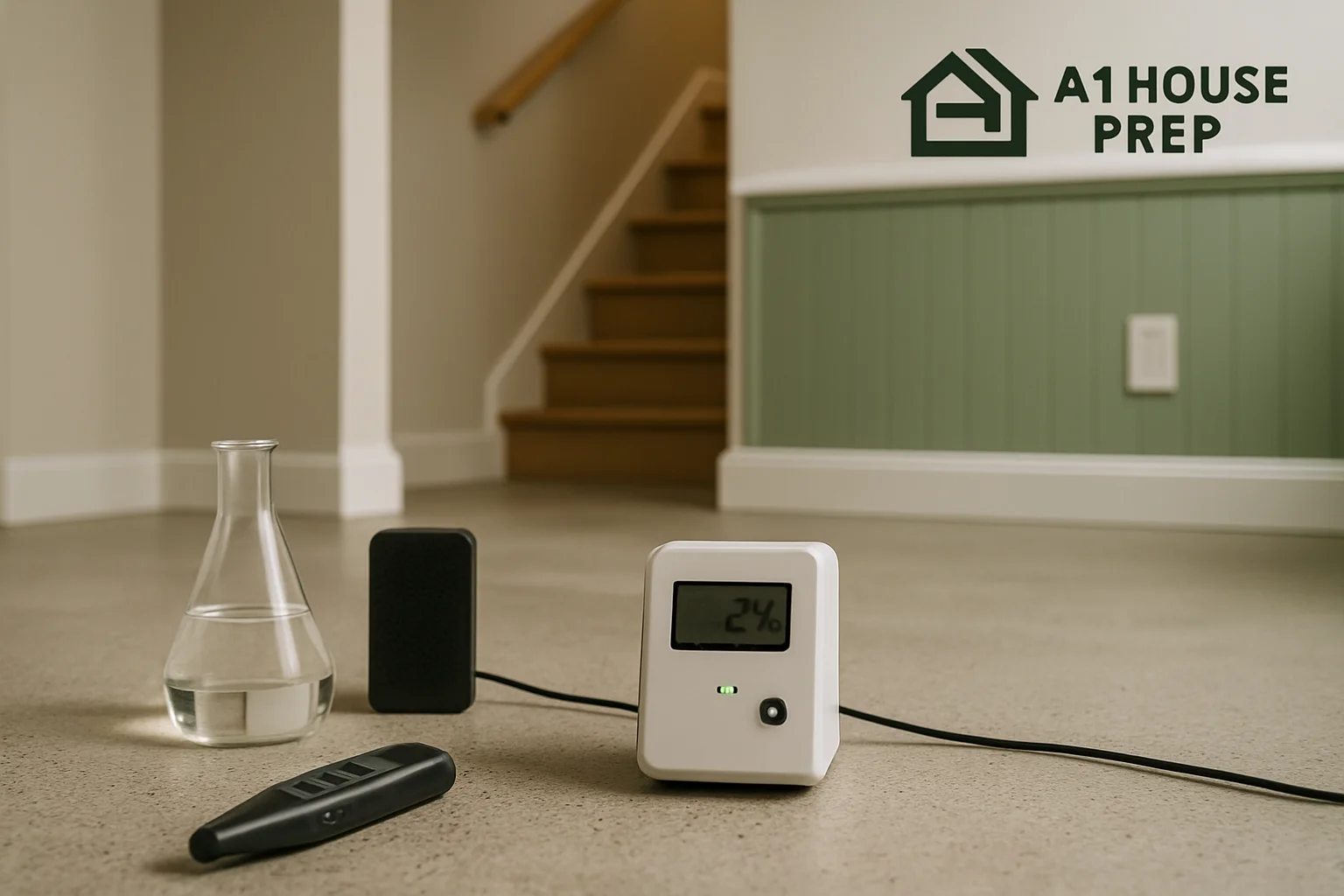
For homeowners planning to stay put, home radon monitoring or a long-term test can provide a more representative picture across changing seasons and living habits. This is especially helpful if:
- You spend significant time in the basement or lower level year-round.
- Your earlier result was “borderline” and you want more confidence.
- You want to observe patterns after a renovation or HVAC change.
If you’re unsure which approach fits your situation in Harleysville, Lansdale, Hatfield, Souderton, North Wales, Blue Bell, Ambler, or Collegeville, A1 House Prep can talk through options when you request service.
Retesting after a radon reduction system is installed
Some homes have radon reduction systems installed by specialized contractors. If your home has one (or you’re purchasing a home with one already in place), verification testing is a practical part of responsible ownership.
- After installation: Follow the installer’s guidance for timing, then confirm performance with a post-install test.
- After fan replacement or system service: Retest to confirm the system is still performing as expected.
- If you notice changes: Louder fan noise, a disconnected pipe, or a warning indicator can be reason to retest.
A1 House Prep focuses on testing and property preparation support. If you’d like a professional verification test, our Radon Testing service is a straightforward way to document current levels.
Common “missed” reasons homeowners should repeat a radon test
Beyond renovations and real estate timelines, there are everyday scenarios that justify radon retesting—especially in older homes or properties with active basements.
- You started using a dehumidifier or changed basement moisture control: Moisture control is helpful, but it can coincide with changes in how basement air circulates.
- You added or regularly use a fireplace/wood stove: Combustion appliances can affect pressure dynamics and airflow patterns.
- You added a new bathroom exhaust, kitchen hood, or whole-house fan: Exhaust can increase negative pressure and draw soil gases inward.
- You closed off basement vents or changed door positions: Small lifestyle adjustments can create big airflow changes.
- Your last test was done by a previous owner: Their living patterns may not reflect yours—especially if you use the basement differently.
What to expect from professional radon testing (and how to prepare)
Professional radon testing is designed to be simple for homeowners while following best-practice placement and handling. While exact instructions depend on the test method, these general steps help you get meaningful results:
- Use the correct level: Typically the lowest level of the home that could be occupied (finished or unfinished, depending on use).
- Avoid drafts and unusual conditions: Keep the test away from windows, exterior doors, and direct airflow.
- Maintain consistent living conditions: Follow any closed-house recommendations provided for the test type and timeline.
- Document changes: If you ran a whole-house fan, hosted guests with frequent door opening, or had HVAC service during the test window, note it.
If you’re also reviewing overall indoor environment concerns, pairing radon testing with Air Quality Testing can be a practical way to gather more complete information about your home’s lower-level air and living spaces. For homes on private wells or with taste/odor concerns, Water Testing may also be a smart part of a full property check.
Schedule Radon Testing in Montgomery County
If you’re deciding when to retest for radon in Harleysville, Lansdale, Hatfield, Souderton, North Wales, Blue Bell, Ambler, or Collegeville, A1 House Prep can help you choose the right timing and provide professional testing with clear reporting.
- Explore Radon Testing
- Request Service Online
- Prefer to call? 215.853.8226
FAQs: Radon retesting and repeat testing
1) How often should I retest for radon?
A practical approach is to retest periodically and any time something changes that could affect airflow or foundation conditions—like finishing a basement, updating HVAC, or doing major sealing/insulation. If it’s been several years since your last test, a repeat test can confirm today’s conditions.
2) Should I retest if my last radon test was low?
Yes, especially if the test was many years ago or you’ve made changes to the home. A low historical result is encouraging, but it doesn’t guarantee levels will remain the same indefinitely. Retesting is the way to verify current conditions.
3) Is radon higher in winter in Pennsylvania?
It can be. Colder months often involve more closed-house conditions, which can influence indoor radon levels. That said, the best time to test is when you can follow the test guidelines and get a usable result for your decision—especially during real estate timelines.
4) I’m buying a home in Lansdale (or nearby). Should I trust the seller’s old report?
Prior reports can be helpful background, but buyers typically run their own test during the inspection period. The home’s use, ventilation habits, and even small improvements may have changed since the earlier test.
5) Should I use a continuous monitor for home radon monitoring?
Home radon monitoring can be a good option for homeowners who want visibility into trends over time, especially if they spend a lot of time on the lower level. It’s not always necessary for every situation, but it can add confidence when results are variable or when you’re tracking changes after renovations.
6) What if my basement is unfinished—do I still need to retest?
If the basement is the lowest level and could be entered or used (storage, laundry, workshop), it’s still relevant. And if you plan to finish it later, testing now establishes a baseline and retesting after finishing confirms the new conditions.
Local, practical next steps
Retesting doesn’t need to be complicated. If you’re wondering when to retest for radon, start with two questions: (1) Has anything changed in the home or how you use it? and (2) How long has it been since the last reliable test? If either answer points to “yes” or “a while,” a repeat test is a smart, low-disruption next step.
A1 House Prep provides professional radon testing for homeowners and real estate transactions across Harleysville, Lansdale, Hatfield, Souderton, North Wales, Blue Bell, Ambler, and Collegeville. To schedule, visit /services/radon-testing/, request service, or call 215.853.8226.