When Is Odor Treatment Helpful and When Is It the Wrong Tool?
If you’ve ever walked into a home in Harleysville, Lansdale, Hatfield, Souderton, North Wales, or Blue Bell and noticed a smell that “shouldn’t be there,” you’re not alone. Odors are one of the most common reasons Pennsylvania homeowners call us—especially in Montgomery County and Bucks County where seasonal humidity, older housing stock, basements, and well‑used HVAC systems can create a perfect environment for mystery smells.
Here’s the frustrating part: odors are sensory, but their causes are often invisible. That’s why the question when is odor treatment helpful matters. Sometimes an odor treatment is a smart, practical step. Other times it’s the wrong tool—because it can temporarily reduce the symptom while the underlying source continues.
This article is designed for homeowners, home buyers, sellers, and real estate professionals who want a calm, clear way to decide what to do next. We’ll break down when odor treatment makes sense, when it doesn’t, what “testing replaces guessing” looks like, and how to use ozone safely in unoccupied spaces only.
Local note: In our Pennsylvania service area, we often see odor concerns connected to moisture patterns, basement air movement, and everyday home activities. The goal isn’t to alarm you—it’s to help you get confidently curious about your home’s “invisible facts,” then choose the right next step.
A1 House Prep approach: Odors can be real, but they’re not always a reliable diagnosis. Before you invest time and money in treatments, consider whether your situation calls for verification (testing) or remediation of a known source (cleanup, repairs, ventilation changes). If you’re not sure, start with information—because information is what turns a mystery into a plan.
Odor vs. source: why “smells” can be misleading
A smell is a signal, not a root-cause label. Two homes can have the same “musty” odor for completely different reasons. One might have elevated indoor humidity. Another might have an old carpet pad that absorbed moisture years ago. A third might have an under-ventilated crawlspace or a basement that’s pulling air from a damp corner. Odor treatment can change how the air smells, but it doesn’t automatically change the conditions that created it.
That’s why we recommend separating the problem into two questions:
- What is the likely source category? (moisture, organic residue, smoke, pets, cooking, plumbing, HVAC, stored materials, etc.)
- What is the best next step? (clean, repair, ventilate, remove materials, or test to confirm what’s happening)
If you’re deciding what to do before listing a home, moving in, or closing on a purchase, being methodical helps. Odor treatments can be part of that plan—but ideally after you’ve identified or ruled out common causes.
When is odor treatment helpful? (The “right tool” situations)
Odor treatment tends to be most useful when the odor is from a known event or a known material—and you’ve already addressed the physical source as much as reasonably possible. Think of odor treatment as a “finish step,” not a first step.
1) After source removal and deep cleaning
Odor treatment can be helpful when you’ve done the basics well:
- Removing trash, spoiled items, and affected porous materials (when appropriate)
- Cleaning hard surfaces and overlooked areas (baseboards, cabinets, behind appliances)
- Laundering washable fabrics and removing items that hold odor
- Replacing HVAC filters and cleaning return grilles
In these scenarios, odor treatment can help reduce lingering odor that remains in the air and on surfaces after the primary cleanup.
2) For “stale house” smell between occupants
Homes that have been closed up (especially vacant properties) can develop a stale odor. In parts of Pennsylvania, seasonal changes can make it worse—humid summers, damp basements, and closed windows during winter. After airing out, cleaning, and verifying there’s no active moisture issue, odor treatment may be a useful reset for the space.
3) For smoke or cooking odor residues (after cleaning)
Smoke and heavy cooking odors can cling to walls, ceilings, and soft materials. While no single tool is magic, odor treatments can be helpful after you’ve cleaned surfaces, washed or sealed where appropriate, and removed contaminated porous items. This is one area where a professional-grade approach can make a noticeable difference—provided you use the right equipment correctly and safely.
4) For pet odors when the underlying mess has been addressed
Pet odors can be stubborn because the source may be in padding, subfloor seams, or cracks where residue migrated. If you’ve already located the problem areas and cleaned (or removed) affected materials, odor treatment can help with the remaining smell. If you haven’t found the exact source, odor treatment may only provide temporary improvement.
5) As a finishing step for real estate presentation
Sellers and agents often aim for a neutral-smelling home. Odor treatment can be a practical, time-sensitive step when the home is otherwise in good condition and you’re trying to remove “background odors” before showings or photography. The key is to pair it with good housekeeping and ventilation—not use it to cover up an ongoing issue.
When odor treatment is the wrong tool (or the wrong first tool)
There are clear times when odor treatment is not your best next move. In these situations, it can delay the real solution and cost more in the long run.
1) When moisture is active or suspected
If the home has a musty smell that returns quickly, visible condensation, recurring basement dampness, or a history of water intrusion, start with the moisture pathway. Odor treatments do not stop humidity, leaks, or water vapor movement. A practical first step is identifying what’s driving the moisture cycle (grading, gutters, downspouts, foundation seepage, plumbing, ventilation).
If you want to replace “maybe” with “know,” consider indoor testing and measurements to better understand what’s in your air. A1 House Prep offers Air Quality Testing and can also help homeowners evaluate other invisible factors that may be connected to comfort and confidence.
2) When the odor suggests combustion or a mechanical issue
Certain smells should pause the conversation about odor treatment entirely—because the first step is inspection and correction, not treatment. For example, persistent burning smells, fuel-like odors, or strong chemical odors may be linked to appliances, electrical issues, or stored materials. An odor treatment is not a substitute for evaluating a suspected mechanical or safety-related concern.
3) When the problem is inside the HVAC system
If odors appear only when heat or AC runs, the HVAC system can be the distribution route. Ductwork, coils, condensate lines, and filters can contribute. Odor treatment might temporarily change the air smell, but if the system is reintroducing odors, you’ll keep chasing the problem. Start with HVAC maintenance and targeted cleaning.
4) When you’re trying to diagnose “what it is”
Odor treatment changes the air. That can make it harder to track the original source. If you’re still in detective mode—especially during a home purchase—consider keeping conditions stable and gathering information first. In many cases, the homeowner question isn’t “How do I make it smell better today?” but “What is this telling me about the house?”
That’s the heart of A1 curiosity marketing: the home has invisible facts, and your job is to learn them calmly. Sometimes that means testing rather than guessing. Depending on the concern, you may consider Water Testing (for water-related odors) or Air Quality Testing.
5) When people or pets can’t be out of the space
Some professional odor tools—especially ozone—are intended for unoccupied spaces only. If the home cannot be vacated during treatment, an ozone approach is typically not the right fit. Alternatives may include source removal, ventilation improvements, filtration, and cleaning strategies.
Ozone odor treatment: what it is (and what it isn’t)
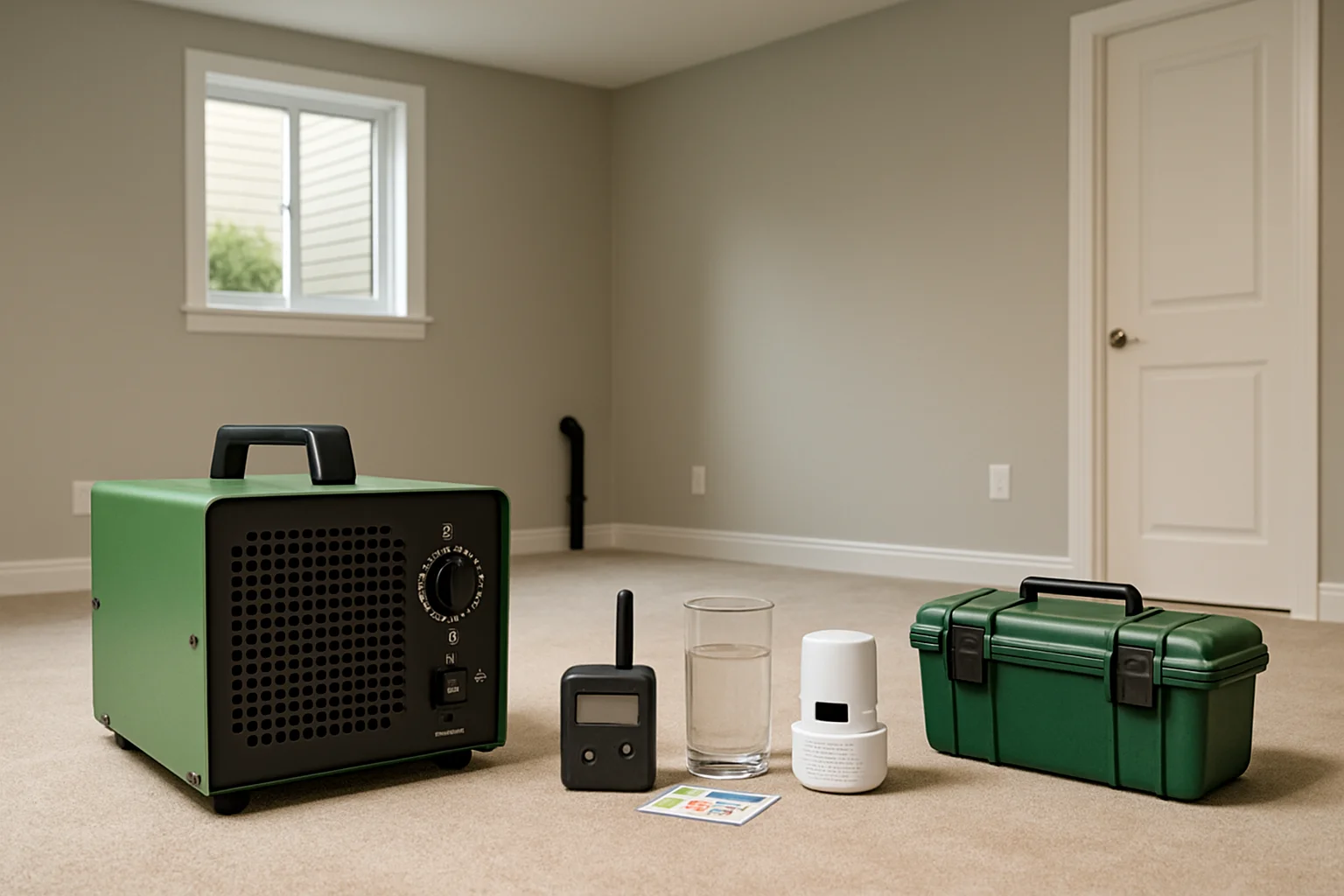
Ozone is a highly reactive form of oxygen that can interact with odor-causing compounds. In professional odor work, it’s sometimes used to address stubborn odors that persist after cleaning and source removal. It is not a “spray-and-pray” product, and it is not meant for occupied rooms.
For homeowners and real estate professionals considering professional equipment, A1 House Prep provides Professional Ozone Machine Rentals with practical guidance so you can use the right tool the right way.
Safe-use basics (unoccupied spaces only)
- Vacate the space: No people, pets, or plants in the treatment area during operation.
- Plan the zone: Close interior doors or isolate the area to limit ozone migration.
- Follow time limits: Use conservative run-times based on the space size and odor severity.
- Allow a full re-entry period: After the machine turns off, allow time for the space to return to normal and ventilate thoroughly with outdoor air before re-occupying.
- Protect sensitive items: Some materials can be affected by oxidation. When in doubt, remove valuables and delicate items.
Important: This article provides general education. Always follow the rental instructions and guidance provided with the equipment, and use caution with any professional-grade odor tool.
A practical decision guide: pick your next step
If you’re unsure whether odor treatment is the right move, use this quick decision guide. It’s designed to help you avoid over-treating and under-investigating.
Step 1: Identify the odor pattern
- Constant: Present all the time (often linked to materials, moisture, or HVAC distribution).
- Event-based: After cooking, rain, doing laundry, or running HVAC.
- Room-based: Confined to one area (bathroom, basement, a specific bedroom, near a drain).
- Seasonal: Worse in summer humidity or winter closed-window periods.
Step 2: Confirm you’ve handled the basics
- Remove obvious odor sources (trash, spoiled food, damp cardboard, old rugs)
- Clean surfaces and fabrics appropriately
- Replace HVAC filter(s)
- Check for simple plumbing issues (dry traps, slow drains)
Step 3: Decide whether you need treatment or information
- If the source is known and corrected: Odor treatment may be helpful as a finishing step.
- If the source is unknown or returns fast: Consider testing and inspection to reduce guessing.
In Pennsylvania homes, “invisible factors” can also influence confidence during a sale or purchase. If you’re gathering due diligence, A1 House Prep provides Radon Testing and Air Quality Testing—services that help you make decisions based on measurements, not assumptions.
Common odor scenarios in Montgomery & Bucks County (and what usually works)
Basement mustiness
- Often linked to: Humidity, stored materials, air movement from basement to living space, minor seepage patterns.
- Best first moves: Dehumidification strategy, airflow management, remove damp-stored items, address water entry points.
- When treatment helps: After moisture control and cleanup, for lingering smell during unoccupied periods.
Bathroom “sour” or drain odors
- Often linked to: Drain biofilm, dry trap, venting issues, intermittent plumbing use.
- Best first moves: Plumbing diagnosis/cleaning, ensure traps are wet, ventilation check.
- When treatment helps: Rarely as a first step; it’s usually a plumbing/ventilation fix.
“Old house” smell in closets or spare rooms
- Often linked to: Low airflow, stored textiles, mild humidity, older finishes.
- Best first moves: Remove/clean contents, improve airflow, confirm humidity range.
- When treatment helps: When the room is empty and you want a reset before reloading the closet.
Water-related odors
If an odor seems tied to your water (at a tap, after showering, or in a utility sink), odor treatment in the air won’t solve the cause. If you’re curious what’s going on, Water Testing can provide clarity—especially for buyers evaluating a property or homeowners noticing a change.
Utility room and water heater area odors
Sometimes the “odor” people notice near mechanicals is actually a mix of humidity, dust, and air stagnation. Keeping mechanical areas clean and maintaining equipment helps. If your system is due for service, a maintenance step like Water Heater Flushing can be part of a broader home prep plan, depending on the home’s needs and age.
Want the right tool for the job—without the guesswork?
If you’re dealing with stubborn odors in a Pennsylvania property and you’re wondering whether ozone is appropriate, A1 House Prep can help you make a practical, homeowner-friendly plan. We serve Montgomery County and Bucks County, including Harleysville, Lansdale, Hatfield, Souderton, North Wales, and Blue Bell.
Explore: Professional Ozone Machine Rentals
Request service: Request Service
Call: 215.853.8226
FAQ: Odor treatment, ozone, and “what to do next”
1) When is odor treatment helpful if I’m selling my home?
Odor treatment is most helpful when the home is clean, the source issue is addressed, and you’re aiming to remove lingering “background” smells before photos or showings. It’s best used as a finishing step—not to cover an ongoing moisture problem or an unresolved pet issue.
2) Will odor treatment fix a musty basement smell permanently?
It can reduce odor temporarily, but if moisture conditions remain, the smell often returns. For musty basements, lasting improvement usually comes from managing humidity, airflow, and any water entry patterns first. Treatment can be useful after those steps are in place.
3) Is ozone safe to use in my home?
Professional ozone equipment is intended for unoccupied spaces only and should be used strictly according to instructions. People, pets, and plants should not be present during treatment, and the space should be ventilated before re-entry. If you can’t fully vacate the area, ozone is typically not the right tool.
4) How do I know if I should test instead of treating?
If you don’t know what’s causing the odor, if it returns quickly, or if you’re in a due-diligence moment (buying/selling), testing can turn a vague concern into measurable information. Depending on the situation, Air Quality Testing or Water Testing may be a more practical next step than treatment.
5) Can ozone remove smoke or cooking odors?
It may help reduce lingering odors after thorough cleaning and source removal. Smoke and cooking residues often cling to surfaces and soft materials, so results depend on how completely those residues are cleaned or removed first, and whether the treatment is sized and timed appropriately for the space.
6) How should I prepare a room before an ozone odor treatment?
Preparation typically includes removing people/pets/plants, securing valuables or sensitive items, closing off the treatment area, and ensuring you have a ventilation plan for afterward. If you’re renting equipment, follow the specific instructions provided with your ozone machine rental.
Bring curiosity—not panic—to odor problems
Odors can feel personal and urgent, especially when you’re hosting, listing, moving in, or trying to make a smart purchase. The premium approach is calm: identify patterns, address obvious sources, and decide whether you need a finishing treatment or better information.
If you’re in Montgomery County or Bucks County and you’d like guidance on whether an ozone treatment approach fits your situation, reach A1 House Prep at 215.853.8226 or use our Request Service form. When you replace guessing with a plan, your home feels simpler—and a lot more livable.