What Is Your Home’s Radon Number?
Most homeowners know their street number, their mortgage rate, and roughly what their monthly utilities run. But there’s another number tied to your house that many people have never seen—because you can’t see, smell, or taste what it measures.
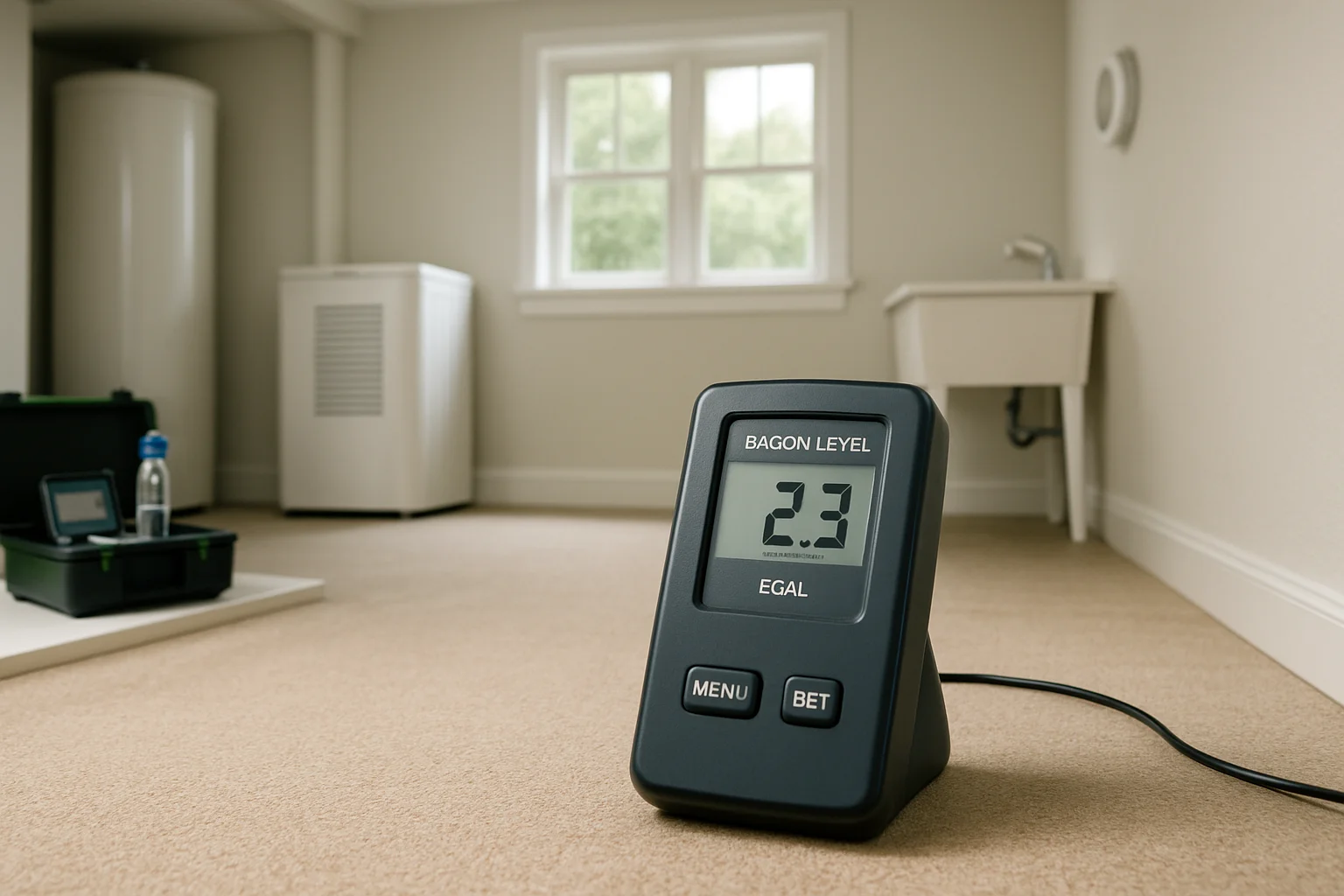
Your home radon number is the result of a radon test taken inside your home. It’s a simple measurement, but it answers a surprisingly important question: What is my home like when no one is watching? Not in a spooky way—more in the practical, homeowner-curiosity sense. It’s part of the “invisible facts” category that includes indoor air quality, water quality, and other behind-the-scenes details that affect comfort and peace of mind.
At A1 House Prep, we help homeowners, buyers, sellers, and real estate professionals across Pennsylvania—especially Montgomery County and Bucks County—replace guessing with testing. If you’re in Harleysville, Lansdale, Hatfield, Souderton, North Wales, Blue Bell, or nearby, learning your home radon number is one of the most straightforward ways to better understand your property.
A1 Curiosity Check: If you’ve ever wondered, “How is my home doing when I’m not thinking about it?”—your radon number is a clear, objective data point. It doesn’t require assumptions, opinions, or a “wait and see” approach. It’s simply measured.
What does “home radon number” mean?
Your home radon number is the measured radon concentration inside the home during a test period. Radon is a naturally occurring gas that can enter through openings in the foundation, sump pits, crawlspaces, and other pathways where the home meets the soil.
Because radon is invisible and odorless, the only reliable way to know your home’s radon number is to test. Two neighboring homes can have very different results—even in the same town—because radon behavior depends on several interacting factors:
- Soil composition and underground pathways near the home
- Foundation type (basement, slab-on-grade, crawlspace, mixed)
- Air pressure differences between the home and the soil
- Weather patterns and seasonal changes
- HVAC operation and ventilation habits
- How the home is used (doors/windows open vs. closed, basement occupancy, etc.)
Think of the home radon number like a snapshot of conditions inside your home during the test window. It’s not a “label” for the entire neighborhood, and it’s not something you can accurately infer from a friend’s test down the street. Testing replaces guessing.
Why Pennsylvania homeowners often want a radon number
Pennsylvania is a radon-aware state for a reason. Many areas throughout Montgomery County and Bucks County see regular testing during home sales, and homeowners often retest as they plan renovations, finish basements, or simply want updated information.
Common reasons people contact A1 House Prep for radon testing include:
- Buying a home: You want objective info before finalizing decisions.
- Selling a home: You want to reduce uncertainty during negotiations.
- Finishing or re-finishing a basement: You’re planning to use lower-level space more often.
- After foundation or HVAC changes: Changes can affect airflow and pressure.
- Routine homeowner curiosity: You’d rather know than wonder.
In communities like Blue Bell and North Wales, where homes range from older construction to newer builds, radon testing is a practical part of understanding your home’s below-grade environment—without turning it into a drama.
How radon testing works (and why the number is trustworthy)
Because radon is not detectable by human senses, quality testing is about consistent placement, controlled conditions, and accurate measurement. The goal is a reliable home radon number that reflects real indoor conditions during the test.
Short-term vs. long-term testing
- Short-term tests provide results over a shorter window and are commonly used during real estate timelines.
- Long-term tests can capture broader trends and are often used by homeowners who want a longer view.
Which option is best depends on your goals (a home purchase deadline vs. a deeper baseline). A1 House Prep can help you choose a testing approach that makes sense for your situation and property type.
Where the test goes matters
Radon tests are typically placed in the lowest livable level of the home—often a basement if it’s used or could reasonably be used as living space. Placement avoids high humidity areas, drafts, exterior doors/windows, and direct airflow from vents. This helps ensure the home radon number represents the home environment, not a quirky corner of it.
Closed-house conditions (when applicable)
Many short-term protocols involve keeping windows closed and limiting door openings prior to and during the test window. This isn’t meant to “game” the result; it’s meant to make the test consistent and comparable, reflecting typical indoor pressure patterns.
Interpreting your home radon number: what it tells you (and what it doesn’t)
Your home radon number is a measurement. It’s useful precisely because it’s not a hunch. But it’s important to interpret it as what it is: data from a specific home, in a specific space, over a specific time.
Here’s what your home radon number can help you do:
- Make informed home decisions during buying, selling, or renovating
- Reduce uncertainty (“Is this something I should address?” becomes “Here’s what the test shows.”)
- Establish a baseline for future comparisons, especially after home changes
- Communicate clearly with real estate professionals using objective information
And here’s what it doesn’t do:
- It doesn’t predict the future with certainty (radon can vary with season and conditions)
- It doesn’t describe the whole neighborhood (two close homes can differ)
- It doesn’t automatically mean your home has a “problem”— it means you have a measurement you can respond to appropriately
When you work with A1 House Prep, you get a practical, homeowner-focused explanation of what the result means in context—without scare tactics and without vague reassurance.
Who should know the home radon number: owners, buyers, sellers, and agents
Homeowners
Even if you’re not moving, knowing your home radon number can be part of routine property care—similar to servicing HVAC equipment or testing water quality. It’s especially helpful if you’ve never tested, or if it’s been years since your last test.
Homebuyers
Radon is one of those “invisible facts” that can influence how you feel about a home after you move in. Testing during the inspection period gives you clarity when it matters most.
Home sellers
A pre-listing radon test can reduce surprises. It also helps you approach buyer questions with calm, documented information rather than last-minute scrambling.
Real estate professionals
Agents appreciate clean timelines, clear documentation, and a process that’s easy for clients. A straightforward radon testing plan keeps the transaction focused on facts, not worry.
Radon is one “invisible fact.” Here are a few more worth testing.
If you’re the kind of homeowner who finds peace of mind in knowing, radon testing often leads to a broader “home baseline” mindset. Consider pairing your curiosity with other practical tests and services:
- Air Quality Testing for a clearer picture of indoor air conditions
- Water Testing for homes on well water or for anyone wanting reassurance about what’s coming out of the tap
- Professional Ozone Machine Rentals for odor treatment in unoccupied spaces only, following safe-use instructions
A note on ozone rentals (for odor treatment only, used safely)
Ozone is sometimes used for stubborn odor situations (smoke, musty odors, certain organic smells) only when the space is unoccupied. If you’re considering an ozone machine rental, plan to:
- Run it only in an empty space (no people, pets, or plants)
- Follow all provided instructions and time guidelines
- Allow for appropriate ventilation/air-out time before re-entry
- Use it as an odor-treatment tool—not a substitute for identifying moisture issues or other root causes
If you’re unsure whether ozone is appropriate for your situation, A1 House Prep can help you think it through based on the space, the odor type, and practical next steps.
What to expect when you schedule radon testing with A1 House Prep
Home testing should feel straightforward. When you schedule Radon Testing with A1 House Prep, our goal is to keep the process clear, calm, and efficient—especially for busy households and real estate timelines in Montgomery County and Bucks County.
While each property is different, most clients can expect:
- Simple scheduling and clear communication
- Guidance on test placement and any occupancy/ventilation considerations
- Respect for the home (clean work, careful setup, minimal disruption)
- Results you can use for planning, negotiating, or updating your home records
If you’re located in Harleysville, Lansdale, Hatfield, Souderton, North Wales, Blue Bell, or surrounding areas, A1 House Prep is local and ready to support you with testing that fits your needs.
Ready to learn your home radon number?
Stop guessing and get a clear, objective measurement. A1 House Prep provides professional radon testing for homeowners, buyers, sellers, and real estate professionals across Montgomery County and Bucks County.
Call: 215.853.8226
Request service online: /request-service/
Radon Testing service page: /services/radon-testing/
FAQ: Home radon numbers in Pennsylvania
1) What is a “home radon number” in plain language?
It’s the result of a radon test inside your home—an objective measurement of radon concentration during the test period. Because radon is invisible and odorless, testing is the way to replace uncertainty with data.
2) If my neighbor’s radon number is low, does that mean mine will be low too?
Not necessarily. Homes close to each other can test differently due to soil pathways, foundation details, airflow, and how each home is operated. That’s why radon is best handled as a home-by-home measurement.
3) When should I test for radon—during a home purchase, or anytime?
Both. Many people test during a purchase or sale because timelines demand clarity. Homeowners also test anytime they want a baseline, when they finish a basement, or after changes that may affect airflow (HVAC updates, new windows, foundation work).
4) Does opening windows change the home radon number?
It can influence test conditions, which is why some tests use closed-house guidelines for consistency. The goal is to get a representative result for typical living patterns during the test window, using a consistent approach.
5) Is a radon test only important if I use my basement every day?
Basements and lower levels are common testing locations because radon often enters from the soil below the home. Even if you don’t spend a lot of time downstairs, many homeowners still want to know the radon number—especially if the space may be used more in the future.
6) How often should I retest to update my home radon number?
There’s no single schedule that fits every home. A practical approach is to retest if it’s been several years, if you’ve made structural or HVAC changes, or if you’re entering a real estate transaction and want current documentation.
7) Can A1 House Prep help with other “invisible facts” besides radon?
Yes. If you’re building a more complete understanding of your home, A1 House Prep also offers Air Quality Testing and Water Testing, along with Professional Ozone Machine Rentals for odor treatment in unoccupied spaces with safe-use guidance.
Bring curiosity home—then back it up with testing
A premium home isn’t just about finishes and curb appeal. It’s also about understanding what’s happening behind the scenes—quietly, consistently, and sometimes invisibly. Knowing your home radon number is a simple step that turns uncertainty into clarity.
If you’re ready to test in Pennsylvania—especially in Montgomery County or Bucks County—A1 House Prep is here with practical guidance and professional support. Call 215.853.8226 or request service online to get started.