What Homeowners Should Know Before Scheduling Radon Testing
Radon is one of those home concerns that doesn’t announce itself. You can’t see it, smell it, or taste it—yet it can be present in any home, from a centuries-old stone farmhouse to a newer build. If you’re considering radon testing Montgomery County PA, the good news is that getting clear, practical answers is straightforward when you know what to expect.
This guide is designed for homeowners, homebuyers, sellers, and real estate professionals in and around Harleysville, Lansdale, Hatfield, Souderton, North Wales, Blue Bell, Ambler, and Collegeville. We’ll walk through what a home radon test actually measures, what affects indoor radon levels, how to prepare for a test, and how to interpret results without guesswork. When you’re ready, A1 House Prep can help you schedule professional Radon Testing with a local, homeowner-focused process.
Why radon testing matters in Montgomery County homes
Radon is a naturally occurring gas that comes from the breakdown of uranium in soil and rock. It can move through the ground and enter a home through small openings in the foundation and lower-level walls. Because the mix of soil composition, building design, and ventilation varies house to house, two neighboring homes can have very different readings.
In Montgomery County, many homes have basements, partial basements, finished lower levels, crawlspaces, or slab-on-grade additions—all of which influence how air moves through the structure. That’s why a professional radon inspection (or a professionally conducted radon test) is a practical step when:
- Buying or selling a home (often tied to contract timelines)
- Finishing a basement or converting lower-level space to living space
- Noticing changes in ventilation after upgrades (new windows, weatherization, HVAC changes)
- You’ve never tested, or it’s been years since the last test
- You want baseline information for ongoing home maintenance
A1 House Prep focuses on testing and clear reporting so you can make informed decisions. If you’re also addressing other environmental or home-comfort questions, we can coordinate complementary services like Air Quality Testing and Water Testing.
What a home radon test measures (and what it doesn’t)
A radon test measures the concentration of radon gas in indoor air. Results are typically reported as a number representing radon concentration over the test period.
It’s helpful to understand what testing can and can’t do:
- It can provide a snapshot (short-term) or a longer-view average (long-term) of indoor radon conditions.
- It can help compare current readings to commonly used action thresholds and guide next steps.
- It can’t predict future readings with certainty, because conditions like weather and ventilation change.
- It can’t be reliably estimated from neighbors’ results—your home’s structure and airflow are unique.
If you’re working with a real estate transaction, timing and proper setup are especially important. A professional radon inspection approach helps ensure the test is positioned correctly and conducted under the right conditions for a reliable result.
Short-term vs. long-term radon testing: which should you choose?
Most real estate and “get an answer quickly” situations rely on short-term testing. This is often the most practical option when you have a contract deadline or you need fast clarity.
Long-term testing is designed to capture radon conditions over a longer period, which can help average out day-to-day and weather-related swings. It may be a smart option if:
- You want a more representative baseline over time
- You’re not under a sale deadline
- You’re tracking indoor environmental conditions as part of ongoing home planning
If you’re unsure which approach fits your situation in Harleysville, Lansdale, Hatfield, Souderton, North Wales, Blue Bell, Ambler, or Collegeville, A1 House Prep can help you choose a testing plan that matches your timeline and the layout of your home. Start with our Radon Testing service page for details.
Premium Tip for Homebuyers & Sellers
If you’re scheduling radon testing Montgomery County PA as part of a real estate transaction, don’t wait until the last week of the contingency period. Leaving time for scheduling, closed-house conditions, and follow-up decisions helps keep negotiations calm and timelines intact.
What can affect indoor radon levels in your home?
Radon readings can vary from one day to the next. That doesn’t mean testing is unreliable—it means radon is influenced by how your home and the environment interact. Common factors include:
- Weather and pressure changes: Rain, wind, and shifting barometric pressure can change how soil gas moves.
- Home ventilation: Exhaust fans, fireplaces, attic fans, and HVAC systems influence air pressure and airflow.
- Foundation type: Basements, crawlspaces, and slab foundations each create different entry pathways.
- Openings and penetrations: Sump pits, utility penetrations, floor drains, and small cracks can provide entry points.
- Season: Many homes experience different patterns across heating and cooling seasons.
This is one reason “quick DIY impressions” can be misleading. A properly executed test—placed in the right location, for the right duration, under appropriate conditions—gives you the clearest data to work from.
How to prepare for a radon inspection or professional test
Before your appointment, a few simple steps help protect the integrity of the reading. A1 House Prep will confirm the specific preparation details when you schedule, but homeowners commonly do the following:
- Choose the right test area: Testing is generally done in the lowest level of the home that is suitable for occupancy (not a cramped crawlspace unless it’s used like living space).
- Follow “closed-house” guidance: For certain test types and timeframes, keeping windows closed and limiting unnecessary exterior door openings improves consistency.
- Don’t disturb the device: Avoid moving or covering test equipment during the test period.
- Plan around home projects: Postpone activities that drastically change airflow (major painting/finishing work, new ventilation changes, significant HVAC modifications) when possible.
- Make the space accessible: Clear a small area so the device can be placed properly—away from drafts, high heat, or direct sunlight.
If you’re a seller, it’s also helpful to let everyone who has access to the home (agents, showings, cleaning services) know that a radon test is in progress and should not be touched.
Where the test device should be placed (and where it shouldn’t)
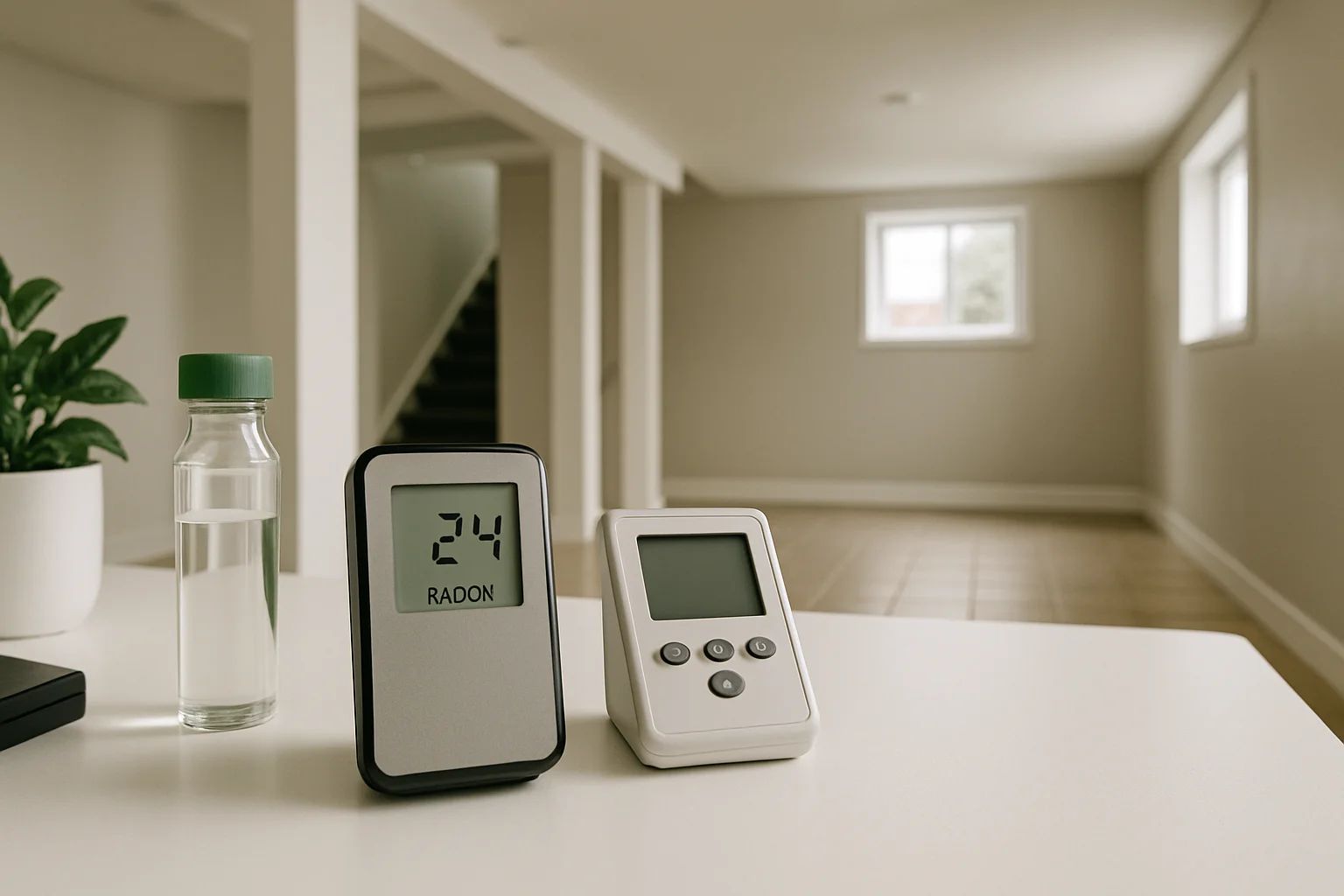
Placement matters. A test placed too close to a draft, a vent, a sump pit fan, or a frequently used door may not reflect typical conditions. Generally, a professional places the device:
- In the lowest suitable level of the home
- In a regularly used area (if applicable), not a rarely entered utility corner
- Away from exterior walls, windows, and direct airflow sources
- At an appropriate height off the floor
Equally important: avoid placing a device in kitchens, bathrooms, laundry rooms, or other areas where humidity and ventilation fluctuate heavily—unless the home layout leaves no better option and the placement can still meet testing best practices.
Understanding radon test results without overreacting
Once your test is complete, you’ll receive a result that indicates the measured radon concentration over the testing period. The most important next step is to interpret that number in context:
- Consider the timeframe: Short-term tests can be influenced by short-lived conditions. Long-term tests better reflect an average.
- Consider the location: Readings are most relevant to the level tested and how you use the space.
- Consider next steps calmly: If a result is elevated, homeowners typically explore follow-up testing and/or mitigation options through qualified providers.
A1 House Prep’s role is to provide reliable testing and practical guidance on what the results mean and what common next steps are—without pressure and without alarmism. If you’re also evaluating overall indoor conditions (odors, humidity concerns, renovation planning), pairing radon testing with Air Quality Testing can be a smart way to build a more complete picture.
Real estate timing: how to keep your transaction moving
For buyers and sellers across Montgomery County, radon is often part of the inspection period. To avoid last-minute issues, consider these best practices:
- Schedule early: Aim to schedule the test as soon as inspections begin.
- Confirm access: Ensure lockbox/entry details are set so placement and retrieval stay on time.
- Minimize disruptions: Limit showings and service visits that might interfere with closed-house conditions.
- Set expectations: Agents and homeowners should know who will receive results and when.
If you’re a real estate professional coordinating multiple services, A1 House Prep can also help streamline property prep items that often come up during transactions, such as Water Heater Flushing or targeted indoor odor support via Professional Ozone Machine Rentals (when appropriate for the situation and used according to guidance).
Choosing a radon testing provider in Montgomery County
When selecting a provider for radon testing Montgomery County PA, look for a process that prioritizes accurate placement, clear communication, and dependable reporting. A premium testing experience should include:
- Clear scheduling and pre-test instructions
- Professional device placement and retrieval
- Straightforward reporting (no confusing jargon)
- Support in understanding results and practical next steps
- Local familiarity with housing styles common in communities like Lansdale, Hatfield, and Blue Bell
A1 House Prep serves homeowners throughout the area with a practical, respectful approach—focused on giving you the information you need to make confident home decisions.
Schedule Radon Testing with A1 House Prep
If you’re ready to schedule a home radon test or need a dependable radon inspection process for a real estate timeline, A1 House Prep is here to help across Harleysville, Lansdale, Hatfield, Souderton, North Wales, Blue Bell, Ambler, and Collegeville.
Call: 215.853.8226
Request service online: /request-service/
Learn more: /services/radon-testing/
FAQs: Radon testing in Montgomery County, PA
1) How long does a typical radon test take?
Timing depends on the test type and the reason for testing. Many real estate transactions use short-term testing to gather results within a practical window, while homeowners seeking a broader baseline may choose longer-term testing for a more averaged view of indoor radon levels.
2) Can I open windows during the test?
Depending on the test protocol, you may be asked to keep windows closed and limit exterior door openings for a set period to maintain consistent conditions. When you schedule with A1 House Prep, we’ll provide clear instructions so your test conditions support reliable results.
3) Where in the house is radon usually tested?
Radon is typically tested on the lowest level of the home that could be used as living space. In many Montgomery County homes, that’s the basement (finished or unfinished). Correct placement helps ensure the reading reflects typical air conditions in that level.
4) If my neighbor’s home tested low, does that mean mine will too?
Not necessarily. Even homes on the same street can have different results due to foundation design, soil pathways, ventilation, and how air pressure behaves in each structure. A professional home radon test is the only reliable way to understand your home’s reading.
5) Should sellers test before listing?
Pre-listing radon testing can help reduce surprises during buyer inspections and keep timelines smoother. If you’re in a market where quick closings are common, planning ahead can be a practical move—especially in areas like Ambler, Collegeville, and North Wales where inspection timelines can be tight.
6) Do finished basements change radon concerns?
A finished basement often becomes regularly occupied space, which makes understanding radon levels in that area more relevant for homeowners. Testing helps you establish a baseline and decide whether any follow-up steps are appropriate.
7) Can I bundle radon testing with other home testing services?
Yes. Many homeowners and buyers choose to coordinate services to reduce scheduling hassle and build a clearer overall picture of the property. Depending on your needs, you can pair Radon Testing with Air Quality Testing and/or Water Testing.
For help scheduling radon testing Montgomery County PA, contact A1 House Prep at 215.853.8226 or submit a request through our Request Service page.