What Does Your Home’s Water Know That You Don’t?
You turn on the tap, fill a glass, and move on with your day. Water is one of the most familiar parts of home life—so familiar that most homeowners never pause to wonder what their water “knows” about the house it travels through. Yet your plumbing, well or municipal supply, fixtures, water heater, and even seasonal changes can leave subtle clues in your water that you can’t see, smell, or taste.
If you’ve ever searched home water testing what is in water, you’re not alone. In Pennsylvania—especially across Montgomery County and Bucks County—many homeowners, buyers, sellers, and real estate professionals want a clear, practical answer: What is actually in this water, and what does it mean for my home?
This article is designed to satisfy curiosity without turning it into anxiety. The goal isn’t to assume something is wrong—it’s to replace guessing with information. With the right water testing, you can make confident, measured decisions about your home and the people who live there.
A1 House Prep perspective: The most valuable home tests often confirm that things are fine. Testing is about clarity—especially when changes are invisible. If you live in Harleysville, Lansdale, Hatfield, Souderton, North Wales, Blue Bell, or anywhere across Montgomery and Bucks County, a baseline water test can be a smart “get-to-know-your-house” step.
Why water is the ultimate “invisible” home system
Your home’s water is a moving snapshot of multiple systems working together:
- Your source: public water supply or a private well
- Your plumbing: pipes, fittings, valves, and fixtures
- Your appliances: water heater, refrigerator dispenser, humidifiers, dishwashers
- Your environment: weather patterns, groundwater conditions, nearby construction, seasonal demand
Because water flows through so many touchpoints, it can quietly reveal things a walkthrough won’t: changes in corrosion, sediment, minerals, disinfection byproducts, or other indicators that merit attention. And in real estate situations, it can help reduce uncertainty when timelines are tight.
Common Pennsylvania water questions (and what testing can clarify)
Homeowners in southeastern Pennsylvania often ask similar questions, whether they’re on well water, public water, or a hybrid of older municipal infrastructure and private plumbing:
- “Why does my water smell different sometimes?” Odors can be intermittent, seasonal, or related to plumbing and drains—not just the source.
- “Why do I see spots on glassware or scale on fixtures?” Minerals and hardness can affect appearance, appliance performance, and cleaning effort.
- “Why is my water cloudy or discolored after not using it?” This can be related to aeration, sediment, or plumbing conditions.
- “Do I need to test if I’m on public water?” Many homeowners choose to test for peace of mind and to understand what’s happening inside their home’s plumbing, especially in older houses.
- “We’re buying/selling—what should we test?” The answer depends on the water source and what a home inspection reveals, but a targeted approach is often more helpful than guessing.
Water testing is essentially a translation tool. It converts an invisible situation into understandable results so you can choose next steps—if any—based on evidence.
What “home water testing” can look for (without getting alarmist)
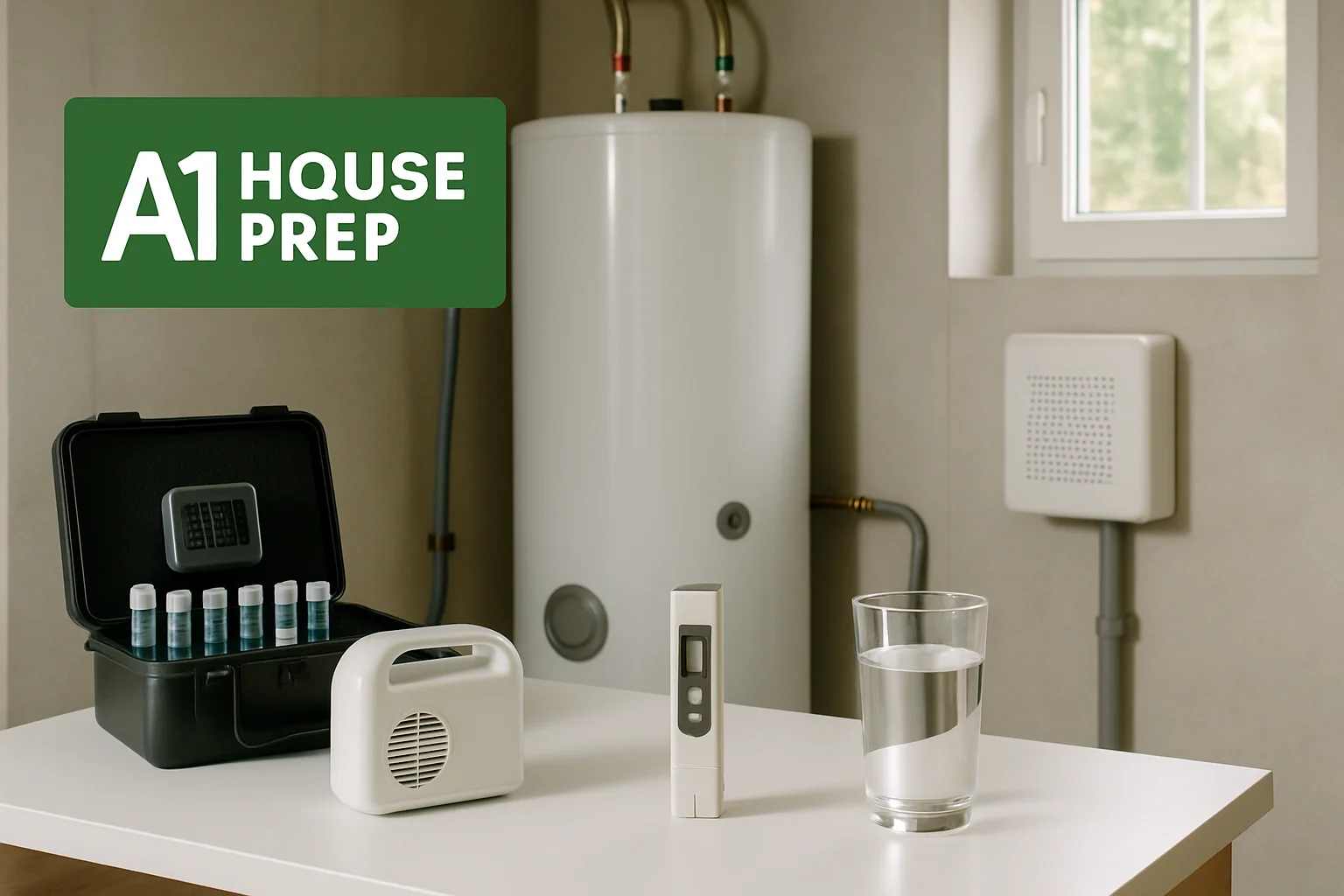
Different homes call for different test panels. A smart water testing plan matches the property type, water source, and homeowner concerns. While the exact options vary, here are examples of categories that water testing may evaluate:
1) Minerals & general chemistry
These indicators can affect taste, scaling, and appliance efficiency. Testing may include measurements related to hardness, pH, and other general water characteristics. Results can help you decide whether a water softener, filtration, or simple maintenance is worth considering.
2) Metals and corrosion indicators
Older homes in communities like Lansdale, Hatfield, Souderton, and North Wales may have legacy plumbing materials or conditions that influence metals in water. Testing can help clarify whether the water is interacting with the plumbing in a way that warrants action.
3) Microbiological indicators (often well-related)
For private wells—common in parts of Montgomery County and Bucks County—testing is often a routine part of responsible ownership. Results can guide practical steps such as maintenance, treatment, or follow-up testing if needed.
4) Nuisance issues (taste, odor, staining)
Some water concerns are less about “danger” and more about daily comfort and home upkeep. Testing can support decisions about filtration, fixture cleaning strategies, and other practical improvements.
Key point: The purpose of testing is not to jump to conclusions. It’s to identify what’s present (or confirm what isn’t), so you can decide whether to monitor, maintain, or make an upgrade.
Public water vs. well water in Pennsylvania: different questions, same value
If you’re on public water
Municipal water providers generally monitor water quality at the system level. But what comes out of your kitchen faucet is influenced by your home’s plumbing, fixtures, and water heater. Many homeowners test because:
- They live in an older home with unknown plumbing history
- They’ve noticed a change in taste, odor, or appearance
- They want a baseline for renovations (new kitchen, bath, or plumbing updates)
- They’re preparing to sell and want fewer surprises
If you’re on a private well
With a well, you’re effectively your own water utility—so routine testing can be part of normal homeownership. Homeowners often test:
- When buying or selling a home
- After heavy rain, flooding, or drought conditions
- If there’s new construction nearby or changes in land use
- If the water’s taste, odor, or color changes
- On a schedule as a common-sense baseline
In both cases, testing supports confidence. It’s about knowing the story your water is telling, rather than filling in the blanks with assumptions.
The “house clues” your water can reveal
Your water can be a quiet narrator of your home’s condition. Here are a few homeowner-focused examples of what it may hint at:
- Water heater clues: Sediment and mineral buildup can affect performance and hot-water clarity. Regular maintenance can help a system run more smoothly.
- Plumbing clues: Certain results can suggest that the water is interacting with pipes or fittings in a way worth discussing with a professional.
- Appliance clues: Hard water and scaling can shorten the effective life of some appliances and increase cleaning effort.
- Seasonal clues: Variation throughout the year can explain “it only happens sometimes” issues.
If your water heater hasn’t been maintained in a while, flushing is a practical step many homeowners consider as part of overall water quality and performance care. Learn more about water heater flushing and when it may make sense.
Curiosity-first testing: how to approach it without spiraling
The most reassuring water testing experiences are structured. Instead of testing everything at once and wondering what it means, consider a calm, staged approach:
- Start with your “why.” Are you curious, preparing for a sale, buying a home, or troubleshooting a taste/odor issue?
- Identify the water source. Public water and wells have different priorities.
- Pick a sensible baseline. A general panel can establish what “normal for this house” looks like.
- Add targeted tests if needed. If there’s a specific concern, a focused add-on can be more useful than guessing.
- Use results to choose next steps. Sometimes the right next step is simply documenting the baseline and moving on.
That’s the heart of curiosity marketing done right: the goal isn’t to frighten you—it’s to give you the satisfying feeling of knowing.
Real estate situations: buyers, sellers, and agents
Water questions often come up fast during a transaction. In Montgomery County and Bucks County markets, clarity can reduce friction and help keep timelines on track.
For buyers
- Testing can help you understand the home beyond the visual inspection.
- Results can inform your immediate maintenance checklist after closing.
- A baseline provides peace of mind—especially if you plan renovations.
For sellers
- Knowing your results in advance can prevent last-minute uncertainty.
- If you’ve made improvements, testing can support documentation.
- It helps you answer buyer questions with specifics rather than guesses.
For real estate professionals
- Clear testing supports smoother communication and fewer surprises.
- It helps clients make decisions based on evidence.
- It can be especially helpful for well properties or older homes with unknown histories.
If you’re coordinating multiple home health checks, A1 House Prep also provides air quality testing and radon testing for homeowners who want a more complete understanding of the indoor environment.
What about odors in the home? (Water isn’t always the source)
Sometimes a “water smell” is actually an indoor odor issue that becomes more noticeable near sinks, laundry areas, basements, or humid spaces. If you’re dealing with persistent odors after a known event (such as a vacancy period, musty buildup, or a contained odor problem), professional-grade ozone treatment can be used only with strict precautions and only in unoccupied spaces.
A1 House Prep offers professional ozone machine rentals for appropriate situations. Ozone is not a casual DIY tool. Safe-use guidelines typically include:
- No people, pets, or plants in the treated space during operation
- Follow time and placement instructions carefully based on the unit and room size
- Allow adequate airing-out time before re-entry
- Use only as directed and avoid running it while the home is occupied
If you’re unsure whether an odor is water-related, indoor-air-related, or drain/plumbing-related, starting with testing and a clear plan is often the most efficient path.
How A1 House Prep helps homeowners across Montgomery & Bucks County
A1 House Prep is a Pennsylvania home testing and property preparation company focused on clear information and practical next steps. If you’re in Harleysville, Lansdale, Hatfield, Souderton, North Wales, Blue Bell—or nearby communities—our approach is designed to feel straightforward and premium, not overwhelming.
When you schedule water testing, you’re not just buying a report. You’re investing in:
- Clarity about what’s in your home’s water right now
- Context for what results may mean for home maintenance and comfort
- Confidence as a homeowner, buyer, seller, or agent making time-sensitive decisions
Ready to replace guessing with answers?
If you’ve been wondering home water testing what is in water, A1 House Prep can help you get clear, homeowner-friendly results—without the drama.
Call: 215.853.8226
Request service: /request-service/
Explore Water Testing: /services/water-testing/
FAQ: Home water testing in Pennsylvania
1) Do I need home water testing if I’m on public water?
Many homeowners still choose testing because what reaches your faucet can be influenced by your home’s plumbing, fixtures, and water heater. A baseline test can be a simple way to understand your specific property, especially in older homes.
2) How often should a private well be tested?
Testing frequency depends on the well, property conditions, and any changes you notice. Many well owners choose routine baseline testing and additional testing after notable events (like flooding, major storms, or changes in water appearance or odor).
3) What should I do if my water test shows something unexpected?
Don’t jump straight to worst-case conclusions. Start by reviewing which parameters were tested, how the sample was collected, and whether a confirmatory test is appropriate. From there, you can decide on monitoring, maintenance, or a targeted treatment approach if needed.
4) Can water testing explain hard water and spotting on dishes?
Yes. Testing can identify mineral-related characteristics that often contribute to spotting, scale buildup, and increased cleaning effort. Results can help you decide whether changes like filtration, softening, or maintenance would be worthwhile.
5) Is “bad smell from the sink” always a water quality problem?
Not necessarily. Odors near sinks can come from drains, disposal units, plumbing traps, humidity, or other indoor factors. Testing can help rule in or rule out water-related causes, and separate water issues from indoor odor issues.
6) Is water heater flushing related to water quality?
It can be. Over time, sediment and mineral buildup may affect hot water clarity and appliance performance. Flushing is a maintenance step some homeowners use to help keep systems running smoothly. Learn more at /request-service/.
7) Can A1 House Prep help with other “invisible” home concerns?
Yes. In addition to water testing, A1 House Prep offers radon testing and air quality testing for homeowners and real estate transactions seeking a fuller picture of the indoor environment.
A calm next step: get a baseline, then decide
Your home’s water doesn’t need to be a mystery. Whether you’re a longtime homeowner in Blue Bell, preparing a property in Harleysville, buying in Hatfield, or selling in Lansdale, the simplest approach is often the most effective: test, understand, and choose next steps based on facts—not assumptions.
To schedule service, call 215.853.8226 or use the online form: Request Service.