
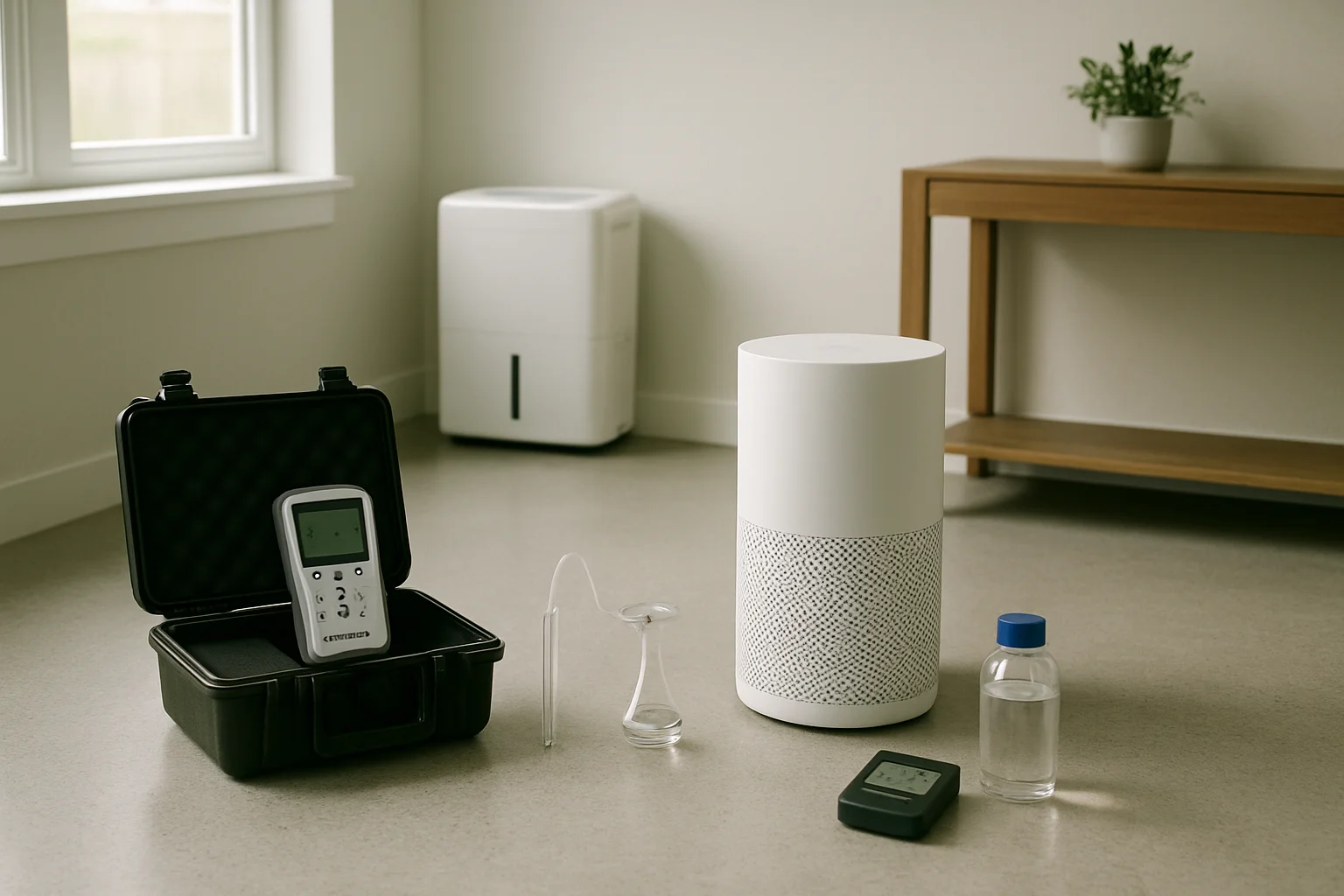
What Does Your Favorite Room Say About Your Home’s Air Quality?
Your favorite room is usually the one that “feels right.” Maybe it’s the family room where everyone gathers, the bedroom that finally lets you unwind, or the finished basement that becomes the default hangout spot. Comfort, light, and layout matter—but there’s another layer most homeowners rarely think about: the invisible air patterns that can make one room feel fresher (or heavier) than another.
In Pennsylvania homes—especially throughout Montgomery County and Bucks County—room-to-room differences can be surprisingly common. The reason is simple: each room is its own small environment shaped by airflow, humidity, temperature, building materials, and how you use the space. That’s why room air quality testing can be such a practical, curiosity-satisfying step. It replaces guessing with real information—without leaning on scare tactics.
At A1 House Prep, we help homeowners, buyers, sellers, and real estate professionals in Harleysville, Lansdale, Hatfield, Souderton, North Wales, Blue Bell, and surrounding Pennsylvania communities understand what’s happening in their indoor air—so decisions are based on facts, not assumptions. If you’re ready to learn what your home is really telling you, explore our Air Quality Testing service.
Why “Favorite Room” Clues Matter (Even When Nothing Seems Wrong)
Most air quality concerns aren’t dramatic. They’re subtle: a room that feels stuffy after a few hours, a space that tends to hold odors longer, a bedroom that’s hard to keep comfortable, or a basement that feels “heavy” in summer. These patterns are often tied to everyday home mechanics:
- Air exchange: How often fresh outdoor air replaces indoor air.
- Pressure and airflow: How your HVAC system, doors, and windows move air between rooms.
- Moisture levels: Humidity that can rise (or drop) depending on season, room use, and ventilation.
- Sources: Cooking, pets, cleaning products, stored materials, hobby supplies, or an attached garage.
- Location: Basements and lower levels behave differently than upper floors.
Because these variables change from room to room, your “favorite room” can actually be your most revealing room. Not because it’s unsafe—but because it’s the space you experience the most. If you spend the most time there, you’re more likely to notice patterns worth investigating.
A1 Curiosity Check: If Your Home Could Talk…
Ask yourself: Which room do I gravitate toward—and why? Comfort often points to stable temperature and airflow, while avoidance can hint at stagnant air, lingering odors, or higher humidity. Room air quality testing turns those everyday observations into measurable data you can use.
What Different Rooms Commonly “Say” About Air Quality
Every home is unique, but certain room types tend to share common air-quality patterns. Below are practical, homeowner-friendly interpretations—paired with what testing can help you confirm.
1) The Bedroom: “Quiet Air” and Overnight Build-Up
Bedrooms are often closed off for long periods—doors shut, windows closed, airflow reduced. Overnight, carbon dioxide levels can rise simply from normal breathing, and humidity can change based on seasonal conditions. Bedrooms also contain fabrics (carpet, bedding, upholstered furniture) that can hold dust and odors.
- Common clue: You wake up feeling like the air is stale, even though the room looks clean.
- Why it happens: Low ventilation + lots of soft materials + closed doors.
- How testing helps: Identifies whether a specific room has conditions that differ from the rest of the home, guiding practical next steps (ventilation habits, filtration considerations, or targeted investigation).
2) The Kitchen: “High Activity, Fast Changes”
Kitchens can swing from normal to noticeable quickly. Cooking releases heat, moisture, and particles—even with careful habits. Gas appliances can also contribute to indoor air changes. Exhaust fans help, but their effectiveness varies by installation and use.
- Common clue: Odors linger longer than expected or the space feels humid after cooking.
- Why it happens: Inconsistent exhaust use, undersized ventilation, or airflow that pushes cooking byproducts into adjacent rooms.
- How testing helps: Provides a clearer picture of what’s in the air during normal living conditions, so you can make informed improvements without over-correcting.
3) The Finished Basement: “Comfortable… Until It Isn’t”
Basements in Pennsylvania often run cooler and can be more humid, especially in spring and summer. Finished basements may feel cozy, but they can also trap odors due to limited windows and lower air exchange. Storage areas, laundry equipment, and sump systems can also influence conditions.
- Common clue: The basement smells “musty” after rain, or it’s your least favorite room even though it’s nicely finished.
- Why it happens: Moisture patterns, limited fresh air, and materials that absorb odors.
- How testing helps: Distinguishes between “typical basement air” and room-specific issues worth addressing—useful for homeowners and especially helpful before listing a home.
If your curiosity includes what you can’t see or smell, basements are also a common place to pair air concerns with other home testing. For example, many Pennsylvania homeowners choose to add Radon Testing alongside air quality testing, since radon is invisible and can vary by level of the home.
4) The Home Office: “All-Day Exposure to the Same Air”
Working from home means you’re spending many continuous hours in one space. Even minor issues—stagnant air, persistent odors from furniture or equipment, or inconsistent humidity—can become more noticeable simply because you’re there all day.
- Common clue: You feel better after stepping outside, but you can’t pinpoint what’s “off” indoors.
- Why it happens: Low air turnover, closed doors, and equipment heat changing airflow.
- How testing helps: Gives objective insight into that one room you occupy most, helping you prioritize practical fixes instead of guessing.
5) The Bathroom & Laundry Area: “Moisture and Ventilation Tell the Story”
Bathrooms and laundry rooms are designed for moisture, but they depend heavily on ventilation. If fans aren’t used consistently—or don’t vent effectively—humidity can linger and travel into nearby rooms.
- Common clue: Mirrors stay fogged for a long time, or the area feels damp.
- Why it happens: Ventilation issues, moisture load, and door/airflow patterns.
- How testing helps: Helps identify whether a moisture pattern is localized or affecting adjacent spaces, which is valuable during home prep or pre-sale planning.
6) The Living Room: “The Social Hub Reflects the Whole House”
Your living room often sits near central returns or major pathways for air movement. It can function like a “blending bowl” where air from multiple rooms meets. If something is off elsewhere, the living room can be where you notice it.
- Common clue: The main floor smells fine most of the time, but sometimes it doesn’t—without a clear trigger.
- Why it happens: Airflow mixing from kitchen, basement, hallways, and entrances.
- How testing helps: Offers a baseline reading in a central space, which can be compared to other rooms for a clearer map of what’s happening.
Why Room-to-Room Differences Happen in Montgomery & Bucks County Homes
Housing stock in communities like Lansdale, Hatfield, Souderton, and North Wales ranges from historic homes to mid-century builds to newer construction. That mix creates a wide variety of ventilation styles, insulation levels, and HVAC designs. Even within the same neighborhood, one home may breathe very differently than another.
Common factors we see in Pennsylvania homes include:
- Seasonal sealing: Homes are often tightened up in winter, changing airflow and fresh-air exchange.
- Basement influence: Lower levels can affect air movement throughout the structure (the “stack effect”).
- Additions and renovations: A newer addition can behave differently than the original structure.
- Attached garages: Air pathways between garage and living space can matter more than people realize.
- Humidity swings: Summer humidity and winter dryness can both impact comfort and odor perception.
The goal of room air quality testing isn’t to make your home feel like a laboratory. It’s to create a clear, practical snapshot of what’s going on—so your next step is the right step.
Testing Replaces Guessing: What Room Air Quality Testing Can Tell You
Homeowners often try to solve air concerns by swapping filters, buying a gadget, or masking odors. Sometimes those steps help. Sometimes they only treat symptoms. Testing gives you a more grounded starting point.
Depending on your concerns and the spaces involved, air quality testing can help you:
- Compare rooms: Identify whether one room behaves differently than the rest of the home.
- Pinpoint patterns: Connect changes to time of day, weather, HVAC cycles, or room use.
- Validate improvements: Recheck after changes (ventilation adjustments, cleaning protocols, humidity control, or home prep steps).
- Support real estate decisions: Provide clarity for buyers and confidence for sellers.
For homeowners who want a fuller picture of “invisible home facts,” air testing is often paired with other evaluations such as Water Testing, particularly in properties with private wells or older plumbing, and sometimes with routine maintenance like Water Heater Flushing for overall home performance. Different systems, same idea: informed ownership.
Odors, Curiosity, and Ozone: A Practical (and Safe) Approach
Odors are one of the most common reasons people start asking questions about indoor air. It’s also where many homeowners waste money on short-term cover-ups. If you’re dealing with persistent smells—smoke, pet odors, cooking, or “mystery” odors—there are two smart steps:
- Identify the source and conditions: Odors often cling to porous materials and become more noticeable with humidity changes.
- Choose the right treatment method: The best approach depends on the space and the cause.
For certain odor situations, professional-grade ozone equipment may be used as an odor treatment option for unoccupied spaces only. A1 House Prep offers Professional Ozone Machine Rentals for appropriate scenarios. Ozone is not a “set it and forget it” product—it requires careful, informed use.
- Unoccupied spaces only: People and pets must not be present during ozone treatment.
- Follow rental instructions: Use only as directed, including treatment time and ventilation procedures afterward.
- Plan for re-entry: Allow time for the space to ventilate before normal use.
- Use it strategically: Ozone is about odor treatment—not a substitute for addressing moisture, cleaning, or ventilation basics.
If you’re unsure whether ozone is appropriate for your situation, A1 House Prep can help you think through the goal (odor removal vs. broader air-quality questions) and choose a sensible next step.
A Simple Homeowner “Favorite Room” Checklist
If you want to turn curiosity into clarity, walk through your home with these questions. You can do this in 10 minutes—then decide whether room air quality testing makes sense.
- Where do you spend the most time? That room’s air matters most to your comfort.
- Which room do guests comment on? (Too warm, stuffy, smells like pets, etc.)
- Which room holds odors the longest?
- Which room is hardest to heat or cool?
- Which room feels different after rain or humidity changes?
- Do you keep any rooms closed off? Closed doors change airflow.
- Is there a “transition” spot? Hallways and stairwells can move air between levels.
These answers don’t diagnose anything—but they do help you choose where testing would be most useful: a bedroom, a basement, a home office, or a central living area for baseline comparison.
How This Helps Buyers, Sellers, and Real Estate Professionals
Indoor air questions often come up at the most inconvenient time: during showings, inspections, or negotiations. A calm, practical testing approach can help reduce uncertainty and keep decisions grounded.
- For sellers: Identify and address odor or comfort concerns before listing, so your home shows at its best.
- For buyers: Learn more about the home you’re purchasing, especially if you notice room-to-room differences during showings.
- For agents: Offer clients a clear next step when questions arise—without jumping to worst-case assumptions.
In many cases, testing is simply a way to document the current condition of a home and prioritize improvements logically—especially helpful in competitive markets across Montgomery and Bucks County.
FAQ: Room Air Quality Testing (Homeowner Edition)
How do I know if I need room air quality testing or whole-home testing?
If your concerns are tied to one space (a musty basement, a stuffy bedroom, a home office you’re in all day), room-focused testing can be a smart starting point. If multiple rooms have similar issues, whole-home context may be helpful. A1 House Prep can help you choose an approach based on your layout and goals.
What’s the benefit of testing if I don’t smell anything?
Some indoor air factors don’t announce themselves with an odor. Testing can provide objective information and a baseline—useful for homeowners who want clarity, and for buyers who want additional insight beyond what’s visible.
Can one room really be different from the rest of the house?
Yes. Differences in ventilation, sunlight, insulation, moisture load, and door position can create distinct conditions. That’s why room air quality testing can be so revealing—it helps you compare spaces rather than assume the whole home behaves the same way.
Do older homes in Pennsylvania have more air quality issues?
Not necessarily—older homes can be draftier (more air exchange), while newer homes can be tighter (less air exchange). Each has tradeoffs. The most helpful approach is to test and then decide what improvements make sense for your specific property.
Is ozone safe to use for odors?
Ozone should only be used in unoccupied spaces and strictly according to instructions, with proper ventilation afterward. It’s a specialized odor-treatment tool, not a general “air freshening” method. If you’re considering it, review A1’s Professional Ozone Machine Rentals guidance and ask questions first.
Should I test other parts of the home at the same time?
Many homeowners bundle services to build a clearer overall picture—especially during home prep, buying, or selling. Depending on the property, you might consider Radon Testing and/or Water Testing along with air testing.
Next Step: Turn “I Wonder…” Into Clear Answers
Your favorite room isn’t just a comfort zone—it’s a clue. If you’ve noticed a room that feels unusually fresh (or unusually stale), holds odors, or behaves differently by season, that’s not a reason to panic. It’s simply a reason to get informed.
Ready for Room Air Quality Testing in Montgomery or Bucks County?
A1 House Prep provides practical, homeowner-focused testing across Pennsylvania, including Harleysville, Lansdale, Hatfield, Souderton, North Wales, and Blue Bell. We’ll help you replace guessing with clear information so you can make confident next steps.
Call: 215.853.8226
Explore: Air Quality Testing
Schedule: Request Service
If you’re preparing a home for sale, settling into a new purchase, or simply want to understand the invisible “personality” of your favorite room, A1 House Prep is here to help you get answers—calmly, locally, and professionally.