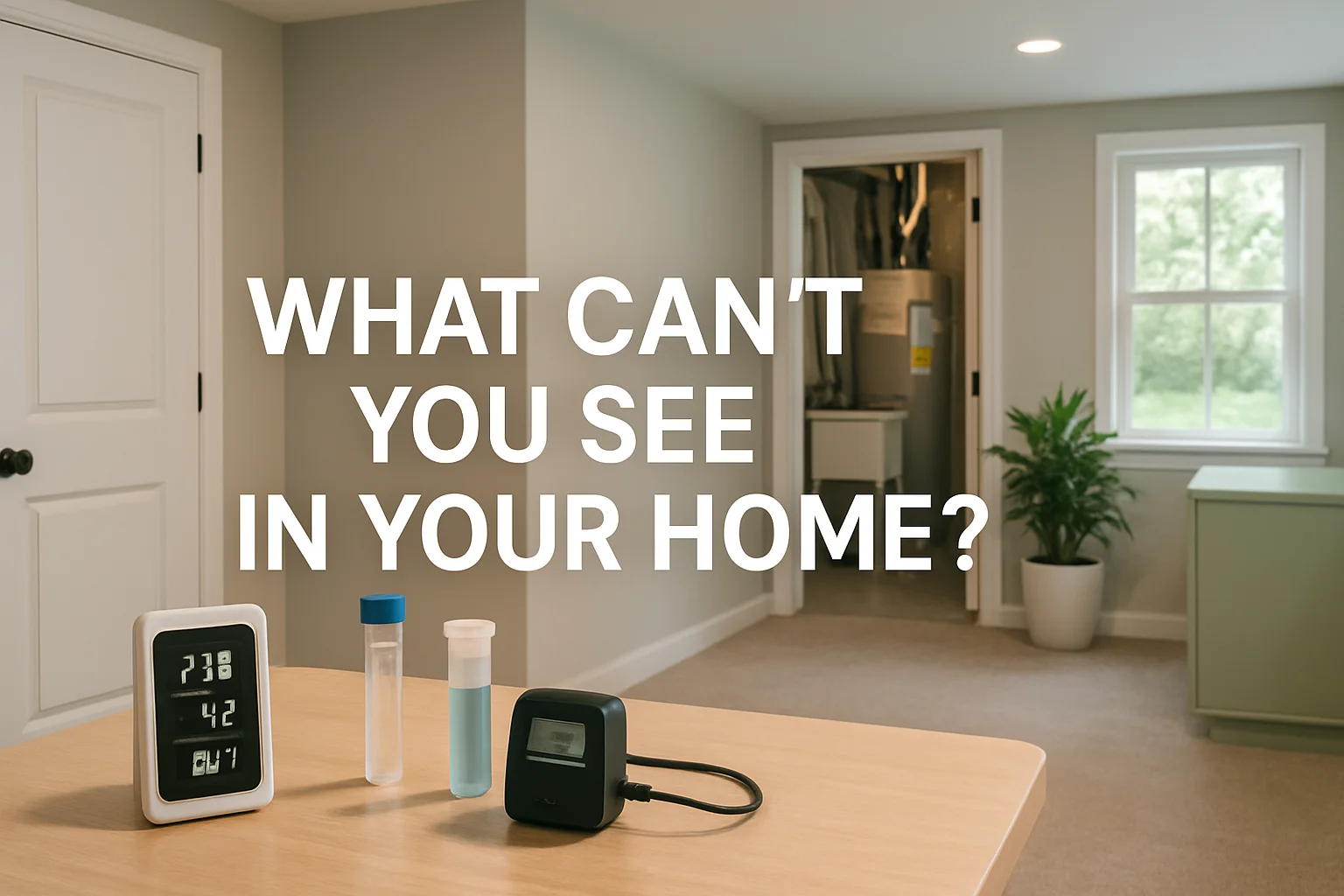
What Can’t You See in Your Home?
If you’ve ever walked into a room and thought, “Something feels off,” you’re not imagining things—you’re noticing the home’s invisible side. Many of the most important facts about a property can’t be spotted in a quick walkthrough: the air you breathe, the water you use every day, and naturally occurring gases that can build up without warning signs. In Pennsylvania homes—especially across Montgomery County and Bucks County communities like Harleysville, Lansdale, Hatfield, Souderton, North Wales, and Blue Bell—these “unseen” factors can vary widely from house to house.
This article is designed to answer a simple, curiosity-driven question: what cannot you see in your home? Not to alarm you—just to replace guessing with practical, homeowner-friendly testing. Whether you’re settling into a new place, preparing to sell, managing a rental, or advising clients as a real estate professional, the goal is the same: make confident decisions based on measurable information.
A1 House Prep provides local, professional home testing and property preparation services throughout the region. If you’d like help understanding what’s happening behind the walls (and in the air and water), you can explore services on our home page or schedule directly via Request Service.
The “Invisible Home” Checklist: What You Can’t See (But Can Measure)
Most homes have two stories: the one you can see (finishes, layout, curb appeal) and the one you can’t (indoor air, water chemistry, gas levels, odor sources). Here are the most common invisible factors homeowners, buyers, and sellers ask about in Pennsylvania:
- Radon gas (odorless, colorless, naturally occurring)
- Indoor air quality concerns (humidity imbalance, particulates, ventilation issues, and other common contributors)
- Water quality (especially for private wells, older plumbing, or changing tastes/odors)
- Odor molecules embedded in soft goods (smoke, pet, cooking, musty smells)
- Water heater sediment and buildup that can affect performance over time
The good news: you don’t have to live with uncertainty. Testing gives you a baseline. From there, you can decide what—if anything—needs attention and prioritize next steps with clarity.
Premium Perspective: A Calm Approach to Home Testing
Home testing isn’t about assuming the worst. It’s about learning what’s true for your property. Two homes on the same street in Hatfield or North Wales can have different radon readings, different water profiles, and different indoor air patterns based on foundation type, ventilation, renovations, and how the home is used. Testing turns “maybe” into measurable information you can act on—without guesswork.
1) Radon: A Pennsylvania Reality That Requires Testing
Radon is one of the best examples of something you can’t see in your home. It’s a naturally occurring gas that can enter through cracks and openings in foundations. You can’t reliably detect it by smell, appearance, or how “new” a home feels. That’s why radon is commonly tested during real estate transactions—and why many homeowners choose to test proactively, especially in Pennsylvania.
When radon testing makes sense
- Buying a home: Get objective data before you finalize decisions.
- Selling a home: Reduce surprises during inspection negotiations.
- Finishing a basement: Basements can be a key area for radon accumulation.
- After major changes: Renovations, HVAC updates, and sealing work can change how air moves through a house.
- It’s been years since the last test: Conditions can change over time.
If you want a clear, professional baseline, A1 House Prep offers Radon Testing throughout Montgomery County and Bucks County.
2) Indoor Air Quality: The “Feel” of a Home Has Causes
Indoor air quality isn’t a single thing—it’s a mix of airflow, moisture behavior, and the everyday particles and residues that build up in lived-in spaces. Homeowners often describe concerns like:
- “The upstairs feels stuffy.”
- “There’s a persistent musty smell after rain.”
- “We see dust constantly—even after cleaning.”
- “The basement air feels heavy.”
In areas like Blue Bell, Lansdale, and Souderton—where homes range from older builds to newer developments—air behavior varies widely. Even a well-kept home can have ventilation pinch points, humidity swings, or airflow imbalances that affect comfort and how the home presents to buyers.
What air quality testing helps you understand
- Moisture dynamics: Too much humidity can contribute to odors and deterioration; too little can feel uncomfortable.
- Ventilation effectiveness: Some rooms may not exchange air efficiently.
- General indoor air concerns: Establishing a baseline and identifying patterns worth addressing.
A1 House Prep provides Air Quality Testing to help homeowners and real estate professionals move from “I think” to “I know.”
3) Water Quality: Clear Water Isn’t Always the Full Story
Water can look perfectly clean and still have characteristics worth understanding—especially if you’re on a private well, you’ve recently moved in, or you’re noticing changes in taste, odor, staining, or scale. In Bucks and Montgomery County, water sources and plumbing systems vary, which means one property in Harleysville can have a different water profile than another home just minutes away.
Situations where water testing is especially helpful
- Buying a home with a well: A practical step for clarity during due diligence.
- Older plumbing: Water interactions with pipes can influence color, taste, and buildup.
- New odors or staining: Changes deserve a measured explanation.
- Planning equipment purchases: If you’re considering a softener or filtration, test results can guide smarter decisions.
To get reliable information specific to your property, schedule Water Testing with A1 House Prep.
4) Sediment and Scale: What’s Happening Inside Your Water Heater
Your water heater works quietly in the background—until it doesn’t. Over time, sediment and mineral buildup can accumulate inside the tank. This buildup is invisible from the outside, but it can influence performance, efficiency, and consistency in everyday use.
Flushing is a straightforward maintenance step many homeowners overlook, especially after moving into a home where the maintenance history is unknown.
Common “invisible” signs a flush may be worth considering
- Hot water seems less consistent than it used to be
- Unusual noises from the tank (popping or rumbling can occur as sediment heats)
- Hot water has changed in clarity or odor
- You don’t know the last time it was flushed
A1 House Prep offers water heater maintenance support via Water Heater Flushing for homeowners who want a practical, preventative approach.
5) Odors You Can’t “Find”: When Smell Has No Obvious Source
Odors are interesting because you can sense them—but you often can’t see what’s causing them. In a home, odor molecules can cling to porous materials (carpet, upholstery, curtains), settle into HVAC ductwork, or linger in rooms with low airflow. This is especially common after:
- Cooking odors (spices, oils)
- Smoke exposure (fireplace, tobacco)
- Pet odors
- Musty smells from humidity events
- Vacant-home “closed up” smells
For homeowners or sellers preparing a property for showings, a professional odor-treatment option can be helpful when used correctly and responsibly.
Ozone machines: effective tools with strict safe-use rules
Ozone treatment is sometimes used for odor remediation in unoccupied spaces only. It is not a casual “air freshener.” Ozone must be used carefully, with clear safety steps and time for the space to air out before anyone re-enters.
- Only run ozone in an unoccupied space (no people, pets, or plants).
- Follow all rental instructions for run time, placement, and re-entry timing.
- Ventilate thoroughly afterward before allowing anyone back inside.
- Use the right tool for the job: ozone is for odor treatment, not a substitute for addressing moisture sources or ventilation problems.
A1 House Prep provides Professional Ozone Machine Rentals and guidance for responsible, homeowner-friendly use—ideal for pre-listing prep, post-tenant turnover, or stubborn odor situations where the space can be kept vacant during treatment.
Curiosity-First Homeownership: Replace Guessing with a Simple Plan
Homeownership comes with constant decision-making. When you don’t have information, you’re forced to guess—and guessing can be expensive, stressful, or time-consuming. A calm, curiosity-first testing plan helps you understand your home as a system.
A practical order of operations (for many Pennsylvania homes)
- Start with radon testing to establish a baseline, especially if you use lower levels of the home.
- Check indoor air quality if comfort feels inconsistent or the home has persistent odors or humidity issues.
- Test water when you move in, when conditions change, or before investing in equipment.
- Maintain your water heater with periodic flushing as appropriate.
- Use ozone responsibly for odor treatment when the home can be unoccupied and properly ventilated afterward.
This approach is valuable for:
- Homeowners: Learn what’s true and plan improvements intelligently.
- Buyers: Reduce surprises and negotiate based on real information.
- Sellers: Prepare a home that shows clean, cared-for, and well-documented.
- Agents: Support clients with clear next steps and reliable local resources.
Why Local Experience Matters in Montgomery & Bucks County
Homes in our region can differ dramatically: stone farmhouses, mid-century split levels, townhomes, newer builds, and everything in between. Soil conditions, foundation styles, drainage patterns, and HVAC choices all influence what’s happening in the “invisible” layer of a property.
A1 House Prep works throughout Harleysville, Lansdale, Hatfield, Souderton, North Wales, Blue Bell, and surrounding Pennsylvania communities—bringing local familiarity and a homeowner-focused approach to testing and preparation.
Ready to Stop Guessing?
If you’re wondering what you can’t see in your home, testing is the clearest next step. A1 House Prep offers professional home testing and property-prep support across Montgomery County and Bucks County.
- Radon Testing
- Air Quality Testing
- Water Testing
- Water Heater Flushing
- Professional Ozone Machine Rentals (unoccupied spaces only)
Call A1 House Prep: 215.853.8226
Schedule service: Request Service
FAQs: What Homeowners Ask About the Things They Can’t See
1) What cannot you see in your home that matters most?
Common high-impact “invisible” factors include radon levels, indoor air quality patterns (like humidity and ventilation performance), and water quality characteristics. You can’t confirm these with a visual walkthrough—but you can measure them through professional testing.
2) Do newer homes in places like Lansdale or Blue Bell still need radon testing?
Yes, newer construction can still have radon. Radon is related to underlying conditions and how the home interacts with the ground and ventilation—not simply the home’s age. Testing is the only reliable way to know your home’s radon level.
3) When should I consider air quality testing?
Air quality testing is worth considering when you notice persistent odors, comfort issues (stuffy rooms, humidity swings), or if you’re preparing a home for sale and want to document a clearer picture of the indoor environment. It can also be helpful after renovations or HVAC changes.
4) Our water looks fine—why would we test it?
Appearance is only one piece of the puzzle. Water testing can help explain taste or odor changes, staining, or scale buildup, and it’s especially helpful for private wells or homes with older plumbing. Results can guide smart maintenance and equipment choices.
5) Is an ozone machine safe to use in my house?
Ozone machines should be used only under strict guidelines: the space must be unoccupied (no people, pets, or plants), and you must follow run-time and re-entry instructions and ventilate thoroughly afterward. Ozone is best viewed as a targeted odor-treatment tool—not an everyday solution.
6) How do I choose which tests to do before listing my home in Montgomery or Bucks County?
A practical approach is to start with radon testing (commonly requested in transactions), then address air quality and odor concerns that could impact showings, and test water if you have a private well or known issues. A1 House Prep can help you choose a sensible testing plan based on the property and your timeline.
Closing Thought: A Better Way to Know Your Home
The most valuable home insights often aren’t visible—they’re measurable. If you’ve been wondering what cannot you see in your home, consider that curiosity a strength. It’s the first step toward making calm, informed choices for your property, your family, and your next real estate decision.
To schedule testing or property preparation support in Pennsylvania, contact A1 House Prep at 215.853.8226 or use Request Service.