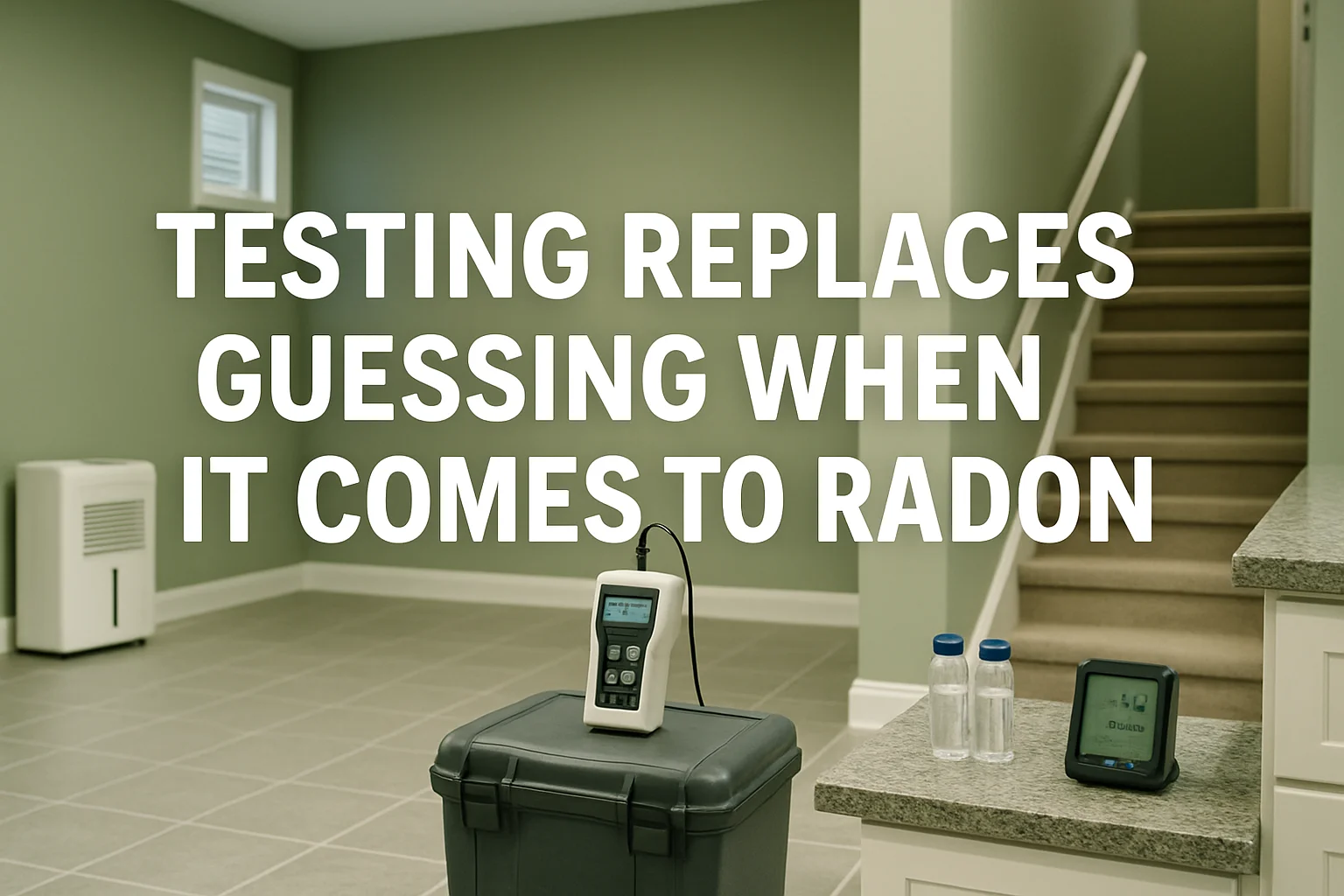
Testing Replaces Guessing When It Comes to Radon
Some home questions are easy to answer with a glance: Is the roof new? Are the windows drafty? Others are invisible by nature—and that’s where curiosity can work in your favor. Radon is one of those “hidden facts” about a home in Pennsylvania: you can’t see it, smell it, or taste it, and you won’t know your levels by intuition. In a market where homeowners, buyers, sellers, and real estate professionals value clarity, radon testing replaces guessing with a simple, objective measurement.
At A1 House Prep, we help homeowners across Montgomery County and Bucks County—plus communities like Harleysville, Lansdale, Hatfield, Souderton, North Wales, and Blue Bell—get practical information about their property. This article is designed to be calm, clear, and useful: what radon is, why “my neighbor’s result” isn’t your result, when to test, and how to use the findings to make confident decisions.
Why “Radon Testing Replaces Guessing” Is More Than a Catchphrase
Homeownership is full of assumptions that usually work out: the basement “seems” dry, the air “feels” fine, the water “tastes” normal. Radon doesn’t cooperate with those cues. It’s a naturally occurring gas that can enter a home through openings and pathways you may never notice—cracks, sump areas, utility penetrations, crawlspaces, or the joint where the slab meets the wall.
Because radon is invisible, there are only two ways to talk about it responsibly:
- Guessing based on anecdotes, maps, or what the house “seems like.”
- Testing to understand what’s actually happening in your home.
That’s why the target idea here matters: radon testing replaces guessing with data you can use—whether you’re planning a renovation, preparing for a sale, or simply satisfying a nagging “what don’t I know about my house?” question.
The Pennsylvania Factor: Why Local Homes Benefit from Clear Answers
Pennsylvania is well-known for having regions where radon can be present, and levels can vary widely from one neighborhood to another—and even from one house to the next on the same street. In Montgomery County and Bucks County, differences in soil composition, foundation type, drainage, and building features can all influence results.
In other words, you don’t need to assume anything based on:
- A nearby home’s past test result
- The age of your property (old homes and new homes can both test high)
- Whether your basement is finished or unfinished
- Whether you spend much time in the lowest level
Radon is a “measurement problem,” not a “vibe problem.” The quickest path to confidence is a professional test and a straightforward explanation of what the result means for your next step.
What Radon Testing Actually Tells You (and What It Doesn’t)
A radon test provides a snapshot of radon levels in a specific location over a specific period. It answers the essential homeowner question: What is the radon level in my home under typical, closed-house conditions?
What it can do:
- Provide an objective measurement you can share with family, buyers, or a real estate agent
- Create a baseline for future comparisons (especially after major changes like HVAC upgrades, basement finishing, or foundation work)
- Help you make informed decisions instead of relying on assumptions
What it doesn’t do:
- It doesn’t “prove” what your home will read every day of the year
- It doesn’t diagnose where radon is entering
- It doesn’t automatically indicate what solution is needed (if any)
That said, it’s the most important first step—because without measurement, every conversation is hypothetical.
If you’d like to schedule professional testing, visit our Radon Testing service page or request service directly.
Premium Home Insight, Without the Drama
If you’ve ever thought, “I just want to know what’s going on in my house,” you’re not alone. A1 House Prep approaches radon the way many homeowners approach any important property decision: gather reliable information first, then decide what to do next. Calm testing replaces anxious guessing—especially during a home sale, purchase, or renovation.
When Should You Consider a Radon Test?
You don’t need to wait for a “perfect time.” In practice, there are a few moments when testing is especially helpful for homeowners in Harleysville, Lansdale, Hatfield, Souderton, North Wales, and Blue Bell.
Common times to test
- Before listing your home: Reduce surprises and support smoother negotiations.
- During a home purchase: Add clarity to your inspection timeline.
- After moving in: Establish a baseline for your own peace of mind.
- After renovations: Finishing a basement, adjusting HVAC, or air sealing can change how air moves through a home.
- If it’s been years since the last test: Conditions can change over time.
For real estate professionals, having a dependable testing partner can help keep transactions moving while giving clients a measured, factual understanding of the home.
What to Expect: A Straightforward Testing Experience
Most homeowners want the same things: minimal disruption, clear instructions, and results explained in plain English. Professional radon testing is designed to be unobtrusive while delivering dependable measurements.
Typical testing steps (high level)
- Choose the right location: Usually the lowest level that could be lived in or used regularly.
- Set up the test device: Positioned to avoid drafts, high humidity corners, or direct tampering.
- Maintain closed-house conditions: Follow standard guidance during the test window for consistency.
- Complete the testing period: Then collect and document results.
- Review the outcome: Understand what the number means and what your options are.
If you’re coordinating schedules for a buyer, seller, or tenant-occupied property, A1 can help keep the process clear and professional. Start with Request Service.
Invisible Home Facts: The Curiosity Checklist (Beyond Radon)
Radon is one of several “invisible home facts” that homeowners often want to understand—especially when making improvements or preparing for a sale. While this article focuses on radon, many clients appreciate bundling insight so they can make fewer assumptions overall.
- Air Quality Testing: Helpful when a home has persistent musty odors, recent remodeling, or comfort complaints (stale air, dust concerns, etc.).
- Water Testing: Particularly valuable for private wells, older plumbing, or anytime you want a baseline on what you’re using every day.
- Water Heater Flushing: A practical maintenance step that can support performance and help remove built-up sediment over time.
Think of it as moving from assumptions to evidence—one data point at a time.
Odors vs. Radon: Don’t Confuse “Smells Fine” with “Measured Safe”
It’s common to hear, “We don’t have any odors, so we’re probably fine.” Odor is not a reliable indicator of radon levels. A home can smell fresh and still have elevated radon, and a home can smell musty for reasons that have nothing to do with radon.
When odors are the primary concern (pet odors, smoke smells, musty rooms after a vacancy, etc.), some homeowners consider ozone as part of an odor-treatment plan. A1 House Prep offers Professional Ozone Machine Rentals, but it’s important to use ozone responsibly.
Important ozone safety-use basics (odor treatment only)
- Use only in unoccupied spaces: People and pets must be out of the treated area.
- Follow rental instructions: Set timers and dosages based on room size and conditions.
- Ventilate afterward: Air out the space thoroughly before re-entry.
- Remove sensitive items as directed: Certain materials can be affected; follow guidance provided with the rental.
Ozone is an odor tool, not a radon test and not a substitute for measurement. If your question is radon, the answer is still: radon testing replaces guessing.
How to Use Your Results in Real Life (Homeowners, Buyers, Sellers, and Agents)
A result is most useful when it supports a decision. Here’s how different groups commonly apply radon testing information in Pennsylvania transactions and everyday homeownership.
Homeowners
- Create a baseline reading to inform future improvements
- Keep documentation with your home records
- Re-test after major changes that affect airflow or the foundation
Home buyers
- Add clarity during inspections instead of relying on a seller’s old report
- Make decisions with facts rather than online speculation
Home sellers
- Reduce last-minute surprises that can slow negotiations
- Show buyers you took testing seriously and handled it professionally
Real estate professionals
- Provide clients with an objective data point and calm expectations
- Support smoother timelines with a reliable testing schedule
Whatever your role, the value is the same: a measured number is easier to work with than a hunch.
FAQ: Radon Testing for Pennsylvania Homes
1) Why does radon testing replace guessing so effectively?
Because radon is not detectable by sight or smell, and “rules of thumb” (like the home’s age or your neighbor’s result) aren’t reliable. Testing turns an invisible unknown into a documented measurement you can use.
2) Do I need a radon test if my neighbor’s house tested low?
It’s still wise to test your own home. Radon levels can vary significantly between houses due to differences in foundation details, ventilation patterns, soil pathways, and small structural openings.
3) When is the best time of year to test in Montgomery County or Bucks County?
Many homeowners test during the cooler months when windows are closed more often, but the “best” time is when you can follow proper testing conditions and get a dependable baseline. If you’re in a transaction, the best time is usually as soon as your timeline allows.
4) What should I do to prepare my home for a radon test?
Preparation typically involves maintaining closed-house conditions during the test window, keeping doors and windows closed except for normal entry/exit, and avoiding actions that could interfere with the test device. A1 House Prep will provide clear, practical instructions for your specific appointment.
5) Can I rely on a past radon test from years ago?
Older results can be useful as a reference, but homes change over time—settling, renovations, HVAC adjustments, and weather patterns can all influence conditions. Re-testing is a practical way to confirm what’s true now.
6) Is an ozone machine a substitute for radon testing?
No. Ozone is sometimes used for odor treatment in unoccupied spaces with proper safety steps, but it does not measure radon. If the question is radon levels, testing is the appropriate tool.
7) How do I schedule radon testing with A1 House Prep?
You can learn more on our Radon Testing page or go straight to Request Service. If you prefer to speak with someone, call 215.853.8226.
Ready to Replace Guessing with a Clear Radon Measurement?
If you’re in Pennsylvania—especially Montgomery County or Bucks County—and you want a calm, professional answer about your home, A1 House Prep is here to help. Whether you’re a homeowner, buyer, seller, or agent, we’ll keep the process straightforward and the information easy to use.
- Explore: Radon Testing
- Schedule: Request Service
- Call: 215.853.8226
When it comes to invisible home facts, clarity is premium—and radon testing replaces guessing.