Some Odors Don’t Need Perfume — They Need the Source Addressed
There’s a particular kind of frustration that comes from a home that “looks” clean but doesn’t smell right. You light a candle, open windows, run a fan, spray a freshener… and the odor returns the moment the air settles. That’s usually the cue that odors need source addressed—not covered up.
In Pennsylvania homes—from Harleysville and Lansdale to Hatfield, Souderton, North Wales, and Blue Bell—odor complaints tend to show up for practical reasons: seasonal humidity, older basements, tight building envelopes, well-water variables, pets, renovations, past water events, or a home that sat vacant. The good news is that most persistent odors are solvable when you treat them like a clue, not a mystery.
This guide is designed for homeowners, buyers, sellers, and real estate professionals in Montgomery County and Bucks County who want a calm, step-by-step way to get answers. The theme is simple: testing replaces guessing. When you understand what’s in the air and where it’s coming from, the right next step becomes obvious—whether that’s cleaning, drying, repairs, targeted odor treatment, or professional help.
Why “Covering It Up” Usually Fails
Most odor products are designed to add a stronger scent or temporarily suppress perception. That can help for a quick showing or a short visit, but it rarely addresses what’s actually producing the smell. Persistent odor sources typically fall into a few buckets:
- Moisture-related growth and off-gassing (musty basements, damp crawlspaces, wet carpeting, wall cavities that stayed wet too long)
- Combustion or cooking residues (smoke, grease, past fireplace use, lingering “old kitchen” smell)
- Organic contamination (pet accidents in subflooring, rodents, trash, food spills)
- Water chemistry (well-water odors, sulfur-like smells, metallic notes)
- Building materials and stored contents (paint, adhesives, new flooring, stored fabrics, old furniture)
- Ventilation imbalance (stale air, “closed-up house” smell, pressure differences pulling odors from basement/garage)
When homeowners feel like they’ve tried “everything,” it’s often because the plan is missing one thing: confirming the source. That’s where a testing-first mindset helps, even when the odor itself seems straightforward.
A Curiosity-First Approach: Treat Odor Like a Home Fact
Odors are information. They can signal moisture movement, ventilation patterns, or an unseen reservoir (like a subfloor or ductwork) holding onto odor molecules. Instead of asking, “How do I make it smell better?” a better question is:
“What is this odor telling me about the home?”
In practice, a curiosity-first approach means you don’t jump to dramatic conclusions. You gather a few “invisible home facts”:
- Where is it strongest (basement, one bedroom, near a return vent, by a sump pit, at a particular sink)?
- When does it show up (after rain, during humidity, when HVAC runs, after showers, after cooking)?
- How does it behave (only with doors closed, only on hot days, only in winter)?
- What changed recently (new flooring, painting, water leak, new pet, new tenants, vacant period)?
This quick “odor journal” can save time and cost because it points your next move in the right direction—especially if you’re preparing for a listing, responding to a buyer’s concern, or trying to protect a recently renovated space.
Common Odor Types in Pennsylvania Homes (And What They Often Mean)
1) Musty / “Basement” Smell
Often linked to moisture, stored contents, or limited airflow. In Montgomery County and Bucks County, musty smells commonly intensify during humid stretches or after heavy rain. The source can be as simple as damp cardboard and fabrics—or as complex as a hidden moisture pathway.
2) Smoke / “Stale Ash” Odor
Smoke odor can embed in porous surfaces (drywall, trim, fabrics) and re-release over time, especially when indoor humidity rises. Even if no one currently smokes, past occupancy can leave a long shadow.
3) Pet Odors That “Come Back”
Carpet cleaning can improve the surface, but pet odors often persist when urine has reached padding or subflooring. Warm days and high humidity can make it “reappear.”
4) Rotten Egg / Sulfur-Like Smell
Frequently tied to water issues (well water, water heater conditions, drain traps) or utility-related concerns. If you notice this, focus on pinpointing the location (hot water only vs. cold water, one fixture vs. multiple) and consider a water-focused evaluation.
5) Chemical / “New House” / Solvent Smell
Can come from fresh paint, adhesives, sealants, new flooring, or stored products. Better ventilation helps, but the right approach depends on what’s off-gassing and how concentrated it is.
Testing Replaces Guessing: When Air and Water Testing Can Help
Odor is subjective—two people can describe the same smell differently. Testing adds objective data so you can make a measured decision rather than chasing the “next product.” A1 House Prep offers practical home testing services in Pennsylvania to help homeowners move from suspicion to clarity.
- Air Quality Testing can help you understand what’s in the air beyond what you can smell. This can be useful when odors are persistent, when occupants disagree on what they’re noticing, or when you want documentation during a real estate transaction.
- Water Testing can be a smart move when odors appear connected to sinks, showers, laundry, or drinking water—especially in homes with well water or older plumbing.
- Radon Testing is separate from odor issues, but it’s another example of an “invisible home fact” that matters in Pennsylvania. Buyers often ask for it, and it’s best handled with measured, professional testing rather than assumptions.
Premium homeowner tip: If you’re preparing a home for sale in Lansdale, Hatfield, or Souderton, consider pairing curiosity with documentation. Odor concerns are often less stressful for everyone when you can show what you checked, what the data says, and what steps were taken. Testing and clear notes can reduce back-and-forth during inspections and negotiations.
When Odor Treatment Makes Sense: The Role of Professional Ozone
Once you’ve identified (or removed) the primary source, you may still have residual odor trapped in porous materials. That’s where professional ozone treatment can be a tool—especially for smoke, pet, and musty “stale air” scenarios.
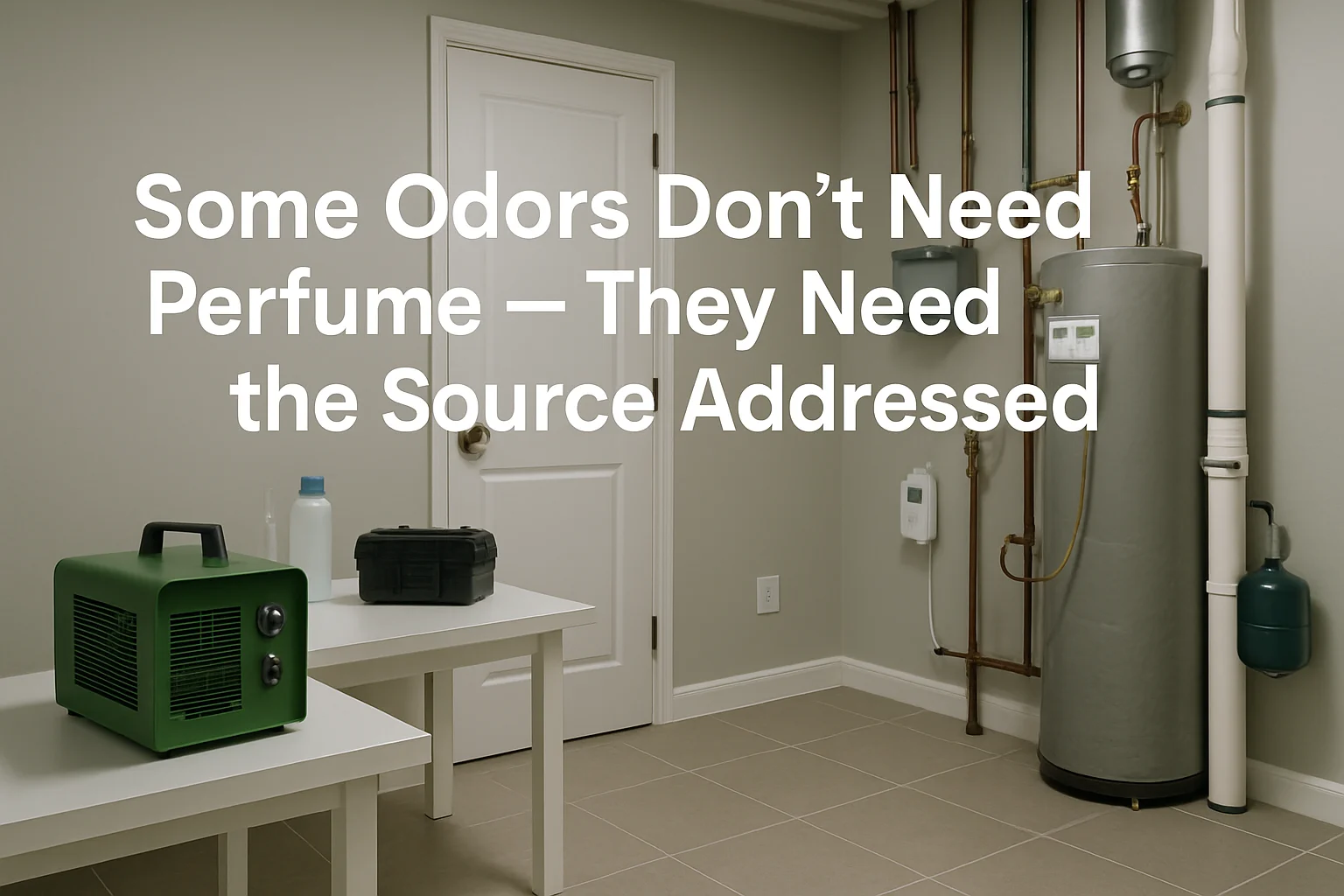
A1 House Prep offers Professional Ozone Machine Rentals as an option for odor treatment in unoccupied spaces. This is not a “spray and pray” approach. Ozone is a powerful oxidizer and must be used carefully, with strict attention to safe-use instructions.
What ozone is (in simple terms)
Ozone (O3) is a reactive form of oxygen. In controlled, proper applications, it can help break down odor-causing compounds in the air and on surfaces. It’s typically considered when the source has been addressed but the smell lingers—or when a vacant property needs a reset before cleaning and staging.
What ozone is not
- Not a substitute for drying and moisture control. If a basement is damp, ozone won’t fix the conditions that create musty odors.
- Not a substitute for cleaning. Grease, soot, and organic residues should be physically cleaned where possible.
- Not an “occupied-space air freshener.” Ozone use requires the space to be unoccupied during treatment.
Safe-Use Basics: Ozone Treatment Must Be Unoccupied
Because ozone is reactive, it should be used only in unoccupied spaces and according to professional guidance. If you’re considering an ozone rental for a home in Blue Bell, North Wales, or elsewhere in the region, plan for a treatment window when people and pets can be out of the space.
- Vacate the area. No people, pets, or plants in the treatment zone during operation.
- Remove or protect sensitive items. Certain materials (like natural rubber) can be affected; discuss specifics before treatment.
- Seal and control airflow. Close windows and doors to the treatment area as instructed, and consider HVAC/returns so ozone doesn’t travel to occupied areas.
- Run for the recommended duration. Longer is not always better; the right run time depends on space size and odor intensity.
- Allow time before re-entry. After the machine turns off, the space should sit and then be ventilated per instructions before re-occupying.
If you want help choosing the appropriate approach, A1 House Prep can guide you toward a measured plan for odor treatment and next steps through our Professional Ozone Machine Rentals service page or via a direct request.
A Practical “Odor Investigation” Checklist (Homeowner-Friendly)
Use this checklist before you invest in products or major work. It’s designed to narrow the source and avoid chasing symptoms.
Step 1: Map the odor
- Identify the strongest location(s): basement corners, closets, near returns, near a particular sink.
- Check if it’s stronger with doors closed or HVAC running.
- Note if it’s worse after rain or during humidity spikes.
Step 2: Confirm moisture basics
- Look for visible condensation, dampness, or staining.
- Check the sump area (if present), floor drains, and crawlspaces.
- Confirm bath fans and kitchen ventilation are functioning and vented properly.
Step 3: Rule out “container odors”
- Cardboard, fabrics, books, and stored furniture can hold odors.
- Try temporarily removing items from one suspect room and reassess after 24–48 hours.
Step 4: Evaluate water-related odor patterns
- Is the smell from hot water only? Consider water heater factors and maintenance.
- Is it from a specific drain? Check traps, drains, and usage patterns.
- For maintenance support, see Water Heater Flushing.
Step 5: Decide: clean, test, treat, or all three
- Clean when residues or contamination are likely.
- Test when you want objective data or when the source isn’t obvious (see Air Quality Testing and Water Testing).
- Treat (e.g., ozone in unoccupied spaces) when residual odor remains after source control.
Real Estate Situations: Buyers, Sellers, and Odor “Objections”
Odor can influence a showing faster than almost anything else, even when the home is structurally sound. For sellers, that can feel unfair. For buyers, it can feel like a red flag. A calm, professional approach helps both sides.
- Sellers: If you’re listing a home in Montgomery County, address odors early—before photography and open houses. If an odor is known, it’s often better to document what you did (cleaning steps, moisture fixes, testing results, odor treatment) than to hope it goes unnoticed.
- Buyers: A smell doesn’t automatically mean the worst. Ask where it’s strongest and whether it correlates with rain, HVAC cycles, or a specific area. Request appropriate testing when the cause isn’t clear.
- Agents: Odor issues become smoother when you can translate them into a plan: “Identify source, confirm conditions, document results, then treat residual odor if needed.”
Where A1 House Prep Fits In
A1 House Prep is a Pennsylvania home testing and property preparation company serving homeowners and real estate professionals across Montgomery County and Bucks County. If you’re done guessing and want a practical next step, we can help you:
- Gather objective information through Air Quality Testing and Water Testing
- Support common real estate testing needs with Radon Testing
- Reset lingering odor in unoccupied spaces with Professional Ozone Machine Rentals
- Handle helpful maintenance steps like Water Heater Flushing when odor patterns suggest hot-water involvement
Ready to Stop Masking and Start Knowing?
If you suspect the odors need source addressed, we’ll help you take the next practical step—whether that’s testing, targeted odor treatment, or a clear plan for what to address first.
Call A1 House Prep: 215.853.8226
Request service online: /request-service/
Explore ozone rentals: /services/ozone-machine-rentals/
FAQ: Odors, Testing, and Ozone Rentals
1) Why do odors come back even after deep cleaning?
Many odors persist because the source isn’t fully removed (for example, contamination in padding/subfloor, residues on walls, or damp materials). In other cases, the source is removed but odor compounds remain embedded in porous surfaces and re-release with humidity or temperature changes.
2) How can I tell if an odor is related to moisture?
Moisture-related odors often intensify after rain, during humid weather, or in closed-up areas like basements and closets. Condensation, damp spots, staining, or a history of leaks are additional clues. If you want objective insight, Air Quality Testing can help you move beyond guesswork.
3) Is ozone treatment safe to run while I’m home?
No. Ozone treatment should be used only in unoccupied spaces with clear safe-use procedures, including re-entry and ventilation guidance. People and pets should not be present in the treatment area while the machine is operating.
4) What kinds of odors are ozone machines best suited for?
Ozone is commonly considered for stubborn, residual odors—often smoke, pet, musty “stale” smells, and some organic odor scenarios—after the primary source has been addressed. For details and guidance, visit Professional Ozone Machine Rentals.
5) Should I get water testing if my home has a sulfur-like smell?
If the smell seems tied to water use (a specific faucet, shower, or hot water vs. cold water), Water Testing can be a practical step. Also consider maintenance factors—like the condition of the water heater—where Water Heater Flushing may be relevant depending on your system and history.
6) I’m selling a home—what’s the best way to handle an odor concern before showings?
Start by identifying and correcting the source (moisture control, cleaning, removal of affected materials). If the cause isn’t clear or you want documentation, consider testing. If residual odor remains after source control, an ozone treatment plan in an unoccupied space can help reset the feel of the home before photography and showings.
7) Do you serve my area in Montgomery or Bucks County?
A1 House Prep supports homeowners and real estate professionals across Pennsylvania, including Montgomery County and Bucks County communities such as Harleysville, Lansdale, Hatfield, Souderton, North Wales, and Blue Bell. To confirm scheduling and the best service path, use our Request Service form or call 215.853.8226.
Final thought: Odor problems are often solved faster—and with less stress—when you treat them like evidence. When odors need source addressed, the most premium move isn’t a stronger scent. It’s clarity, targeted action, and a home that feels clean because it truly is.