Radon Testing for Basements and Finished Lower Levels
Basements and finished lower levels can be some of the most useful spaces in a Pennsylvania home—family rooms, home offices, guest suites, gyms, and play areas. They’re also the areas most likely to be impacted by radon, a naturally occurring gas that can enter through the soil and find pathways into a home. If you’re searching for radon testing basement guidance for your home in Harleysville, Lansdale, Hatfield, Souderton, North Wales, Blue Bell, Ambler, or Collegeville, you’re in the right place.
This article breaks down how and why radon shows up in lower levels, when a basement radon test is most important, and what to expect from professional radon testing with A1 House Prep. Whether you’re a homeowner planning improvements, a buyer reviewing inspections, or a seller preparing for listing, accurate testing is a practical first step.
Local note for Montgomery County homeowners: Homes across our service area—especially those with basements, walkouts, sump pits, or older slab work—can have very different radon results from one property to the next. The only dependable way to know your home’s level is to test under the right conditions, in the right location, with the right methods.
Why basements and finished lower levels matter for radon
Radon originates from the natural breakdown of uranium in soil and rock. Because it begins below grade, it tends to enter a home at the lowest points: basements, crawl spaces, and slab-on-grade areas. Pressure differences between indoor air and the soil around the foundation can draw soil gases inside through even small openings.
Basements and lower levels can be more vulnerable because they often include:
- More direct contact with soil (foundation walls and floor slabs below grade)
- Common entry points such as expansion joints, floor cracks, utility penetrations, and sump pits
- Stack effect where warmer air rising through the home can pull air in from the lowest levels
- Mechanical systems (furnaces, water heaters, exhaust fans) that can influence airflow patterns
Even if your basement “feels dry” and looks well maintained, radon can still be present. Odor and visible clues aren’t reliable indicators—which is why testing is the practical, homeowner-friendly way to make informed decisions.
Unfinished basement vs. finished basement radon: what changes (and what doesn’t)
A common question we hear is whether a finished lower level changes the need for testing. In short: a finished basement radon concern is still a basement radon concern—because radon is about how air moves through the foundation and living space, not whether the space has drywall and carpet.
Here’s what tends to change:
- How the space is used: If your lower level is a daily living area, the result is more relevant to how you live in the home.
- Airflow patterns: Finishes can reduce “natural ventilation” from bare concrete and open joists. Closed doors and tighter finishes can also affect how air mixes.
- Placement considerations: In a finished lower level, we choose a location that reflects typical occupancy while staying away from drafts, exterior doors, and direct HVAC supply vents.
What doesn’t change: radon entry points can still exist behind finishes. That’s why lower level radon testing is typically the most meaningful area to measure, especially if the basement is livable or frequently occupied.
When to schedule radon testing in the basement
Many homeowners plan a radon test “someday,” but there are specific times when testing is especially useful. Consider scheduling radon testing basement services if you’re in any of these scenarios:
- Buying a home: A radon test is a common inspection add-on and can provide clarity before you finalize your purchase.
- Selling a home: Pre-listing testing can help you avoid last-minute surprises and keep the process smoother for buyers and agents.
- Finishing a basement: Testing before and after finishing gives you a baseline and helps you plan confidently.
- After major air sealing or HVAC changes: New windows, insulation, air sealing, or mechanical upgrades can change pressure and ventilation patterns.
- Seasonal changes: Levels can fluctuate with weather and home conditions; testing at a point when windows are typically closed can be informative.
If you’re not sure whether a basement radon test fits your situation, A1 House Prep can help you choose a testing approach that matches how your home is used and your timeline.
What professional basement radon testing involves
Professional radon testing is designed to produce a reliable snapshot of conditions in the lowest lived-in area of the home (often the basement or finished lower level). While the exact setup can vary based on the home layout, a typical professional test includes:
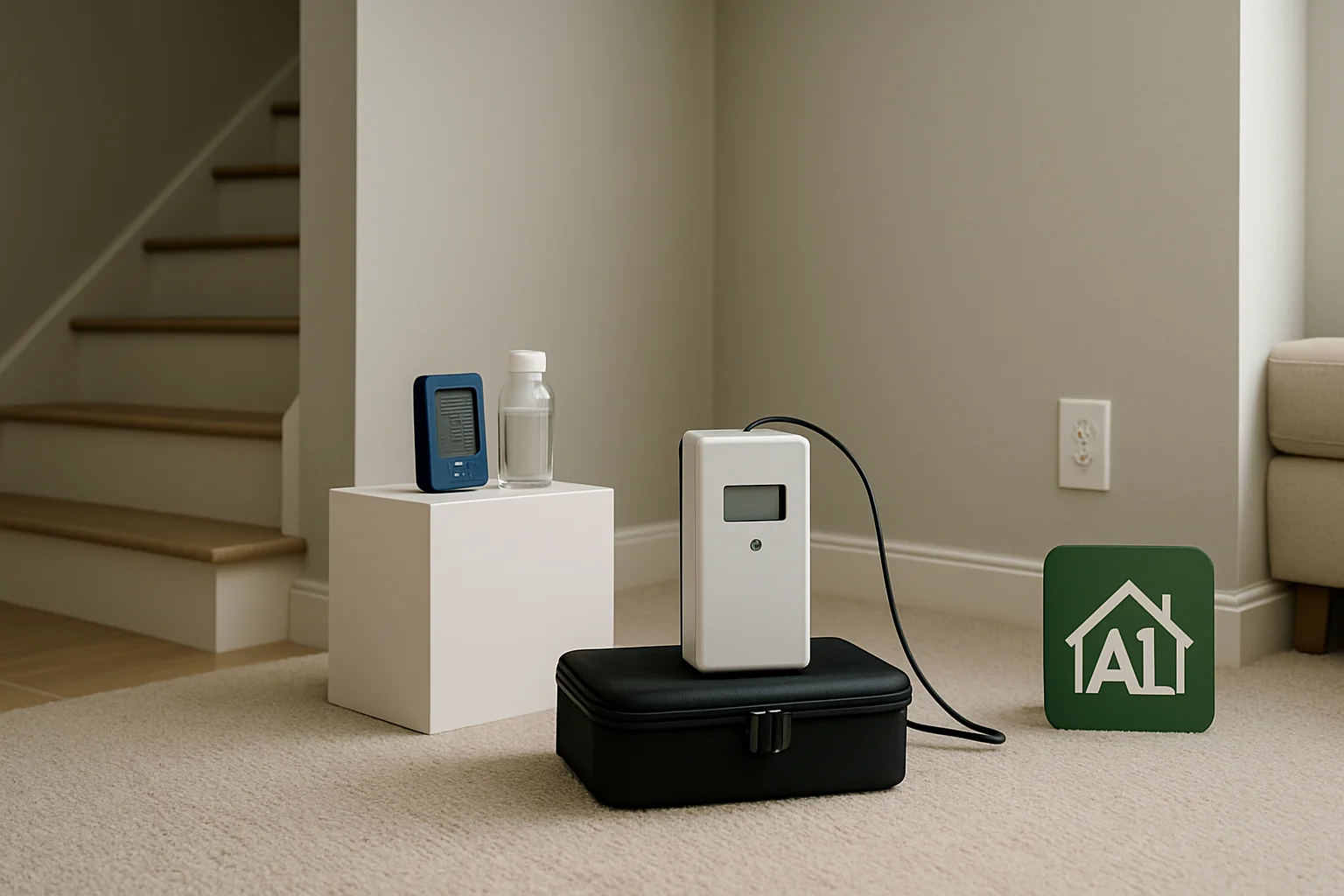
- Choosing the right test location: A suitable spot on the lowest level that could be occupied, away from drafts, exterior doors, and moisture sources like open sump pits.
- Following closed-house guidance: During many short-term tests, standard practice is to keep windows closed and limit unusual ventilation to reflect typical living conditions.
- Using calibrated equipment and documented procedures: Consistent setup and handling support credible results.
- Clear reporting: You receive the measured result and practical next-step guidance based on what the data shows.
For homeowners in Harleysville, Lansdale, Hatfield, Souderton, North Wales, Blue Bell, Ambler, and Collegeville, the biggest value of professional testing is confidence—confidence that the test was placed correctly, run under appropriate conditions, and reported in a way that’s easy to use for decisions.
If you’re ready to schedule, start here: Radon Testing.
Where to place a radon test in a basement or finished lower level
Proper placement matters. A device placed in the wrong spot can be influenced by drafts, humidity, or unusual airflow, which can make results less meaningful. While every home is different, these are homeowner-friendly placement principles to keep in mind:
- Test the lowest level that can be lived in: If you have a finished lower level that’s used as living space, that’s usually the priority area for lower level radon testing.
- Avoid kitchens, bathrooms, and laundry rooms: Moisture and ventilation patterns can skew conditions.
- Keep distance from drafts: Stay away from exterior doors, windows, stairwell drafts, and direct supply vents.
- Don’t place it in a sump pit or right next to a floor drain: These can be direct entry points and create an unrepresentative “hot spot.”
- Choose a normal breathing-zone location: Typically a few feet off the floor, depending on device requirements and space.
In finished spaces, we also consider how the room is actually used. A test placed in a rarely accessed storage nook may not reflect conditions where your family spends time, while a test placed next to an exterior walkout door may be overly influenced by air leakage. Professional setup helps balance these factors.
Common basement features that can influence radon entry
Many Pennsylvania homes share similar basement and foundation details. These features don’t automatically mean you have elevated radon—but they are common pathways where soil gas can enter:
- Sump pits and sump covers
- Floor cracks and control joints
- Utility penetrations (plumbing, electrical, HVAC lines)
- Block foundation walls and gaps at the slab/wall seam
- French drains or perimeter drainage systems
- Crawl space access points connected to the basement
Finished lower levels can conceal some of these areas behind flooring, framing, and drywall. That’s one reason finished basement radon considerations shouldn’t rely on visual inspection alone—testing provides the data you need.
Interpreting radon test results: what homeowners should do next
Radon results are measured as a concentration in the air. If your results come back elevated, the next step is typically to confirm the situation and discuss options for next actions based on your goals (real estate timeline, renovation plans, and how the lower level is used).
Practical next steps many homeowners consider include:
- Discussing the result with a radon professional: Understand what the number means for your home and how the test conditions may have influenced it.
- Planning follow-up testing: Especially if conditions during the test weren’t typical or if you want additional confidence.
- Coordinating with real estate professionals: If you’re in a transaction, it’s helpful to keep documentation organized and timelines clear.
A1 House Prep focuses on accurate testing and clear guidance so you can make informed, practical decisions without guesswork.
Basement air quality: when radon testing fits into a bigger picture
Radon is one piece of the “lower level air” puzzle. Basements can also experience humidity, musty odors, particulates, and other indoor air concerns depending on the home. If you’re troubleshooting comfort or odor issues in a basement or finished lower level, you may also benefit from:
- Air Quality Testing for a broader look at indoor conditions
- Professional Ozone Machine Rentals for specific odor-removal projects (used properly and according to guidance)
And if your home’s water is part of a buyer/seller checklist—or you’re simply due for peace of mind—consider Water Testing. Many homeowners prefer to bundle testing services so they can address questions efficiently, especially during a busy transaction or renovation period.
Radon testing in real estate: buyers, sellers, and agents
Radon testing often shows up as a negotiation topic—not because anyone did something wrong, but because it’s a measurable item that can vary by home. For real estate professionals and clients in our local area (Harleysville through Collegeville), the process goes smoother when expectations are set early:
- Buyers: Request the test early enough to allow for results, discussion, and next steps without rushing.
- Sellers: Consider pre-listing testing to reduce surprises and keep the transaction moving.
- Agents: Encourage clear access to the basement/lower level and help clients follow any test-condition instructions during the test period.
Professional reporting and consistent documentation help everyone stay aligned—especially when a finished lower level is a major selling feature and the result directly relates to the most-used space.
Schedule Radon Testing with A1 House Prep
If you want reliable answers about your basement or finished lower level, A1 House Prep provides professional radon testing for homeowners and real estate transactions across Harleysville, Lansdale, Hatfield, Souderton, North Wales, Blue Bell, Ambler, and Collegeville.
Call: 215.853.8226
Request service online: /request-service/
Learn more: /services/radon-testing/
FAQ: Basement and lower level radon testing
1) What is the best location for a radon testing basement setup?
The best location is typically the lowest level that could be regularly occupied (often a basement or finished lower level), placed in a normal living area away from drafts, exterior doors/windows, direct HVAC vents, and high-humidity rooms. Professional placement helps ensure the result reflects typical conditions.
2) Should I do a basement radon test even if the basement is unfinished?
Often, yes—because unfinished basements are still the closest indoor area to the soil and foundation entry points. Testing provides a baseline, and it can be especially helpful if you plan to finish the space, install a home gym, or use the basement for laundry and storage frequently.
3) How does finished basement radon risk compare to the rest of the house?
Radon levels are frequently highest on the lowest levels of a home, which is why lower level radon testing is commonly recommended. Upper floors may have different readings due to air mixing and pressure differences, but understanding the lower level is typically the most informative starting point.
4) Can I open windows during the test?
Depending on the type of test, you may be asked to keep windows closed and avoid unusual ventilation for a set period to reflect standard test conditions. Your testing provider will give you clear instructions so the results are meaningful and properly documented.
5) Do walkout basements test differently than fully below-grade basements?
They can. Walkout basements may have different airflow patterns due to doors and above-grade walls, which can influence how air exchanges with outdoors. That’s why device placement and following test-condition guidance matters—especially in homes with mixed below-grade and above-grade lower levels.
6) How often should I repeat radon testing in the basement?
Many homeowners consider retesting after major renovations, HVAC changes, or significant foundation work, or if the use of the basement changes (for example, finishing the space). Retesting can also be reasonable for periodic reassurance, since levels can vary over time.
7) Can A1 House Prep help if I’m also concerned about basement odors or overall air quality?
Yes. Along with radon testing, A1 House Prep offers air quality testing and professional ozone machine rentals for specific odor-related projects. If you’re unsure what you need, you can describe your situation when you request service.
Next steps: get clear answers for your lower level
Basements and finished lower levels are valuable living space—especially in Pennsylvania homes where every square foot counts. If you’re planning upgrades, navigating a transaction, or simply want clarity, a professional radon testing basement appointment gives you data you can use.
To schedule service in Harleysville, Lansdale, Hatfield, Souderton, North Wales, Blue Bell, Ambler, or Collegeville, call 215.853.8226 or visit /request-service/.