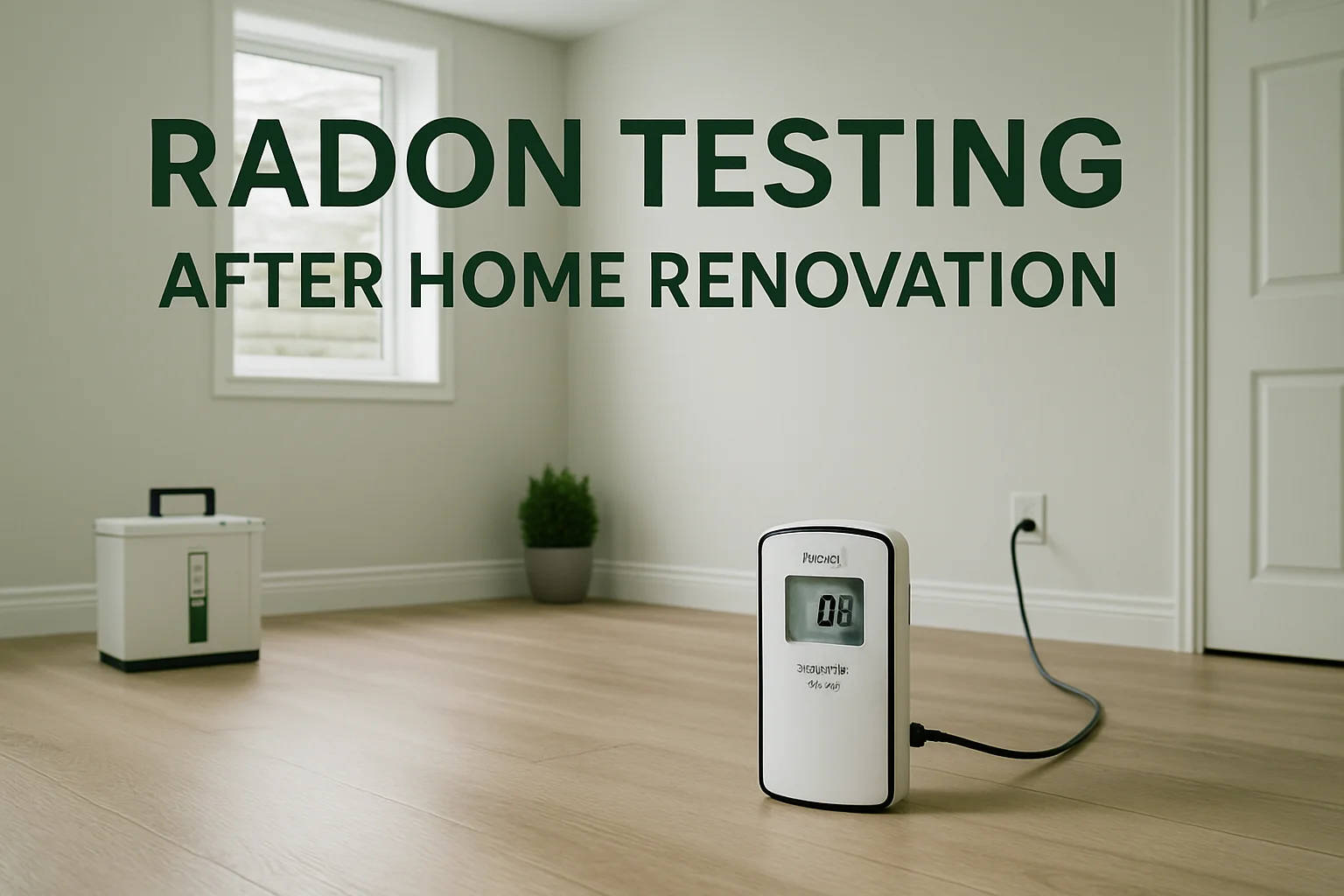
Radon Testing After Renovations or Foundation Work
Finishing a basement, replacing windows, sealing cracks, or completing foundation repairs can make a home feel tighter, cleaner, and more comfortable. But those same improvements can also change how air moves through the house—sometimes in ways that affect radon levels. If you’re searching for radon testing after home renovation in Montgomery County and nearby communities, this guide explains when and why to test, what types of projects can influence results, and how A1 House Prep supports homeowners, buyers, sellers, and real estate professionals across Harleysville, Lansdale, Hatfield, Souderton, North Wales, Blue Bell, Ambler, and Collegeville.
Need help scheduling testing? Call 215.853.8226 or request service online.
Why renovations can change radon levels
Radon is a naturally occurring gas that can enter homes through openings in the foundation and lower-level building materials. What many homeowners don’t realize is that radon readings aren’t just about “the house” in general—they’re influenced by how your home breathes. Renovations and repairs can shift:
- Air pressure and airflow between the basement/crawl space and living areas
- Sealing and insulation that reduce natural ventilation
- Pathways for soil gases created or closed during construction
- HVAC operation and how air is supplied/returned across floors
That’s why radon testing after home renovation is a practical follow-up step—especially if the work involved the basement, slab, crawl space, or foundation. It’s not about alarm; it’s about verifying that changes to the home didn’t create new conditions that raise radon entry or trap it indoors.
Projects that commonly trigger a “re-test” (and why)
You don’t need to test after every cosmetic update. But certain projects are known to alter air movement and the integrity of lower-level surfaces. Consider scheduling testing if you’ve recently completed any of the following:
Basement finishing or remodeling
Basement remodels can convert an unfinished, leaky space into a more air-tight living area. New framing, insulation, drywall, and flooring can reduce ventilation and sometimes change where air pressure pulls from. If you completed a radon after basement renovation project—especially one that added bedrooms, offices, or a family room—testing helps confirm radon levels in the lowest livable area.
Foundation repair, waterproofing, or structural work
Foundation projects often involve crack repairs, new drain systems, sump installations, or sealing. These improvements are valuable for moisture management, but they can also change how soil gases move beneath the slab or along walls. If you’ve had radon after foundation repair on your checklist, a post-project radon test is a smart way to measure real-world conditions after the work is complete.
New windows, doors, insulation, or air sealing
Energy upgrades can make a home more efficient—and more tightly sealed. That can reduce natural air exchange, which may increase indoor concentrations of certain pollutants, including radon. Testing after these improvements provides a baseline in the updated “tight home” configuration.
HVAC changes (new furnace, ducts, returns, or ventilation)
Heating and cooling systems influence pressure differences that can draw air from lower levels. If you’ve added returns in the basement, changed equipment, or adjusted ventilation, radon testing helps ensure the new airflow patterns aren’t increasing radon entry into living spaces.
Major slab work or plumbing changes
New plumbing penetrations, floor drains, or slab repairs can create new gaps (or reseal old ones). Even well-done work can shift radon pathways. A post-renovation test is a simple way to validate the outcome.
Local note for Montgomery County homeowners
Homes across Harleysville, Lansdale, Hatfield, Souderton, North Wales, Blue Bell, Ambler, and Collegeville include a mix of basements, partial basements, crawl spaces, and slab-on-grade construction—often with renovations over time. If your project changed the basement or foundation in any meaningful way, consider professional radon testing as the simplest way to confirm what’s happening in the home today, not what was true years ago.
When to do radon testing after renovation work
Timing matters. If you test too early—while materials are still curing, ventilation is abnormal, or contractors are frequently opening doors—you may not get a useful snapshot of typical conditions.
Good timing guidelines
- After the project is substantially complete and the space is being used normally
- After cleaning and contractor traffic slows (fewer doors/windows propped open)
- After HVAC is operating in its regular mode for the season
- When the home can follow standard “closed-house” conditions for short-term testing (as applicable)
If you’re preparing for a sale or settlement, the ideal window is “soon enough to act on results” but not so soon that construction activity skews the reading. A1 House Prep can help you choose a practical schedule for your property and timeline.
What kind of radon test should you choose?
There are different ways to measure radon. The best choice depends on your reason for testing—post-renovation confirmation, real estate due diligence, or establishing a longer-term baseline.
Short-term tests
Short-term measurements are commonly used for real estate transactions and quick check-ins after changes to the home. They can be a good fit when you need timely information and can maintain typical testing conditions during the measurement period.
Long-term tests
Long-term testing can provide a broader view of average conditions across changing weather and HVAC seasons. If you renovated for long-term living and want a deeper understanding of your baseline, ask about options and what timeline makes sense.
Not sure which direction to go? Start with A1’s Radon Testing service page and then request service—we’ll help match the testing approach to your goals and property setup.
Where to test after a basement renovation or foundation project
Placement is crucial for meaningful results. In most cases, you’ll want to test in the lowest level of the home that is suitable for occupancy—especially if the renovation turned an unfinished basement into a finished living area.
Common post-renovation testing scenarios
- Finished basement now used daily: test in the finished area (family room/office), following standard placement guidelines.
- Basement remains unfinished but accessible: test in the basement if it’s the lowest level and could be used or accessed frequently.
- Crawl space homes: testing focus is usually the lowest occupied level above the crawl space.
- Split-level or walk-out basements: placement depends on which level is lowest and how it’s used.
During scheduling, share details like whether the basement now has new flooring, drywall, a bedroom, or a new HVAC supply/return. Those details help determine the best testing plan for radon testing after home renovation.
Real estate situations: buyers, sellers, and renovations between tests
Radon questions often come up during a home purchase or sale—especially when a listing highlights “newly finished basement” or “recent foundation repair.” If a radon test was performed years ago, it may not reflect the home’s current conditions after major updates.
For sellers
- Testing after a renovation can reduce surprises during inspection.
- Clear documentation supports a smoother negotiation process.
- If the basement is newly finished, buyers often expect current radon information.
For buyers
- New finishes can make basements more comfortable—but also more “sealed.” Testing helps confirm current readings.
- Foundation repair history is worth discussing. Post-repair conditions are what matter now.
For agents and transaction coordinators
- Radon testing can be scheduled in alignment with inspection timelines.
- Clear communication about renovations helps ensure proper test placement and timing.
If you’re coordinating a transaction in Harleysville, Lansdale, Hatfield, Souderton, North Wales, Blue Bell, Ambler, or Collegeville, A1 House Prep can support scheduling and documentation through our Radon Testing service.
Related home testing that can complement post-renovation radon testing
Renovations can affect more than radon—especially in lower levels where moisture, airflow, and mechanical systems intersect. Depending on your project, you may also consider:
- Air Quality Testing for broader indoor air concerns after construction dust, new materials, or ventilation changes
- Water Testing if work involved plumbing updates, a new well component, or you simply want an updated baseline
- Water Heater Flushing as practical maintenance—especially after periods of heavy contractor use or if sediment issues are suspected
- Professional Ozone Machine Rentals for odor-related needs (used carefully and according to guidance), particularly after smoke, musty odors, or renovation-related smells
Radon is often the headline topic after foundation or basement work, but a whole-home, homeowner-focused approach can be helpful—especially if you’re preparing for listing photos, showings, or a move-in date.
Practical tips to get the most reliable post-renovation radon results
Radon testing is most useful when it reflects typical living conditions. Here are practical steps that help the measurement represent your real day-to-day environment:
- Finish the messy work first: Avoid testing while sanding, painting, or cutting materials with doors/windows frequently open.
- Run the HVAC normally: Don’t change thermostat habits just for the test.
- Keep notes: Record major changes like “new sump installed,” “crack repair,” “new vapor barrier,” or “new basement return vent.”
- Choose the right location: Test where people will spend time—especially if the basement is now a living space.
- Plan around travel: If you’ll be away and the home will be closed up or unoccupied, ask whether that could affect the schedule.
When you request service, share your renovation scope and completion date. A1 House Prep will help you align testing timing with the reality of your project.
Frequently Asked Questions
1) Do I really need radon testing after home renovation if the house tested “fine” years ago?
It’s often a good idea to re-test after major changes to the basement, foundation, insulation, or HVAC. Renovations can alter airflow and pressure relationships, which can change radon entry and indoor concentrations over time. Post-renovation testing gives you an updated baseline based on how the home functions today.
2) What renovations are most likely to affect radon levels?
Basement finishing, foundation repairs/waterproofing, new windows and air sealing, HVAC changes (especially adding returns or supplies in lower levels), and slab or plumbing penetration work are common triggers for re-testing. If you’re unsure, describe the work when you schedule—A1 can advise on whether radon testing after home renovation is recommended.
3) How soon after foundation repair should I test for radon?
Typically, testing is best once the work is complete and the home is back to normal living conditions—without constant door/window openings or ongoing construction. If you’re on a real estate timeline, schedule as soon as feasible after completion so results can be reviewed and shared if needed.
4) If my basement is newly finished, where should the radon test be placed?
In many cases, the best location is the newly finished basement area that will be regularly used. The goal is to measure in the lowest level that is suitable for occupancy. Placement details matter, so professional guidance helps ensure the result is meaningful for the space you’ll actually live in.
5) Can I open windows to “air out” the basement during the test?
For many short-term test protocols, keeping windows closed as much as practical helps reflect standard conditions for measurement. Because requirements can vary based on test type and timing, it’s best to confirm expectations when you schedule.
6) I just remodeled in preparation for selling. When should I test so it helps the transaction?
Test after the renovation is complete and the home is in normal, show-ready condition. That way the results align with how the buyer will experience the home. If you’re listing in communities like Lansdale, Hatfield, North Wales, or Blue Bell, schedule early enough to avoid last-minute surprises during the inspection period.
7) Does A1 House Prep handle mitigation too?
A1 House Prep focuses on professional testing and homeowner support. If results indicate next steps are worth exploring, we can help you understand your report and discuss common options so you can make an informed decision.
Schedule radon testing after your renovation
If you’ve completed a basement remodel, foundation repair, or energy-efficiency upgrades, now is a smart time to confirm current radon levels. A1 House Prep provides professional Radon Testing for homeowners, buyers, sellers, and real estate professionals across Harleysville, Lansdale, Hatfield, Souderton, North Wales, Blue Bell, Ambler, and Collegeville.
Call 215.853.8226 or schedule online via Request Service.