Professional Ozone Machine Rental After Water Damage or Musty Smells
When a home in Harleysville, Lansdale, Hatfield, Souderton, North Wales, Blue Bell, Ambler, or Collegeville develops a persistent “basement smell,” it can quickly shift from a nuisance to a real concern—especially after water damage, a humid summer, or a long-closed room. Paint, air fresheners, and basic cleaning often mask the problem for a few days, but the odor returns because the source hasn’t been addressed. That’s where a professional ozone machine rental musty smell plan can be a practical next step—when used correctly and paired with moisture control.
This guide explains how ozone odor treatment works, when it’s appropriate, and how to use a professional unit responsibly after water intrusion or stubborn musty odors. If you’re preparing a property for listing, moving into a new home, or trying to reset the smell of a basement, crawlspace-adjacent room, or storage area, A1 House Prep can help you choose the right approach through our Professional Ozone Machine Rentals service.
Local homeowner note: Musty odors are common in our area’s basements—especially in older homes with stone foundations, marginal grading, or seasonally high humidity. Odor removal works best when you treat both the smell and the conditions that created it.
Why musty smells linger after water damage (even when things look “dry”)
Musty odors are typically a symptom of moisture and the materials it affects. Even after visible water is gone, odor-causing compounds can remain trapped in porous surfaces. Common contributors include:
- Wet or previously wet building materials (drywall edges, baseboards, subflooring, insulation)
- Carpet, pads, and upholstered items that absorbed moisture
- Basement humidity and condensation on cool surfaces
- Organic residue (dust, paper, cardboard, stored fabrics) that holds odor
- Hidden damp spots behind furniture, in closets, or near sump pits and utility penetrations
That’s why effective musty odor removal is usually a two-part plan: (1) correct moisture and remove damaged/contaminated items, then (2) treat remaining odor in the air and on surfaces. Ozone can help with the second part—but it should not be treated as a shortcut for drying, cleaning, or source removal.
What ozone is—and how ozone treatment helps with odors
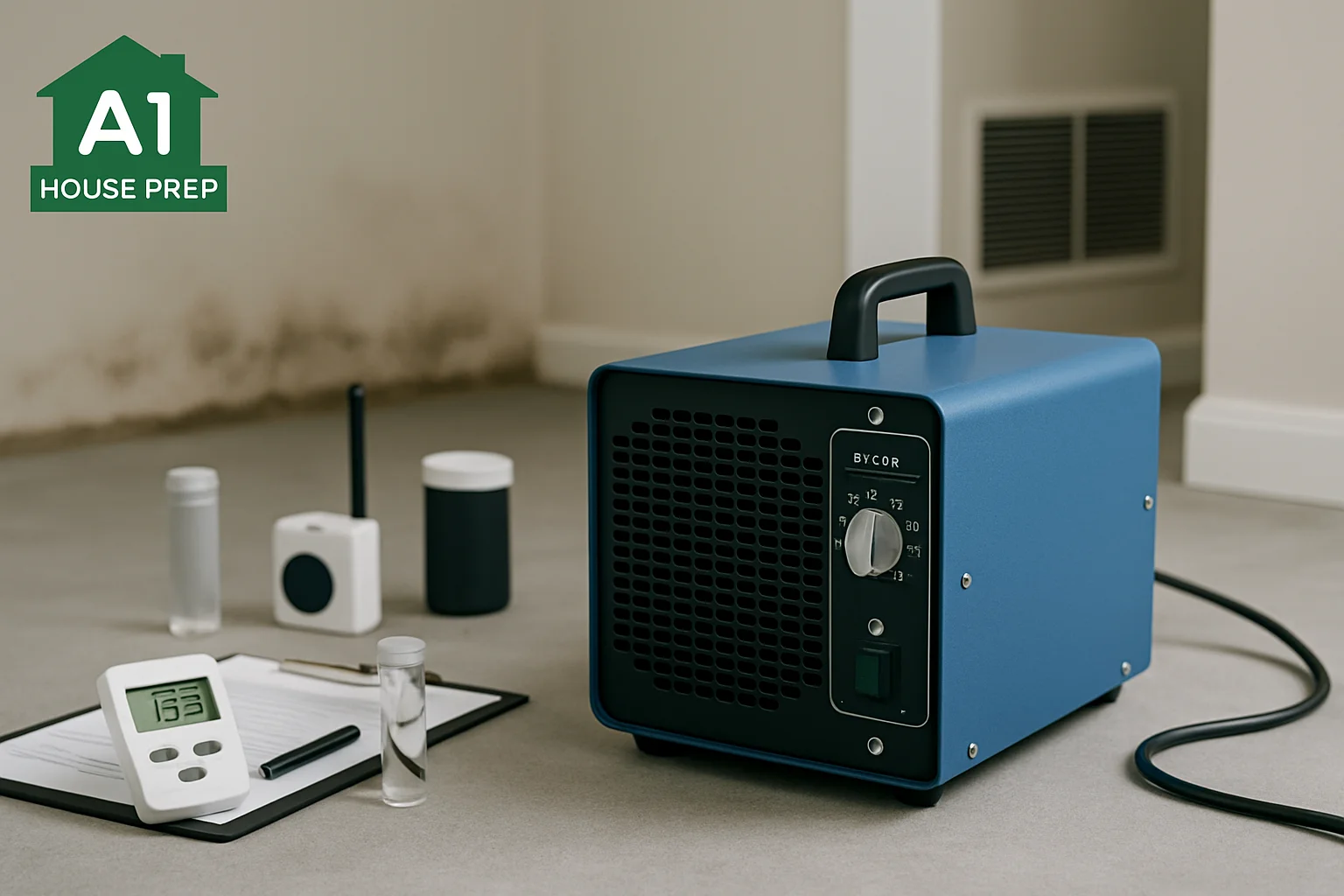
Ozone (O3) is a highly reactive form of oxygen. Professional ozone machines produce ozone gas that can react with many odor-causing molecules. In controlled, unoccupied spaces, ozone treatment may help reduce stubborn smells that are difficult to reach with normal cleaning—particularly after:
- Minor water damage and lingering “wet basement” odor
- Musty smells in finished basements, spare rooms, closets, or storage areas
- Smoke-like “stale house” odor from a closed-up home (after the source is addressed)
- Odors from pets, cooking, or general occupant buildup (after thorough cleaning)
Think of ozone as a reset tool for the smell of a space—not a replacement for dehumidification, cleaning, or repairs. A responsible moisture odor treatment plan starts with moisture control and sanitation, then uses ozone as a final step when needed.
When an ozone machine rental makes sense (and when it doesn’t)
Homeowners and real estate professionals often ask whether they “should just run ozone.” The right answer depends on what’s causing the odor and whether the space can be treated safely and effectively.
Good candidates for ozone odor treatment
- Persistent musty odor after materials have been dried and cleaned
- Basement odor removal for areas with ongoing humidity control (dehumidifier, proper ventilation, improved drainage)
- Post-remediation finishing step after removing damaged carpet, drywall, or saturated storage items
- Vacant or temporarily unoccupied homes (ideal for treatment and airing out)
When ozone is the wrong tool (or a “not yet”)
- Active water intrusion (leaks, seepage, wet materials still drying)
- Visible microbial growth or extensive contamination that requires professional remediation
- Strong chemical odors without a clear source (needs investigation)
- Occupied spaces where people, pets, or plants cannot be removed during treatment
If you’re unsure whether the smell is “just musty” or a sign of a bigger indoor environment issue, pairing odor work with testing can be a smart step. A1 House Prep offers Air Quality Testing and Water Testing for homeowners who want clearer information while planning next steps.
Step-by-step: A practical plan for musty odor removal after water damage
For best results, treat odor like a checklist—not a single product. Here’s a homeowner-friendly sequence that real estate pros also appreciate during listing prep.
1) Stop the moisture at the source
- Fix leaks (plumbing, foundation seepage, window wells, HVAC condensate issues).
- Confirm gutters/downspouts discharge away from the foundation.
- Improve grading if water is pooling near the home.
2) Dry thoroughly (and verify)
- Use dehumidifiers and fans; consider professional drying help after significant water.
- Remove wet carpet pads, soaked drywall, and saturated stored items if they can’t be properly dried/cleaned.
- Check typical “hidden” zones: behind couches, under area rugs, inside closets, around sump pits.
3) Clean surfaces that hold odor
- HEPA vacuum dust and debris (especially in basements and utility areas).
- Clean hard surfaces where residue accumulates (floors, shelving, baseboards).
- Launder washable fabrics; discard porous items that remain odorous after cleaning.
4) Control humidity going forward
- Maintain basement humidity at a reasonable level with a properly sized dehumidifier.
- Ensure dryer vents and bath fans exhaust outside (not into attic or crawlspace).
- Improve airflow in closed rooms and closets.
5) Use ozone as a finishing step (when appropriate)
Once the space is clean and dry, a professional ozone machine rental can help reduce leftover odor that seems “embedded” in the room. A1 House Prep can guide you through equipment selection and general best practices via our ozone machine rentals, especially for homeowners preparing for showings or move-in.
How to use a professional ozone machine responsibly in a home
Ozone should be treated like a serious tool. You’ll want to follow manufacturer instructions and keep treatment conservative—especially in smaller, tightly sealed rooms where concentrations can build quickly.
General best practices (homeowner-focused)
- Only treat unoccupied spaces. Remove people, pets, and plants during treatment and the immediate airing-out period.
- Remove sensitive items when possible. Some materials (rubber, certain plastics, delicate fabrics) may be more reactive.
- Pre-clean first. Ozone works best after the odor source and residue are addressed.
- Target the right area. Treat the room(s) where odor is strongest; don’t over-treat the entire house if the issue is localized.
- Use a timer and a plan. Short, controlled runs with evaluation in between are often more practical than “set it and forget it.”
- Aerate thoroughly afterward. Open windows/doors (as practical) and use fans to exchange air before re-occupying.
If you’re preparing a property for a buyer showing, aim to complete treatment and aeration well before scheduled traffic so the home feels fresh and normal—without heavy fragrance covering up underlying issues.
Basement odor removal in our area: what makes it tricky
In towns like North Wales, Ambler, and Blue Bell—plus surrounding Montgomery County communities—it’s common to see older basements with a combination of humidity and porous materials. Even without a dramatic flood, the following can set the stage for recurring musty odor:
- Seasonal humidity swings and cool basement surfaces
- Stone or block foundations that can wick moisture
- Finished basements where wall cavities can hide dampness
- Storage habits (cardboard on basement floors, fabric bins, paper goods)
A successful moisture odor treatment plan is usually a combination of: keeping humidity controlled, limiting porous storage, and using targeted odor remediation when needed. Ozone can be part of that “reset” process—particularly before a sale or after a water event.
For buyers, sellers, and agents: when odor treatment helps a transaction
Odor is emotional. A clean inspection report can still be overshadowed by a musty first impression. If you’re listing a home in Collegeville or showing properties in Hatfield or Souderton, odor control can support confidence and comfort.
- Sellers: Reduce musty odor before photos, open houses, and private showings.
- Buyers: Address “mystery smells” after move-in, especially in basements and closed rooms.
- Agents: Use a consistent plan that pairs cleaning + moisture control + targeted odor treatment, rather than masking sprays.
If the property has a history of water intrusion or you want more clarity about the indoor environment, consider pairing odor work with Air Quality Testing. For homes on private wells or where water issues are part of the story, Water Testing can also support a more complete picture.
Related home prep services that pair well with ozone rentals
Odor control is often connected to broader home performance and maintenance. Depending on what you’re seeing (and smelling), these services can complement an odor-removal plan:
- Air Quality Testing for homeowners who want data to help guide next steps.
- Radon Testing as part of a smart basement-focused home health checklist (especially during real estate timelines).
- Water Testing for properties with private wells or water quality concerns.
- Water Heater Flushing to support efficiency and reduce sediment-related issues as part of overall home prep.
Need help choosing the right ozone machine rental for a musty smell?
A1 House Prep serves Harleysville, Lansdale, Hatfield, Souderton, North Wales, Blue Bell, Ambler, and Collegeville with professional-grade ozone machine rentals and homeowner-focused guidance. Call 215.853.8226 or request service online to discuss your space, timeline, and the best next step.
FAQ: Ozone machine rental for musty smells and water-damage odors
1) Will an ozone machine rental remove a musty smell permanently?
Ozone treatment may reduce or eliminate lingering odors, but long-term results depend on fixing the moisture conditions that caused the smell. For many homes, the “permanent” solution is moisture control (drying, dehumidification, leak repair) plus targeted odor treatment as a finishing step.
2) How do I know if my odor issue is moisture-related or something else?
Musty odors often correlate with higher humidity, past water events, or stored porous items in basements and closets. If the odor is strongest after rain, during humid weather, or near exterior walls/floors, moisture is a likely factor. If you want a more informed plan, consider air quality testing to help guide next steps.
3) Is ozone the same as using an air purifier or dehumidifier?
No. Dehumidifiers remove moisture from the air, and air purifiers filter particles. Ozone machines generate a reactive gas intended for controlled odor treatment in unoccupied spaces. In many homes, the best approach is to use a dehumidifier for ongoing humidity control and ozone only as a targeted, occasional odor-removal tool.
4) How long should I run an ozone machine for basement odor removal?
Run time varies based on the size of the space, severity of odor, and the machine’s output. Many homeowners get better results by using conservative, timed treatments and reassessing between runs rather than over-treating. Always follow the unit’s instructions and plan time for thorough ventilation afterward.
5) Can I use ozone after a flood or major water damage?
Ozone can be considered after drying and cleanup are complete, but it’s not a substitute for water extraction, structural drying, or removal of water-damaged porous materials. If materials are still wet or the source isn’t resolved, odor is likely to return.
6) Should I rent an ozone machine before listing my home?
If a musty smell is affecting first impressions, ozone treatment can be a helpful final step—especially when paired with cleaning and humidity control. For real estate timelines in places like Lansdale, Souderton, and Collegeville, it’s best to schedule treatment with enough buffer time to ventilate and confirm the home smells clean and neutral before showings.
7) What’s the best first step if I’m not sure what I need?
Start by identifying where the odor is strongest and whether there’s a moisture trigger (rain, humidity, plumbing use). Then reach out to A1 House Prep to discuss options—including whether an ozone machine rental musty smell plan fits your situation. You can call 215.853.8226 or request service online.
Ready for a cleaner, fresher-smelling home?
Musty odors after water damage are frustrating—but they’re also common and solvable with the right sequence: moisture control first, then targeted odor treatment. If you’re in Harleysville, Hatfield, North Wales, Blue Bell, Ambler, Lansdale, Souderton, or Collegeville and want a professional-grade solution with practical guidance, explore A1 House Prep’s Professional Ozone Machine Rentals. For scheduling, call 215.853.8226 or request service here.