Is That Odor Really Gone or Just Covered Up?
Most homeowners in Pennsylvania have had this moment: you walk into a room and notice a smell that wasn’t there before—or a smell that seems to return at the worst possible time. You light a candle, spray an air freshener, open a window, and within minutes everything feels better. But later that day (or a week later) you catch a familiar whiff again and wonder: is the odor gone or covered up?
That question is more than a nuisance. Odors can affect how comfortable your home feels day to day, and they can raise eyebrows during showings, inspections, and appraisals. In Montgomery County and Bucks County communities like Harleysville, Lansdale, Hatfield, Souderton, North Wales, and Blue Bell, odors often come down to a few repeat culprits: humidity, pets, cooking, smoke, seasonal dampness, stored items, and sometimes less obvious sources you can’t see.
This article is for the curious homeowner (and the practical buyer, seller, or real estate pro) who wants clarity without panic. The goal isn’t to scare you—it’s to replace guessing with a calm, methodical approach. When you understand the difference between masking a smell and addressing its source, you can make smarter choices, protect your time and budget, and feel confident about the air in your home.
Covered Up vs. Gone: What Your Nose Can (and Can’t) Tell You
Your sense of smell is powerful—but it isn’t a lab instrument. Here’s why odors can trick even attentive homeowners:
- Olfactory fatigue: You stop noticing a smell after exposure, even if it’s still present.
- Humidity changes: Damp air can “carry” odors differently than dry air, making smells appear and disappear with the weather.
- Temperature swings: HVAC cycles, sun exposure, and seasonal shifts can re-activate odors trapped in materials.
- Layered scents: Cleaning products, candles, or plug-ins may temporarily dominate the air while the original odor remains underneath.
- Hidden reservoirs: Odors may be held in porous materials like carpet, upholstery, unsealed concrete, or unfinished framing.
So when you ask whether an odor is gone or covered up, you’re really asking: “Did we remove the source, or did we just change what the room smells like right now?”
Common “Phantom Odors” in Pennsylvania Homes (and Why They Come Back)
Many odor issues follow patterns in our region. Here are common categories A1 House Prep hears about across local homes:
1) Moisture-Related Odors
That classic “musty basement” smell often points to moisture interacting with building materials. The odor can get stronger after heavy rain, humid weeks, or when the HVAC has been off.
2) Pet Odors That Linger in Layers
Even well-cared-for pets can leave odor traces in carpet pads, subfloors, baseboards, and upholstery. Surface cleaning helps, but deeper materials may still hold odor compounds.
3) Cooking and Grease Films
Cooking odors can settle into paint, cabinets, and fabrics—especially in open-concept homes where the kitchen shares air with living spaces.
4) Smoke Residues
Smoke can cling to porous materials and re-emerge with humidity and heat. Sometimes homeowners don’t notice it until a house is closed up for a few days.
5) Storage Odors (Cardboard, Old Paper, Stored Textiles)
Basement storage areas and closets can develop a “stale” smell that seems mysterious but often comes from stored contents rather than the room itself.
6) Plumbing Traps and Intermittent Sewer-Like Smells
Occasional odors from drains or seldom-used fixtures can show up at odd times. These typically require a practical, mechanical check rather than more fragrance.
None of these automatically mean something “dangerous”—but they do mean the best next step is to get specific instead of guessing.
The Curiosity Test: Two Questions That Quickly Clarify What’s Happening
If you’re trying to decide whether an odor is truly resolved or just masked, ask:
- Does the smell return when the home is closed up for 12–24 hours? If yes, the source is likely still present (even if it’s small).
- Does the smell intensify with humidity, heat, or HVAC cycles? If yes, the odor may be stored in materials and re-releasing under certain conditions.
These two clues help you choose a smarter plan: cleaning and removal, targeted testing, or a professional odor treatment approach.
Why “More Fragrance” Usually Makes the Problem Harder to Solve
It’s understandable to reach for quick solutions—especially before guests arrive or during a real estate listing. But heavy fragrances can complicate your next steps:
- Masking hides patterns: If you can’t detect when and where the odor appears, it’s harder to locate the source.
- Layering creates new odors: Smoke + perfume + cooking odors can create a “mixed” smell that’s more noticeable to visitors.
- Buyer perception risk: In showings, strong air fresheners can make buyers wonder what’s being concealed.
A premium approach is subtle: identify what’s happening, confirm what you can, and use the right tool for the right job.
Testing Replaces Guessing: Invisible Home Facts That Support Better Decisions
Odors are sensory—but the conditions behind them can be measurable. If you’re trying to make confident decisions (especially when buying or selling), consider pairing odor concerns with practical home testing services.
- Concerned about overall indoor conditions? Consider Air Quality Testing to better understand what’s in the air beyond what you can smell.
- Wondering about “basement air” and the bigger picture? In many Pennsylvania homes, Radon Testing is a smart, separate step for understanding an invisible factor that isn’t odor-based.
- Noticing unpleasant taste/smell in water? Water Testing can help identify common issues that can contribute to odor at sinks, taps, or appliances.
Think of it as building a short list of facts, not chasing a feeling. For homeowners and real estate professionals, that clarity supports faster, calmer decisions.
Where Ozone Fits: A Professional Tool for Odor Treatment (Not a Cover-Up)
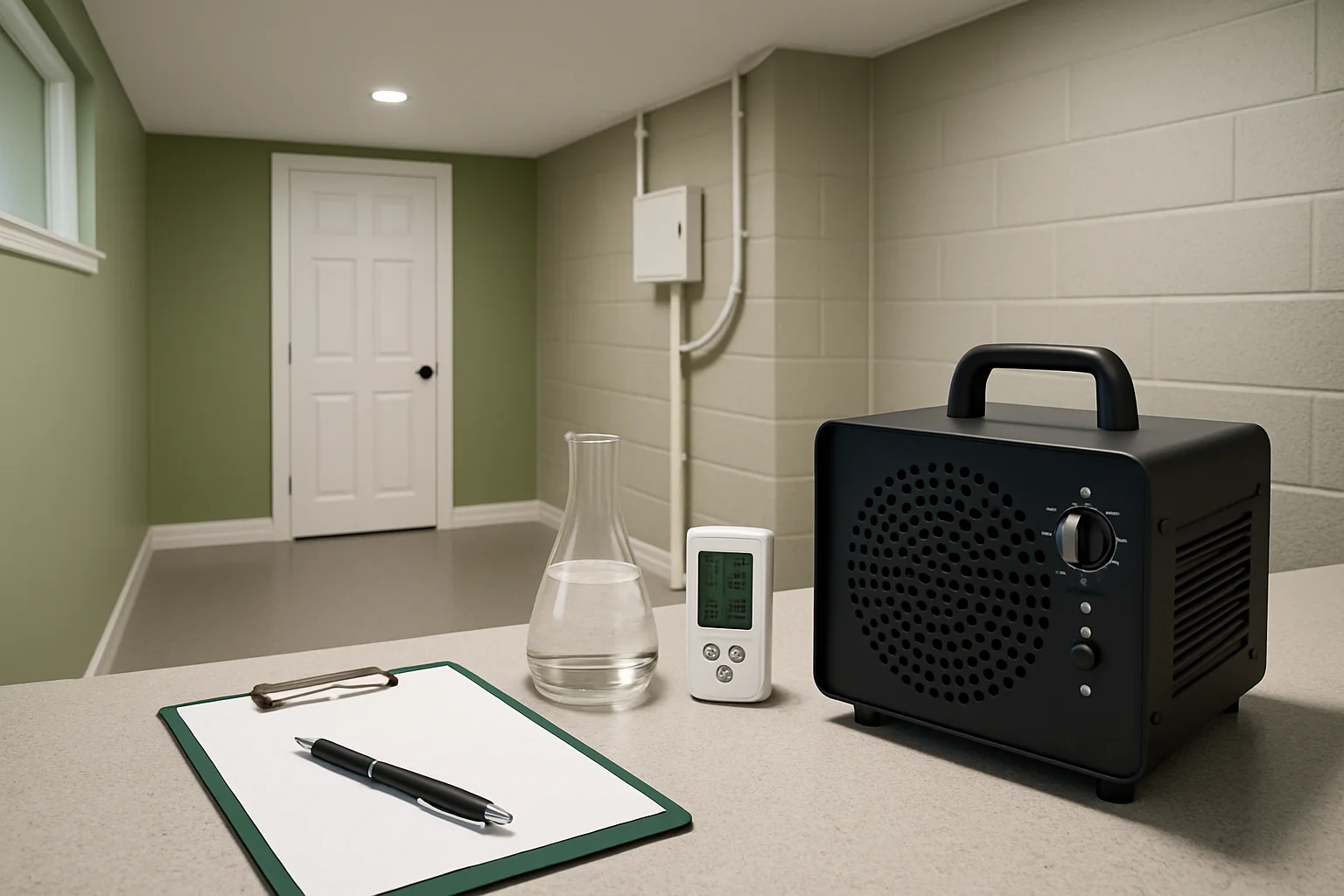
When the underlying source has been addressed (for example, removing the affected items, cleaning the area, or resolving moisture contributors), there can still be stubborn residual odor in porous materials. That’s where a professional ozone treatment can be an option.
Ozone is used in some odor-control scenarios because it can help oxidize odor-causing compounds. But it’s not a “spray-and-pray” shortcut—and it’s not meant to replace real root-cause work.
If you’re exploring this option in Montgomery County or Bucks County, A1 House Prep offers Professional Ozone Machine Rentals with homeowner-focused guidance so you can use the equipment appropriately.
Important: Ozone Use Is for Unoccupied Spaces Only
Ozone treatment should only be performed when the space is unoccupied. That means:
- No people in the treatment area during operation
- No pets in the treatment area during operation
- Follow all instructions for run time, placement, and post-treatment ventilation
When used responsibly, ozone can be part of a premium “finish step” for odor cleanup—helping you feel confident that you didn’t just cover up the issue.
A Calm, Practical Process: How to Tell If the Odor Is Truly Resolved
If you want a homeowner-friendly method that works whether you’re living in the home or preparing it for listing, try this sequence:
Step 1: Identify the “Odor Conditions”
- When do you notice it most (morning, after rain, after cooking, after HVAC runs)?
- Where is it strongest (one room, a closet, near a return vent, basement stairs)?
- Is it seasonal or constant?
Step 2: Remove or Clean the Most Likely Reservoirs
- Wash fabrics, replace HVAC filters, and clean soft surfaces as appropriate
- Check stored items—sometimes the “room smell” is really “box smell”
- Address obvious moisture contributors (dehumidification, airflow, drying wet items)
Step 3: Ventilate, Then Re-Test by Living Normally
After cleaning and removal, ventilate, then run the home as usual for several days. This “normal living” period is the truth test: if the odor returns with routine conditions, the source may still be present.
Step 4: Consider Targeted Testing for Confidence
If you’re stuck, testing can provide the next clue—especially when the smell is vague, intermittent, or showing up during real estate timelines. A1 House Prep can help you choose between air or water or radon testing based on what you’re experiencing.
Step 5: Use Ozone as a Finish Step (When Appropriate)
If you’ve removed the source and want a deeper odor treatment approach, ozone machine rentals can be the final “reset” for certain odor scenarios—used only in unoccupied spaces with proper setup and ventilation afterward.
Real Estate Perspective: Odor Confidence for Buyers, Sellers & Agents
Odor issues can create outsized reactions during a showing. Even minor smells may lead buyers to assume bigger problems. If you’re preparing a home in Harleysville, Lansdale, Hatfield, Souderton, North Wales, Blue Bell—or anywhere in Montgomery or Bucks County—here are premium, practical tips:
- Don’t over-fragrance before showings: A “freshly sprayed” home can raise suspicion. Aim for clean, neutral air.
- Document what you did: If you addressed a known issue (deep cleaning, replacing a pad, removing stored items), keep notes. It helps conversations stay factual.
- Consider testing as a trust-builder: Clear results can reduce uncertainty for buyers who are sensitive to “invisible home facts.”
- Schedule odor treatment wisely: If ozone is part of the plan, allow time for treatment and thorough ventilation before any occupancy or showings.
The goal isn’t perfection—it’s confidence. The most successful outcomes come from calm problem-solving, not panic.
FAQ: Odors, Ozone, and “Is It Really Gone?”
1) How can I tell if an odor is gone or covered up?
Close the space up for 12–24 hours (windows closed, normal HVAC), then re-enter and check. If the odor returns, it’s likely not fully resolved. Also note whether humidity, heat, or HVAC cycles make it stronger—those patterns often point to odor stored in materials.
2) Why does an odor disappear during the day and come back at night?
Temperature and airflow changes can alter how odors move through a home. Evening humidity, reduced ventilation, and HVAC cycling can make smells more noticeable. It doesn’t always indicate a severe issue, but it does suggest the source may still be present.
3) Is ozone just another way to cover up smells?
Ozone is not a fragrance and isn’t meant to “mask” odor. It’s a tool sometimes used to treat residual odor compounds after the source has been removed or addressed. It works best as part of a broader plan—not as a substitute for cleaning or removal.
4) Can I run an ozone machine while I’m in the home?
No. Ozone treatment should be performed in unoccupied spaces only, with no people or pets present. Follow the equipment guidance for run time and make sure the area is ventilated afterward before anyone re-enters.
5) What if I can’t find the source, but I know something smells “off”?
That’s common. In those cases, a measured approach helps: track when/where it happens, eliminate likely reservoirs (soft goods, stored items), and consider targeted services like Air Quality Testing or Water Testing depending on the odor profile and location.
6) Do musty odors always mean mold?
Not always. Musty smells are often associated with moisture and materials, but the cause can vary. If you’re unsure, avoid assumptions and focus on practical next steps: reduce humidity, improve airflow, and consider testing or professional evaluation to better understand what’s going on.
Want Confidence Instead of Guesswork?
If you’re trying to determine whether an odor is truly resolved—or you want a professional-grade option for treating residual smells—A1 House Prep can help you choose a smart next step for your home in Montgomery County or Bucks County.
- Explore Professional Ozone Machine Rentals (for unoccupied spaces only, with safe-use guidance)
- Add clarity with Air Quality Testing, Water Testing, or Radon Testing
Call A1 House Prep: 215.853.8226
Request service online: /request-service/
When you’re wondering if the odor gone or covered up question applies to your home, you’re already thinking like a careful homeowner. With a calm process—and the right combination of cleaning, verification, and professional tools—you can move from uncertainty to confidence without overreacting.