Indoor Air Quality Testing for Musty Odors in the Home
A musty smell in the house can be easy to ignore at first—until it becomes persistent or shows up after rain. In many Pennsylvania homes, “musty” often points to moisture, ventilation issues, or hidden materials holding onto odor. The challenge is that your nose can detect a problem long before you can see it, and guessing at the cause can waste time and money.
If you’re searching for air quality testing for musty smell, you’re likely looking for practical answers: What’s causing it? Is it coming from the basement, crawl space, HVAC system, or behind a wall? Should you be concerned as a homeowner—or as a buyer, seller, or agent preparing for a transaction?
A1 House Prep provides professional Air Quality Testing across Harleysville, Lansdale, Hatfield, Souderton, North Wales, Blue Bell, Ambler, and Collegeville. This guide explains how musty odor testing works, what it can tell you, and what to do next once you have results.
Why homes develop a musty odor
“Musty” is usually a symptom, not a diagnosis. It often correlates with excess moisture, organic debris, or stagnant air. Common contributors include:
- Basement humidity: Seasonal moisture in foundation areas and lower levels.
- Minor water intrusion: Slow leaks, window well seepage, or poor drainage.
- HVAC issues: Condensation, dirty coils, or clogged drain pans.
- Carpets and porous materials: Items that absorb moisture and hold odor.
- Crawl spaces and rim joists: Damp air moving into living spaces.
Because air moves throughout a home, the room where you smell it most isn’t always where it originates. That’s where home air testing can help narrow down the likely source and guide next steps.
When musty odor testing makes sense
Basic fixes like cleaning, dehumidifying, or changing HVAC filters can help. But if the smell returns or worsens, testing becomes a practical next step—especially when you’re preparing a home for sale or evaluating a property purchase.
Consider professional indoor odor concerns testing when:
- The smell persists after basic cleaning and dehumidification.
- The odor is strongest in the basement, lower level, bathroom, or near an exterior wall.
- You’ve had recent leaks, storms, or plumbing issues.
- You’re buying or selling and want clearer documentation.
- There’s visible staining, bubbling paint, or warped materials.
Testing doesn’t replace repairs, but it can help you decide where to focus your time and budget.
What air quality testing can help identify
Musty odors are commonly associated with damp environments and organic materials. In an air testing context, the goal is to gather data that helps identify whether conditions in your home suggest a moisture-related issue.
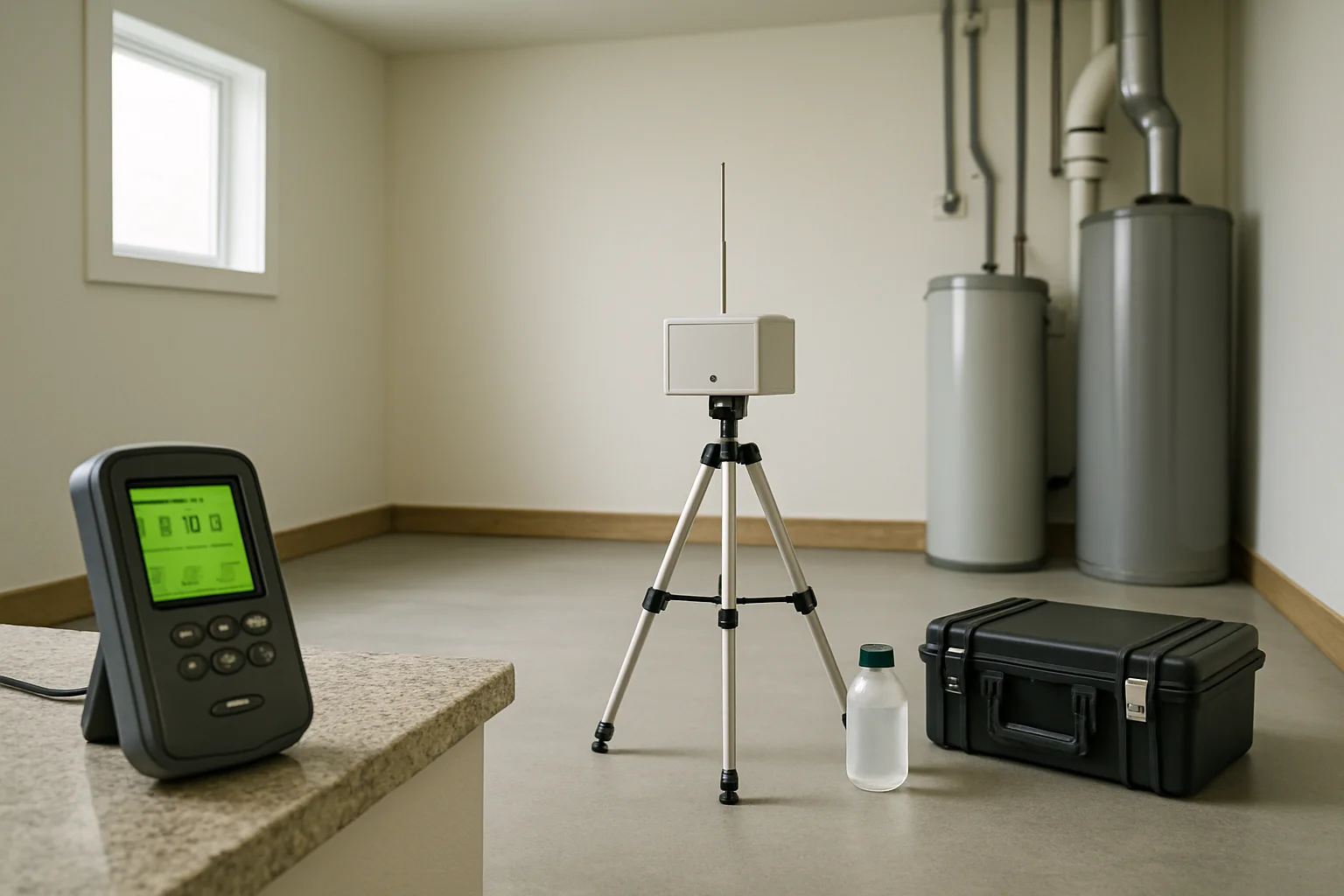
Depending on the situation, air quality testing can help support findings such as:
- Differences between indoor and outdoor conditions: Useful for determining whether an indoor source may be contributing.
- Room-to-room variation: Helpful when one area appears more affected than another.
- Patterns consistent with dampness: A way to understand whether the odor aligns with moisture-related conditions.
In plain terms, testing helps turn a vague complaint into actionable information. That makes it easier to decide whether to prioritize moisture control, ventilation improvements, targeted cleaning, or further inspection.
Common musty-odor hotspots
In homes across Montgomery County, certain areas come up often when tracking a musty smell:
- Finished basements and lower levels: Moisture can hide behind wall panels, under flooring, or in insulation.
- Utility rooms and mechanical closets: HVAC systems, water heaters, laundry appliances, and sump pits can contribute to dampness.
- Bathrooms and laundry areas: High humidity and poor ventilation can create ongoing dampness.
- Attics and top-floor ceilings: Roof leaks or ventilation issues can lead to moisture problems.
- Crawl spaces and rim joists: Odors can migrate upward into living areas.
What to do before testing
A little prep can make results more useful:
- Avoid heavy air fresheners for 24–48 hours: Strong fragrances can mask odors.
- Run the home normally: Keep HVAC settings typical.
- List recent events: Leaks, storms, repairs, or humidity issues.
- Identify suspect areas: Rooms or closets where the odor is strongest.
If you’re preparing a property for sale, coordinate with your agent so testing aligns with inspections and negotiations.
How to interpret results
Homeowners often want a simple yes/no answer: “Is it mold?” But indoor environments are more nuanced. Air testing can provide valuable data, yet it’s only one part of the bigger picture.
Testing can help you:
- Prioritize next steps.
- Decide whether more investigation is warranted.
- Document conditions for real estate decisions.
Testing cannot by itself:
- Locate the exact hidden source without additional inspection.
- Confirm the cause of moisture.
- Guarantee future outcomes from repairs or cleaning.
The most effective approach is to test for objective information, then address moisture, ventilation, and affected materials based on the findings.
Real estate situations: buyers, sellers, and agents
Musty odors can complicate real estate transactions because they raise questions. Even when the cause is minor, buyers may worry about hidden damage. Testing can provide clarity and help the parties make informed decisions.
- For sellers: Testing can help document the situation and plan targeted improvements before listing.
- For buyers: Testing can help determine whether the odor appears isolated or more widespread.
- For agents: A clear testing plan can reduce speculation and keep the process moving.
Service area
A1 House Prep works with homeowners and real estate professionals throughout Montgomery County and nearby communities, including Harleysville, Lansdale, Hatfield, Souderton, North Wales, Blue Bell, Ambler, and Collegeville. If your home has persistent indoor odor concerns, we can help you take a practical, data-informed next step.
Schedule Air Quality Testing for Musty Odors
If you’re dealing with a persistent basement smell, a stale odor after rain, or an unexplained musty scent in one room, A1 House Prep can help you get clear, homeowner-friendly insights through professional Air Quality Testing.
Call: 215.853.8226
Request online: Request Service
FAQ: Musty odor testing and home air testing
1) What is the most common cause of a musty smell in a house?
Many musty odors are linked to excess moisture in basements, crawl spaces, bathrooms, or around HVAC components.
2) Can air quality testing confirm whether the smell is coming from the basement?
Testing can help compare areas and identify whether one zone appears more affected, which can guide further inspection.
3) Does a musty smell always mean there’s mold?
No. Musty odor is often associated with dampness, but it can also come from stored materials, wet carpet padding, or HVAC condensation.
4) How quickly can musty odors return after cleaning?
If the moisture or ventilation issue isn’t corrected, odors can return quickly—sometimes within days or weeks.
5) Do you offer other home testing services?
Yes. In addition to air testing, A1 House Prep offers Radon Testing and Water Testing.
If you’re ready to move from guessing to informed next steps, schedule your air quality testing with A1 House Prep or request service online. You can also call 215.853.8226 to discuss what you’re noticing and the best way to approach musty odor testing in your home.