How Much Do You Really Know About Your Home’s Air?
Your home can look spotless, smell fine, and still leave a big question unanswered: what’s actually in the air you’re breathing every day? In Pennsylvania—especially across Montgomery County and Bucks County—homeowners and real estate professionals are increasingly curious about indoor air quality because it’s one of the most important parts of a home you can’t see. The good news is you don’t have to guess. You can test.
This article is designed around the most common home air quality testing questions we hear in communities like Harleysville, Lansdale, Hatfield, Souderton, North Wales, and Blue Bell. We’ll keep it calm, practical, and homeowner-focused: what to test for, when to test, how to prepare, and how to use the results to make smarter decisions—whether you’re settling into a home, preparing to list, or advising clients.
If you’d like a clear next step, A1 House Prep provides professional Air Quality Testing across the region, with straightforward guidance from start to finish.
Why indoor air feels like a mystery (and why testing helps)
Indoor air is an “invisible system.” It changes with seasons, humidity, renovations, cleaning habits, pets, ventilation, and even how often doors and windows are opened. That’s why a quick sniff test or a few assumptions rarely give you a reliable picture.
Testing replaces guessing by helping you answer questions like:
- Is there evidence of elevated moisture or conditions that may support microbial growth?
- Are there signs of combustion byproducts or ventilation issues?
- Did a past odor event leave behind something measurable?
- Is the air behaving differently in the basement than the bedrooms?
For homeowners, testing can support confident decisions about maintenance, ventilation improvements, and next steps. For buyers and sellers, it can reduce uncertainty during a transaction by providing data that’s easier to discuss than vague concerns.
Premium perspective: A “good-looking” home can still have unanswered questions—especially after new flooring, fresh paint, water intrusion, or long vacancy. Air testing isn’t about panic; it’s about curiosity, clarity, and documentation when it matters.
What does home air quality testing typically look for?
Air quality testing can be tailored to the home and the concern. Not every situation needs every test, and that’s part of the value: choosing the right approach based on the building, occupant goals, and symptoms like persistent odors or humidity problems (without assuming a cause).
Common indoor air quality targets include:
- Particulates and dust-related concerns (often tied to filtration, housekeeping, ducts, and building leakage)
- Moisture indicators that may correlate with mold-prone conditions (basements, crawlspaces, bathrooms, and behind finished walls)
- Combustion and ventilation concerns (furnaces, water heaters, fireplaces, attached garages)
- Volatile organic compounds (VOCs) that can be influenced by renovation products, stored chemicals, and new furnishings
- Localized issues tied to a specific room, event, or odor pattern
In many Pennsylvania homes—particularly those with finished basements, older construction, or seasonal humidity swings—the most helpful first step is often understanding moisture behavior and ventilation. From there, targeted testing can help narrow down the “why” behind the “what.”
Home air quality testing questions homeowners ask (and what to consider)
1) “When is the best time to test?”
Testing can be useful any time you’re trying to answer a question, but timing can change what you learn. For example:
- After a renovation: Useful if you want to understand how new materials may be affecting indoor air or odors.
- During humid months: Helpful when basements and crawlspaces are more likely to show moisture-related patterns.
- During heating season: Useful for homes that feel “stale” or have stronger odor patterns when windows stay closed.
- Before listing or after closing: Helpful as part of a proactive property preparation plan or due diligence process.
2) “Can’t I just buy a monitor online?”
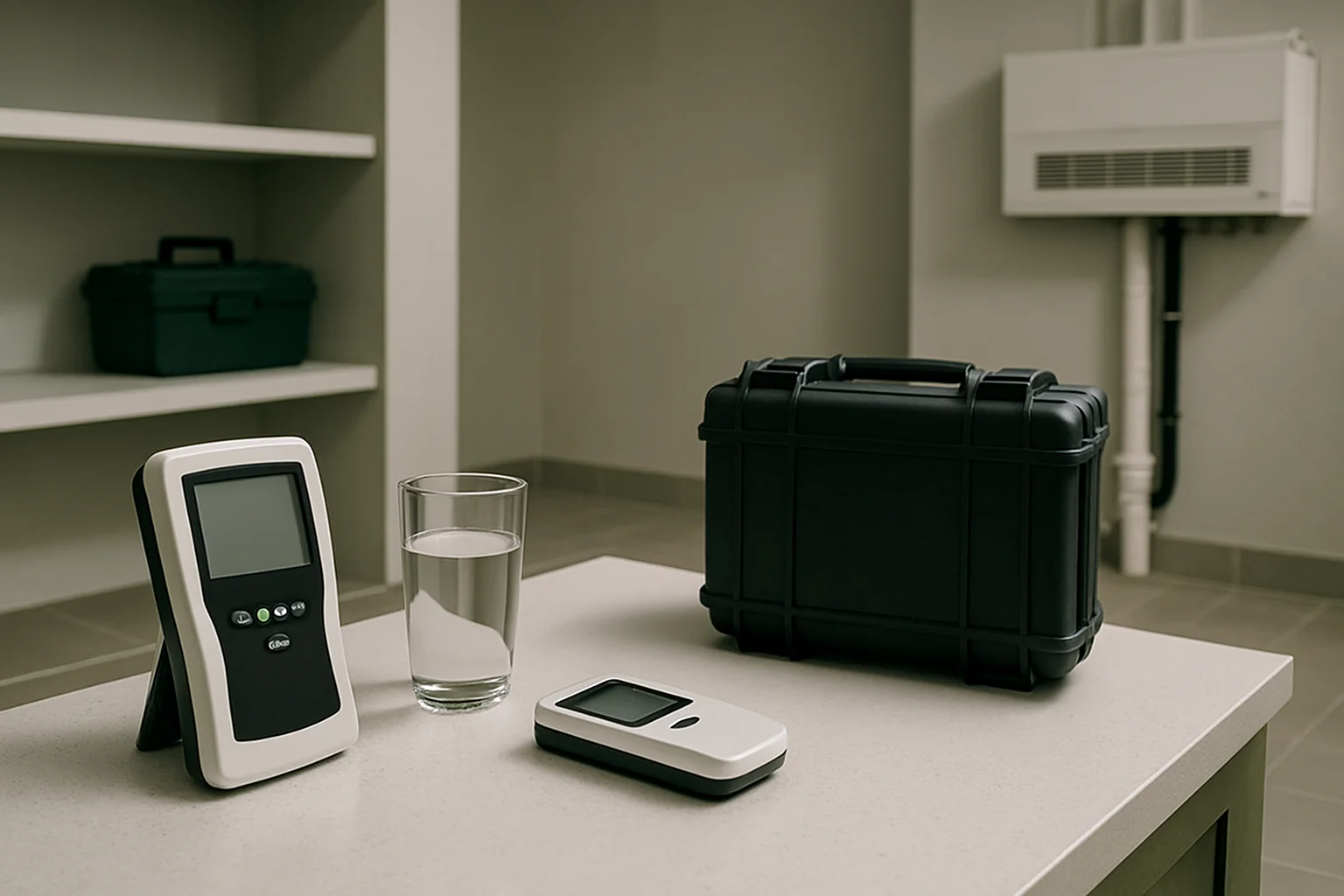
Consumer monitors can be helpful for general awareness, but they often raise more questions than they answer—especially when readings vary hour-to-hour or from room to room. Professional testing is about context: where samples are taken, what comparisons are made, and how results are interpreted alongside building conditions (like ventilation paths, moisture sources, and HVAC behavior).
If you already have a monitor and something looks “off,” that can be a great conversation starter. Professional testing can help confirm whether the concern is consistent, localized, seasonal, or tied to a specific source.
3) “What rooms should be tested?”
Start with how the home is used and where concerns show up. Typical focus areas include:
- Basements and lower levels (moisture patterns, storage odors, finished walls)
- Bedrooms (where people spend long, uninterrupted periods)
- Main living areas (high-traffic and HVAC influence)
- Problem rooms (musty corners, rooms over garages, recently remodeled spaces)
In areas like Lansdale, Hatfield, and Souderton—where homes may range from older construction to newer developments—testing strategies can vary. A1 House Prep can help choose a plan that matches the home’s layout and your goals.
4) “If the home smells fine, do I still need testing?”
Not necessarily—but smell isn’t a reliable measurement tool. Some issues have strong odors; others don’t. Testing is most valuable when you want to replace “I think it’s okay” with “I have data.” That’s especially relevant for buyers, sellers, and real estate professionals who want fewer surprises and clearer documentation.
5) “What if I’m worried about radon too?”
Air quality questions often overlap with broader home testing. In Pennsylvania, radon is a common point of curiosity, especially for homes with basements. If radon is on your mind, consider scheduling a dedicated Radon Testing alongside your air quality discussion so you can prioritize next steps with confidence.
Radon testing is its own process and should be handled as a specific, separate measurement—rather than an assumption based on neighborhood or home age.
Invisible home facts: common triggers that make people curious
Many air-quality concerns start with a simple observation—something subtle that doesn’t scream “problem,” but keeps nagging at you. Here are common triggers we hear in Montgomery County and Bucks County:
- A persistent musty note in the basement or a back room
- “Stale air” during winter when the home is closed up
- New materials after flooring, painting, cabinetry, or insulation work
- Past water intrusion (even if it was “handled”)
- Condensation on windows or cold corners
- Odors after pet ownership, smoking history, cooking, or long vacancy
- Real estate timelines that require clarity quickly
Testing helps convert these triggers into a plan: what to measure, where to look, and what improvements might be worth considering—without jumping to conclusions.
Odor is real—even when the source isn’t obvious
Odor concerns are among the most common “curiosity marketing” questions we get: “The house is clean, so why does it still smell like something?” Odors can be influenced by moisture, finishes, furnishings, previous occupancy, HVAC conditions, and airflow patterns (like negative pressure pulling air from basements, garages, or crawlspaces).
Sometimes odor issues can be addressed with cleaning, humidity control, and ventilation changes. In other cases, homeowners want a more aggressive, short-term odor treatment option as part of property preparation.
Professional ozone machine rentals: a specialized tool (with strict rules)
A1 House Prep offers Professional Ozone Machine Rentals for odor treatment scenarios where it’s appropriate. Ozone is not a casual air freshener. It should be used with careful planning and strict safety practices.
- Use only in unoccupied spaces: People, pets, and plants must be out of the treated area.
- Follow rental instructions exactly: Run-time, placement, and post-treatment ventilation matter.
- Ventilate thoroughly afterward: Allow time for air-out before re-entry.
- Remove or protect sensitive items: Certain materials can be affected by ozone exposure.
If you’re preparing a home for sale in Blue Bell or North Wales, or trying to reset an odor after a vacancy in Harleysville, ozone may be one tool in a broader plan. The goal is a practical, controlled approach—not an ongoing masking strategy.
How to prepare for an air quality test (so results are meaningful)
Preparation depends on the testing approach and your goals, but these general tips help avoid “noisy” results:
- Don’t deep-clean or use strong fragrances right before testing: Heavy scents can cloud the picture.
- Keep windows and doors in typical positions: Test how you actually live (unless instructed otherwise).
- Note recent events: Painting, sanding, pest treatments, new furniture, or water events are important context.
- Identify priority rooms: Where do concerns show up? Where do people spend the most time?
- Share HVAC details: Filter type, recent service, humidifiers/dehumidifiers, and any unusual operation.
For real estate professionals, gathering a short history (vacancy length, known repairs, disclosure notes, and recent renovations) helps ensure the testing conversation stays focused and productive.
How to use the results without overreacting
Numbers are useful—but only when paired with context. A good air quality conversation usually leads to one of three outcomes:
- Reassurance and documentation: You now have a baseline and can move forward with confidence.
- Targeted next steps: You can prioritize improvements like ventilation adjustments, humidity control, or addressing a known source.
- Follow-up testing: If conditions change (after repairs, after seasonal shifts, or after occupancy changes), a follow-up can confirm what’s different.
The most valuable outcome isn’t “perfect air.” It’s clarity: knowing what’s measurable, what’s likely influencing it, and what’s reasonable to do next for your home and your timeline.
Related home testing that pairs well with air questions
Indoor air doesn’t exist in isolation. Depending on the property and the questions you’re trying to answer, you may also want to consider:
- Water Testing for homeowners with private wells or those who want baseline documentation
- Radon Testing for a clear measurement in basements and lower levels
- Water Heater Flushing as part of overall property preparation and maintenance planning
For buyers and sellers, bundling services can simplify scheduling and help create a more complete “invisible facts” profile of the home.
Ready to replace guessing with real answers?
If you have specific home air quality testing questions—or you want professional testing for a property in Montgomery County or Bucks County—A1 House Prep can help you choose a practical plan and understand the results.
- Explore: Air Quality Testing
- Request scheduling: Request Service
- Call: 215.853.8226
FAQ: Home air quality testing questions (Pennsylvania homeowners ask most)
1) What’s the difference between air “testing” and a general home inspection?
A home inspection is a broad visual and functional overview of a property. Air quality testing is a focused measurement approach designed to answer specific questions about indoor air conditions. Testing can complement an inspection by adding data where visual checks can’t confirm what’s in the air.
2) How long does air quality testing take?
Time varies based on the testing plan and the number of areas being evaluated. Some appointments are straightforward, while others involve multiple locations or follow-up steps. When you request service, A1 House Prep can recommend a scope based on your goals and timeline.
3) Should I test before buying a home in Harleysville, Lansdale, or Hatfield?
If air quality is a priority for you, testing during the due diligence period can provide clarity and reduce uncertainty. It can be especially helpful when the home has a finished basement, a history of water intrusion, recent renovations, or long vacancy—common situations across many Pennsylvania housing styles.
4) Can air testing tell me exactly what to fix?
Testing can point to conditions and patterns that help prioritize next steps, but it doesn’t automatically dictate a single fix. The value is in using results alongside building context—ventilation, humidity, HVAC setup, and recent history—to make practical, targeted decisions.
5) If I’m selling, is testing worth it?
For many sellers, testing is a proactive way to document conditions and reduce last-minute surprises. It can also support property preparation decisions—especially when you’re addressing odor concerns or want more confidence before showings and buyer questions.
6) Is ozone treatment safe to use while people are home?
No. Ozone should be used only in unoccupied spaces, following strict instructions for run-time and ventilation afterward. If you’re considering odor treatment, review A1’s Professional Ozone Machine Rentals guidelines and plan for safe, controlled use.
7) Can A1 House Prep help with multiple tests for one property?
Yes. Many homeowners and real estate professionals coordinate air testing with other services such as Radon Testing and Water Testing to build a clearer whole-home picture—especially when preparing a property or completing due diligence.
A calmer way to think about indoor air
Indoor air quality doesn’t have to be a scary topic. In most cases, it’s simply unknown—until you measure it. If you’re curious about what’s happening in your home in Souderton, North Wales, Blue Bell, or anywhere nearby, professional testing is a practical way to move from suspicion to clarity.
When you’re ready, A1 House Prep is here to help you ask better questions, test appropriately, and understand what the results mean for your home and your next steps. Visit /services/air-quality-testing/ to learn more, or request service to get started.