Does Opening a Window Fix the Problem or Just Hide It?
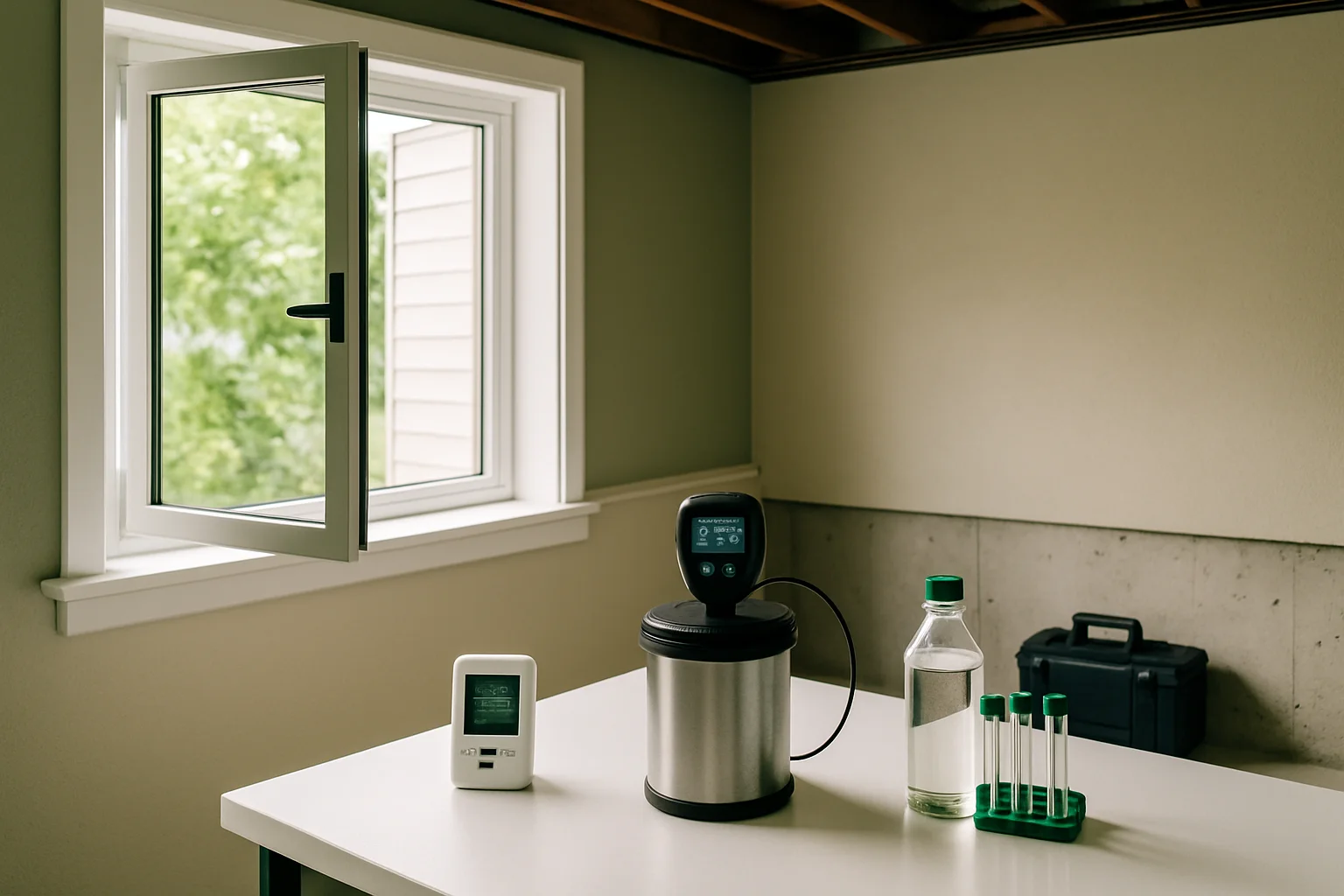
When a home feels “stuffy,” smells off, or triggers that nagging sense that something isn’t quite right, the first instinct is simple: open a window. Fresh air is comforting—and in many Pennsylvania homes, it’s part of daily life. But homeowners across Montgomery County and Bucks County often ask a more specific question: does opening windows fix indoor air quality, or does it only make the symptoms less noticeable?
At A1 House Prep, we like questions like this because they lead to better decisions. Indoor air is full of invisible factors—some harmless, some annoying, and some worth addressing with clear information instead of guesses. Below is a calm, practical guide to what opening a window can help with, what it can’t, and when testing is the smarter next step for homes in Harleysville, Lansdale, Hatfield, Souderton, North Wales, Blue Bell, and beyond.
The quick truth: ventilation can help—but it’s not the same as “fixing”
Opening windows is a form of ventilation—replacing some indoor air with outdoor air. That can temporarily reduce certain indoor pollutants or odors. But “better” air in the moment doesn’t always mean the underlying issue is solved.
Think of it like turning up the radio to ignore a rattle in your car. The sound is less noticeable, but the source is still there. Indoor air quality is similar: if there’s a moisture problem, an intermittent combustion issue, an ongoing source of particles, or an elevated gas that needs attention, ventilation may dilute it temporarily while leaving the root cause untouched.
That’s why A1 House Prep’s approach is homeowner-focused and practical: use ventilation wisely, and use testing when you want clarity. If you’re ready to move from “maybe” to measurable answers, Air Quality Testing gives you data you can act on.
What opening a window can improve (and when it works best)
There are situations where opening windows is absolutely helpful—especially in older homes with tighter interior doors, finished basements, or seasonal humidity swings common in Southeastern Pennsylvania.
1) Short-term odors from everyday activities
Cooking odors, fresh paint smells, cleaning product fumes, and a “closed-up” scent after a weekend away can improve quickly with cross-ventilation (windows open on opposite sides of the home).
2) Moisture spikes after showers or cooking
Bathrooms and kitchens often see temporary humidity surges. A window can help release that moisture—though exhaust fans and consistent ventilation strategies are usually more reliable year-round.
3) Mild stuffiness in shoulder seasons
Spring and fall in places like Blue Bell, Souderton, and North Wales often bring perfect “window weather.” If the home simply needs fresh air exchange, opening windows can be a simple win.
When it works best
- Outdoor air is cleaner than indoor air (no heavy pollen days, wildfire smoke, or nearby construction dust).
- You can create cross-ventilation instead of a single window “crack.”
- The indoor issue is temporary (a one-time smell, a short moisture spike, a single renovation day).
When opening windows does not “fix” indoor air quality
Here’s where homeowners can get misled. If opening windows makes the home feel better, it’s easy to assume the problem is resolved. But several common indoor air quality issues are either persistent, source-driven, or not reliably controlled by open windows.
1) A recurring musty smell or basement “dampness”
If the odor comes back every time windows are closed—or whenever it rains—it often points to an ongoing moisture condition (foundation seepage, high basement humidity, or hidden damp materials). Ventilation may temporarily mask the smell, but moisture-driven issues tend to return until the source is identified.
2) Particles that keep being generated indoors
Dust, dander, renovation debris, and other particles don’t vanish because a window is open. Some will settle; some will circulate. If the source continues—pets, high foot traffic, aging carpets, or certain hobby/garage activities—the indoor air can remain impacted even with periodic fresh air.
3) Outdoor air that’s worse than indoor air
Pennsylvania homeowners know the pattern: pollen surges, humidity spikes, summer wildfire haze, and neighborhood landscaping activity can make outdoor air less desirable. Opening windows in those conditions can make indoor air feel worse, not better.
4) Combustion byproducts and backdraft concerns
Gas appliances, fireplaces, and attached garages can create conditions where unwanted byproducts enter the living space. Window ventilation may dilute odors, but it does not replace proper evaluation of how air moves through the home. (This is one area where “it smells fine now” shouldn’t be the end of the story.)
5) Radon: a “window strategy” is not a strategy
Radon is a naturally occurring gas that can be present in Pennsylvania homes—including in Montgomery and Bucks County—without any odor or visible clue. Opening windows might change readings in the short term, but it’s not a dependable way to understand your home’s radon level. If you’re curious, start with measurement: Radon Testing provides clear results so you’re not relying on assumptions.
Premium homeowner takeaway: “Fresh air” is a feeling. Air quality is a measurement.
If your home only feels better when windows are open, that’s useful information—but it’s not a diagnosis. In many cases, the smartest next step is simply to test so you can stop guessing. A1 House Prep helps homeowners and real estate professionals in Harleysville, Lansdale, Hatfield, Souderton, North Wales, and Blue Bell turn invisible concerns into clear, practical next steps with Air Quality Testing.
A better question than “Should I open a window?”
Instead of asking whether opening windows “fixes” indoor air quality, ask:
- What is the likely source? (moisture, particles, odors, renovations, pets, combustion, outdoor intrusion)
- Is it temporary or recurring? (one-time event vs. weekly pattern)
- Is outdoor air currently an upgrade? (seasonal pollen, humidity, smoke, neighborhood dust)
- What changes when windows close? (does the smell return, does humidity rise, do symptoms reappear)
This is where curiosity becomes a practical tool. Your home gives clues. Testing confirms what those clues mean.
Why “testing replaces guessing” in Pennsylvania homes
Pennsylvania housing stock is varied: century-old stone homes, split-levels, townhomes, new construction with tight envelopes, and everything in between. Add basements, humid summers, and winter heating season—and indoor air becomes a moving target.
Testing is valuable because it helps you:
- Separate odor from air quality (an odor can be strong even when a measured issue is mild, and vice versa).
- Identify patterns (seasonal humidity changes, post-renovation effects, basement-to-main-floor transfer).
- Avoid overcorrecting (buying multiple devices or products without knowing the real driver).
- Support real estate decisions (buyers, sellers, and agents benefit from documentation and clarity).
If you’re in the middle of a purchase, preparing to list, or simply want peace of mind, A1 House Prep offers Air Quality Testing with a straightforward, homeowner-friendly process.
What homeowners often notice first (and what it may suggest)
Indoor air concerns rarely start as a lab report—they start as a moment: “Why does it smell like that?” or “Why do we always feel better with the windows open?” Here are common observations and what they can point toward.
- Musty smell in basement or lower level: often linked to moisture, humidity, or damp materials.
- Stale air in bedrooms: could be limited air exchange or comfort-related ventilation needs.
- Odors after cooking that linger for hours: may suggest ventilation gaps or recirculating HVAC behavior.
- “Sweet,” “chemical,” or “new” smells after renovations: can be typical off-gassing periods; ventilation helps, but measuring and managing exposure is more precise than guessing.
- Noticeable air changes between floors: stack effect and pressure differences can move air (and whatever is in it) throughout the home.
These are not diagnoses—just practical starting points. If you want to know what’s actually happening in your specific home, testing brings the guesswork down to earth.
Where ozone fits in (and where it doesn’t)
Ozone is sometimes discussed as a shortcut for odor problems—especially after smoke odors, pet odors, or musty smells. Used correctly, ozone can be a tool for odor treatment in certain situations. Used incorrectly, it can create unnecessary risk and frustration.
A1 House Prep offers Professional Ozone Machine Rentals with an emphasis on safe, responsible use. Here are the essentials:
- Unoccupied spaces only: People and pets must be out of the treated area during ozone use.
- Follow instructions precisely: Run time, placement, and post-treatment ventilation matter.
- Plan for a full airing-out period: After treatment, ventilate the space thoroughly before re-entry.
- Ozone addresses odor, not moisture sources: If the smell is driven by dampness, the odor may return unless the moisture condition is addressed.
If you’re considering ozone because “opening windows helps, but the smell keeps coming back,” that’s a clue worth exploring. In many cases, pairing curiosity with measurement—starting with Air Quality Testing—helps you decide whether odor treatment is appropriate, or whether another path makes more sense.
Practical window strategy: how to ventilate without guessing
If you do choose to open windows, do it in a way that’s intentional and aligned with conditions.
Use these homeowner-friendly tips
- Create cross-ventilation: Open windows on opposite sides of the home for better air exchange.
- Vent at the right times: Avoid peak pollen or high-humidity hours when possible.
- Use spot ventilation: Run bath and kitchen exhaust during moisture and odor events.
- Watch the basement: In humid weather, open basement windows can sometimes increase moisture load rather than reduce it.
- Don’t confuse “fresh” with “resolved”: If the issue returns repeatedly, treat ventilation as a temporary measure and consider testing.
For homeowners preparing to list a home in Lansdale, Hatfield, or surrounding areas, these steps can improve day-to-day comfort—but documentation from testing is often what removes doubt during a transaction.
Real estate scenarios: buyers, sellers, and agents
Indoor air questions show up at the most inconvenient time: showings, inspections, and final walkthroughs. The calmest way through is to replace assumptions with information.
For sellers
- If you’re airing out the home daily so it “smells right,” testing can help you understand whether it’s just closed-up air—or something worth addressing before listing.
- Documentation supports confidence and reduces last-minute renegotiations based on uncertainty.
For buyers
- If you notice a basement odor or feel better with windows open during a tour, you’re not overthinking it—you’re collecting clues.
- Testing can help you prioritize improvements after closing and avoid unnecessary purchases.
For agents
- Clear, neutral third-party testing can keep conversations factual and help all sides stay calm and solution-oriented.
- It’s easier to move forward when “we think” becomes “we know.”
Related home testing that pairs well with air quality questions
Indoor air concerns can overlap with other “invisible” home facts. Depending on the situation, homeowners in Montgomery County and Bucks County may also consider:
- Radon Testing for an odorless, naturally occurring gas that can vary home to home.
- Water Testing for homeowners on private wells or anyone curious about water quality and household use.
- Water Heater Flushing as a practical maintenance step that supports efficiency and water performance (especially in homes with sediment buildup).
Each service answers a different question, but they share a theme: the best home decisions come from clear information.
FAQs
- Does opening windows fix indoor air quality?
- Opening windows can improve indoor air temporarily by increasing ventilation, especially for short-term odors or stuffiness. But it doesn’t necessarily fix the underlying source of a recurring issue (like ongoing moisture, persistent particle sources, or an odor that keeps returning). Testing helps confirm what’s actually happening.
- How long should I open windows to “air out” a house?
- There’s no universal rule because it depends on outdoor conditions, home layout, and what you’re trying to improve. Cross-ventilation (windows on opposite sides) is typically more effective than opening a single window. If the issue returns quickly after closing windows, consider testing rather than extending the same approach.
- Can opening windows help with musty basement smells?
- Sometimes it reduces the smell short-term, but basements in Pennsylvania can take on outdoor humidity, which may worsen damp conditions during humid weather. If musty odors are recurring, it’s worth investigating moisture and getting objective information through air quality testing.
- Is it better to open windows or run the HVAC fan?
- They do different things. Windows exchange indoor and outdoor air; the HVAC fan circulates indoor air and may filter it depending on your system and filter type. Many homeowners use both strategically. If you’re unsure which helps your situation, testing can clarify what changes actually improve conditions.
- Will an ozone machine solve stubborn odors in a home?
- Ozone can be helpful for certain odor-treatment scenarios, but it must be used responsibly: unoccupied spaces only, follow all operating instructions, and ventilate thoroughly afterward. It’s not a substitute for correcting an odor source (like moisture). If you’re unsure, ask for guidance before renting.
- When should I schedule professional air quality testing?
- Consider testing if the home consistently feels better only with windows open, odors keep returning, there’s a noticeable basement or crawl space smell, you’re buying or selling a home, or you want clear answers instead of trial-and-error. A1 House Prep can help you choose the right next step for your property.
Ready to replace guessing with clear answers?
If you’re in Montgomery County or Bucks County and you’re tired of wondering whether the “fresh air fix” is real—or just temporary—A1 House Prep is here to help with practical, homeowner-friendly Air Quality Testing.
Call A1 House Prep: 215.853.8226
Request service online: /request-service/
Serving Harleysville, Lansdale, Hatfield, Souderton, North Wales, Blue Bell, and surrounding Pennsylvania communities.