Could Your House Be Holding Onto Yesterday’s Air?
Most Pennsylvania homeowners can spot a leaky faucet, a drafty window, or a worn-out roof shingle. But indoor air is different. It can look perfectly “fine” while still feeling heavy, musty, or just… off. If you’ve ever walked back into your home after a weekend away and noticed that first breath doesn’t feel as fresh as you expected, you’re not imagining things. You may be dealing with stale indoor air quality—a common, fixable home comfort issue that often comes down to a handful of invisible factors.
This article is designed to satisfy curiosity without scare tactics. We’ll explain what “stale” air really means, why it happens in homes across Montgomery County and Bucks County, and how professional air quality testing can replace guessing with clear, practical information. Whether you’re a homeowner in Harleysville, a buyer looking in Lansdale, a seller preparing a listing in Blue Bell, or a real estate professional coordinating inspections in Hatfield, Souderton, or North Wales—this is the kind of home detail worth understanding.
What “Stale” Indoor Air Really Means (and Why It’s So Common)
“Stale” isn’t a technical measurement; it’s a lived experience. Homeowners often describe it as:
- A lingering odor after cooking, pets, smoke, or a recent renovation
- Rooms that feel stuffy even when the thermostat says it’s comfortable
- Air that feels heavy or “used up,” especially in basements, bedrooms, or closed-off spaces
- Musty notes that come and go with humidity or weather
Staleness typically results from a combination of air exchange (how quickly indoor air is replaced with outdoor air), moisture (which affects odor and comfort), and sources (materials or activities that release particles or gases). Modern homes can be especially prone to it because improved sealing and insulation can reduce natural ventilation. That’s great for energy efficiency—but it can also mean yesterday’s air hangs around longer than you’d like.
Why Homes in Pennsylvania Can Trap Air
In Montgomery County and Bucks County, a few local realities can contribute to stale indoor air quality:
- Seasonal swings: Hot, humid summers and cold winters keep windows closed for long stretches.
- Basements and lower levels: Common in this region, and often more humid—perfect conditions for musty odors to linger.
- Older housing stock mixed with updates: A home may have new windows and insulation while still having older ventilation patterns or moisture pathways.
- Busy living: Cooking, cleaning products, hobbies, pets, and home projects all add “inputs” to your indoor air.
None of these factors automatically mean there’s a “problem.” They simply explain why it’s normal to wonder what’s in the air—and why testing can be so useful when you want clarity.
Curiosity Check: What Would Your Home Say If It Could?
If your home had a dashboard, it wouldn’t just show temperature. It would also show how air moves, what particles are floating around, and how moisture changes by room and season. Air quality testing is the closest thing to that dashboard—a practical way to trade assumptions for real data, especially when the air “feels” stale but the source isn’t obvious.
Common Clues That Point to Stale Indoor Air
Here are homeowner-friendly signs that suggest your indoor air may not be exchanging as well as it could. These aren’t diagnoses—just clues that it may be worth learning more.
- Odors that return: You clean, you air out, but smells rebound within a day or two.
- Stuffy bedrooms: Especially overnight with doors closed and multiple sleepers.
- Basement “personality”: A persistent damp or musty character, even if you don’t see water.
- Visible dust buildup: Faster-than-expected dust accumulation can hint at particle movement and filtration issues.
- Comfort differences by room: One room feels “flat” or heavy while others feel normal.
Because these symptoms overlap with everyday household realities, the goal isn’t to jump to conclusions. The goal is to get oriented: what’s present, where, and under what conditions.
What Actually Causes “Yesterday’s Air” to Stick Around?
1) Low Fresh-Air Exchange
When outdoor air isn’t being introduced (intentionally or naturally), indoor air can recirculate. HVAC systems may heat or cool effectively but still move the same air around. That can leave odors and fine particles lingering.
2) Moisture and Humidity Patterns
Moisture doesn’t always show up as a puddle. It can be subtle—seasonal humidity, minor seepage, damp foundation walls, or poorly vented bathrooms. Moisture can amplify odors and contribute to a “stale” feel, particularly in lower levels.
3) Everyday Indoor Sources
Indoor air quality is influenced by what happens inside the home. Common contributors include cooking fumes, scented products, candles, attached garages, hobby materials, new flooring or paint, and stored items in basements or closets.
4) Filtration and HVAC Maintenance Variables
Filters matter, but they’re not a universal cure. A low-quality filter, a clogged filter, or gaps around a filter slot can reduce effectiveness. Ductwork conditions and airflow balance can also affect how air circulates—and where “stale” pockets form.
Testing Replaces Guessing: What Air Quality Testing Can Tell You
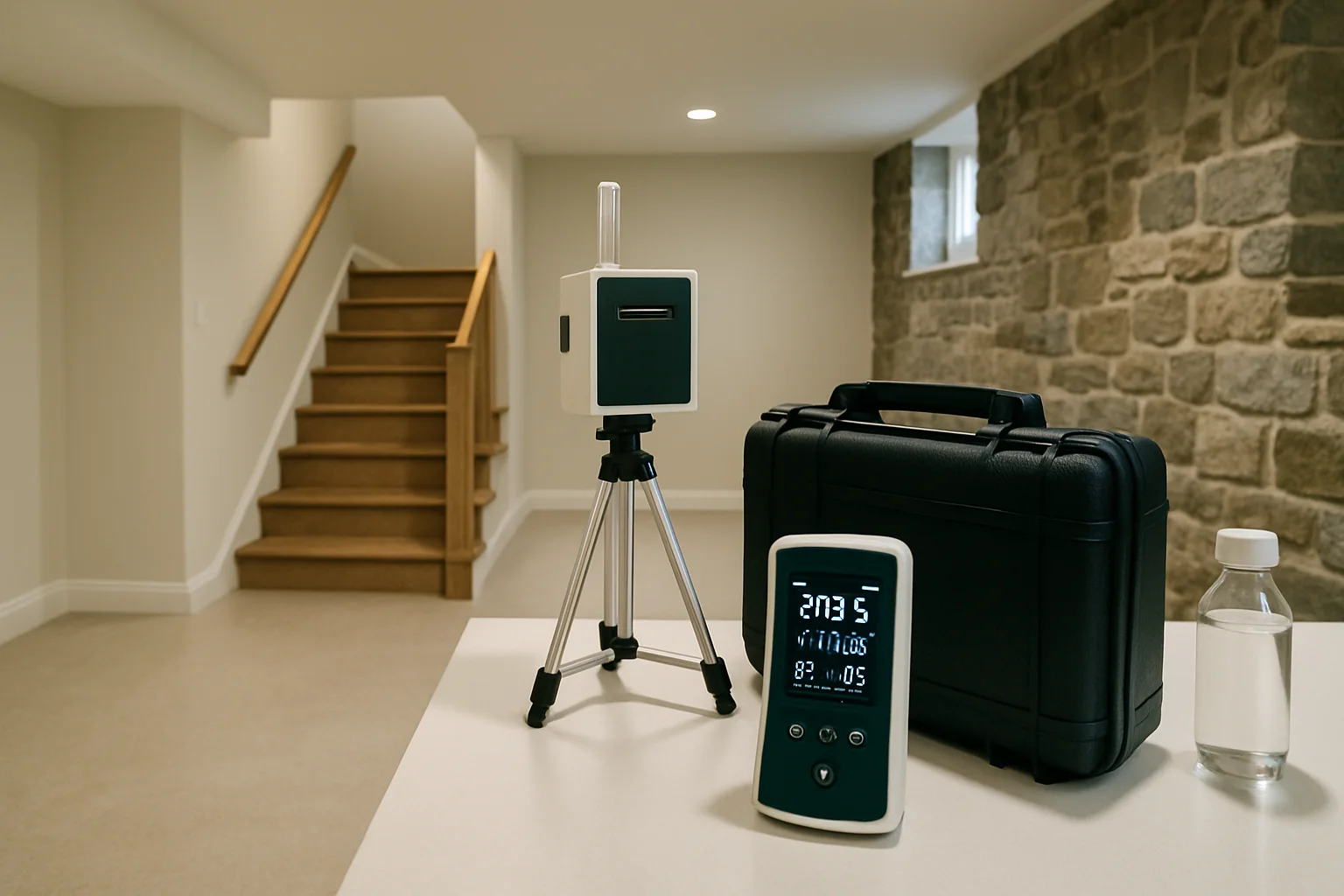
If you’re trying to understand stale indoor air quality, testing provides objective information that helps you make practical decisions. At A1 House Prep, Air Quality Testing is designed for homeowners and real estate scenarios where clarity matters—without drama, and without assumptions.
Depending on your goals and the property, testing can help you:
- Identify patterns: Does the basement differ from the main level? Do certain rooms show different readings?
- Document conditions for a transaction: Useful for buyers, sellers, and agents who want confidence and transparency.
- Prioritize next steps: Instead of randomly buying products or trying one-off fixes, you can respond to real findings.
Air can also interact with other “invisible home facts.” In Pennsylvania, it’s common to pair air-related questions with Radon Testing (especially for basements and lower levels), or to check environmental basics like Water Testing if the home has a private well or you’re validating water quality during a purchase.
Practical, No-Panic Steps to Freshen a Home (Before You Test)
If your house feels like it’s holding onto yesterday’s air, you can try a few low-risk, common-sense steps. These don’t replace testing, but they can help you observe changes and narrow down what’s going on.
- Run bathroom fans longer: Especially after showers. If fans vent to the exterior, extended runtime can reduce lingering humidity.
- Use kitchen ventilation while cooking: Cooking is a major odor and particle source. Venting during and after can make a noticeable difference.
- Check your HVAC filter fit and schedule: Ensure it’s seated correctly and replaced on a reasonable cadence for your home’s conditions.
- Address basement humidity: A dehumidifier can help comfort, especially in summer. Track how it changes the feel and smell over 1–2 weeks.
- Reduce “stored odor” sources: Cardboard, old textiles, and long-stored items can hold smells, particularly in damp areas.
If you try these and the stale feel persists—or if you’re preparing for a sale, purchase, or post-renovation reset—testing gives you a clearer path forward.
Ozone for Odors: A Useful Tool When Used Correctly
Some homeowners want to tackle stubborn odors (smoke, pet odors, “old house” smells, or post-tenant funk) and wonder about ozone. Ozone can be effective for certain odor treatments, but it must be handled with respect and clear safety boundaries.
A1 House Prep offers Professional Ozone Machine Rentals for situations where odor treatment is appropriate. A few critical guidelines:
- Use only in unoccupied spaces: People and pets should not be present during ozone treatment.
- Remove or protect sensitive items: Some materials can be affected by oxidation (rubber, certain fabrics, and delicate finishes).
- Follow time and ventilation instructions: Treatment duration and post-treatment airing-out matter. More is not always better.
- Use ozone as a finishing step, not a cover-up: If moisture, ventilation, or a source issue remains, odors may return.
Think of ozone like a specialized tool in a premium toolkit: valuable when used correctly, unnecessary when used casually, and never a substitute for understanding the underlying cause of stale indoor air quality.
Real Estate Scenarios: Buyers, Sellers, and Agents Benefit from Clarity
Indoor air questions often come up during transitions—when emotions and timelines are real, and clarity is valuable.
For Sellers
- Pre-listing confidence: Knowing what your home’s air is doing can prevent surprises and support straightforward disclosure conversations.
- Better showings: A fresh-feeling home presents better, especially in basements and lower levels.
For Buyers
- Less guessing: If a house feels musty or “closed up,” testing can help you understand whether it’s a simple ventilation/humidity story or something that needs deeper attention.
- Planning leverage: Findings can help you prioritize improvements after closing.
For Agents
- Professional documentation: Third-party testing supports smoother transactions and calmer decision-making.
- Local practicality: From Hatfield to North Wales to Souderton, housing styles vary—testing helps avoid one-size-fits-all assumptions.
Local Focus: Where A1 House Prep Helps
A1 House Prep serves homeowners and real estate professionals across Pennsylvania, with a strong local presence in Montgomery County and Bucks County, including Harleysville, Lansdale, Hatfield, Souderton, North Wales, and Blue Bell. Local experience matters because building styles, basements, and seasonal living patterns influence how air behaves inside a home.
Frequently Asked Questions
FAQ: How do I know if I’m dealing with stale indoor air quality or just a temporary odor?
If the “stale” feel repeats—especially in the same rooms, at the same times (like mornings), or after you’ve cleaned and aired out—it’s worth considering testing. Temporary odors typically fade with time and ventilation; persistent patterns suggest there may be an ongoing source, airflow issue, or humidity factor.
FAQ: Should I open windows more to fix stale air?
Opening windows can help when outdoor conditions allow, but it’s not always practical in Pennsylvania seasons. It also doesn’t tell you why air feels stale. Testing can help you understand what’s happening so you can choose solutions that work year-round.
FAQ: Can air quality testing help during a real estate transaction?
Yes. Buyers may want added confidence beyond a general home inspection, and sellers may want to address questions proactively. Testing can provide objective information that supports clearer decisions and smoother conversations.
FAQ: Is “musty basement smell” always mold?
Not always. Musty odors can be influenced by humidity, stored materials, previous water events, or limited airflow. If you want to move from suspicion to clarity, testing and a practical evaluation of moisture and ventilation conditions is the best next step.
FAQ: When is an ozone machine rental appropriate?
Ozone can be useful for certain stubborn odor situations, especially as a finishing step after cleaning and addressing moisture or source issues. It should be used only in unoccupied spaces with careful adherence to operating and ventilation instructions. For details, see Professional Ozone Machine Rentals.
FAQ: Can A1 House Prep help me rule out other “invisible” home factors?
Yes. Many homeowners choose to pair air questions with other forms of home testing—such as Radon Testing or Water Testing—depending on the property and concerns.
Want to Stop Guessing and Start Knowing?
If your home in Montgomery County or Bucks County feels like it’s holding onto yesterday’s air, A1 House Prep can help you get clear, practical answers with Air Quality Testing. We’ll help you understand what’s happening so you can make informed, homeowner-smart decisions—whether you’re living in the home, preparing to sell, or evaluating a purchase.
Call A1 House Prep: 215.853.8226
Request service online: /request-service/
Stale air is rarely a mystery you solve with one quick trick. But it’s also rarely something you need to fear. With the right testing and a calm, practical plan, you can turn “It feels off in here” into real, useful knowledge—and a home that feels like today, not yesterday.