Can Two Houses Side-by-Side Have Totally Different Radon Levels?
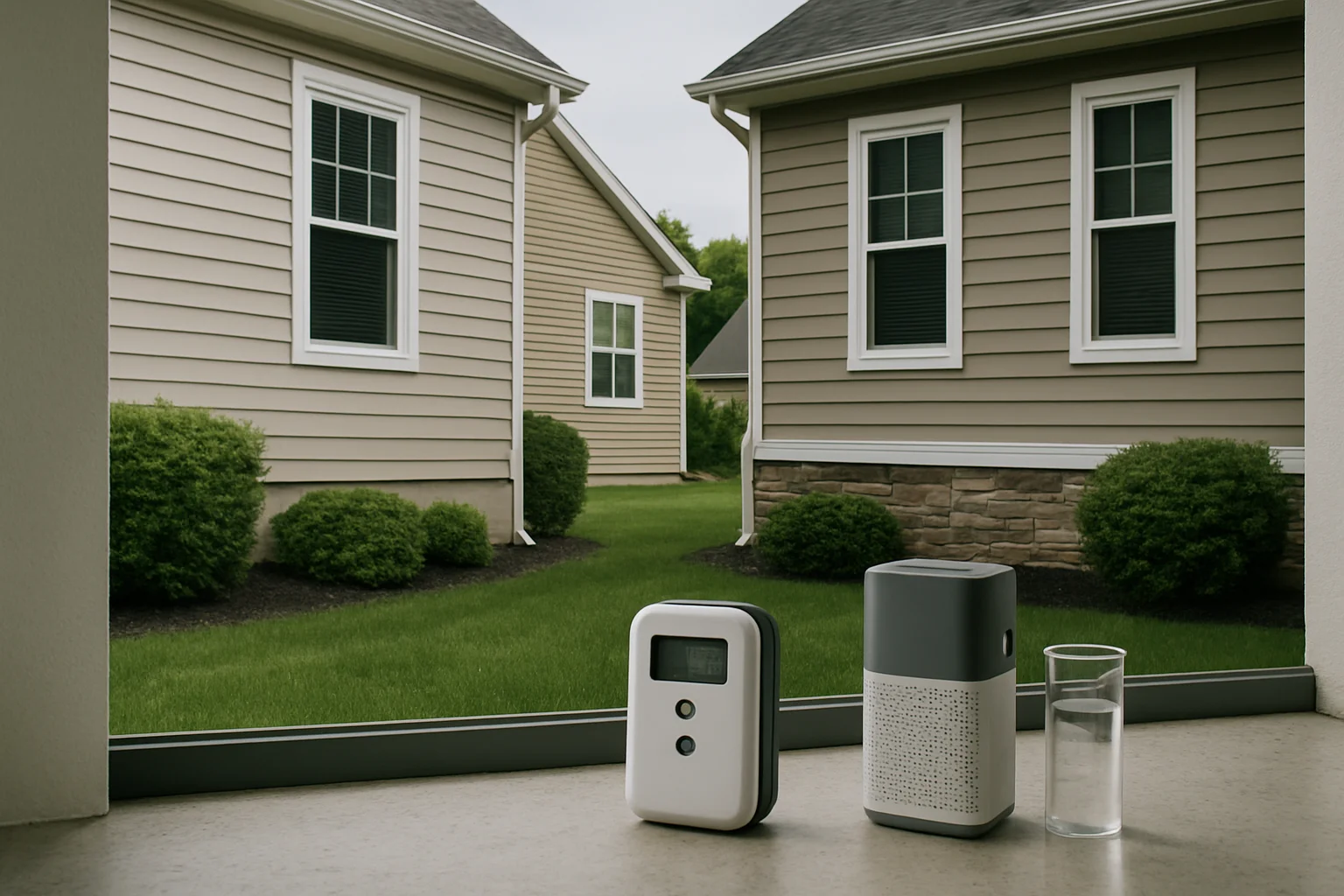
It’s one of the most common (and surprisingly reasonable) homeowner questions we hear in Pennsylvania: can two neighboring homes have different radon levels—even if they’re the same age, same builder, and practically the same floor plan?
Yes. And it happens more often than people expect.
The reassuring part: you don’t need to guess, speculate, or inherit someone else’s assumptions. Radon is an “invisible home fact”—you can’t see it or smell it, and your neighbor’s results don’t automatically tell you yours. The practical solution is simple: test your home, interpret the results, and make decisions with real numbers.
Why this question matters in Montgomery County, Bucks County, and beyond
Across Montgomery County and Bucks County—especially in communities like Harleysville, Lansdale, Hatfield, Souderton, North Wales, and Blue Bell—homeowners, buyers, and sellers regularly compare notes about radon. Someone mentions a “high reading” down the street, another person says their test was “fine,” and suddenly people wonder whether radon is random, overblown, or neighborhood-specific.
Radon can be influenced by local geology, but the biggest variables often happen at the individual home level. Two houses next to each other can have very different results depending on how each building interacts with the soil and how air moves through the structure.
If you want clarity instead of guesswork, professional radon testing provides a straightforward snapshot of what’s happening in your home—under your home’s unique conditions.
How neighboring homes can test differently: the short version
Radon is a naturally occurring gas that can enter a home from the ground. The amount that shows up indoors depends on two big factors:
- How much radon is available in the soil beneath and around the home (which can vary over short distances).
- How the home “pulls” air from the soil and how that air mixes and ventilates indoors (which can vary even between similar houses).
In other words, two houses can share a property line and still behave like two different “systems” when it comes to radon entry and indoor air movement.
7 real-world reasons neighboring homes can have different radon levels
1) Micro-geology: soil and rock can change fast
Even within the same neighborhood, the soil can include different mixes of clay, sand, gravel, fill, or fractured rock. Small changes in subsurface conditions can change:
- How easily gases move through soil (soil permeability)
- Where cracks and pathways develop
- How water drains and affects soil pressure
That’s why the “my neighbor tested low” reassurance can be misleading. It’s possible you share similar risk—or you don’t.
2) Differences in foundation type and construction details
Side-by-side homes may look similar from the curb, but basements and slabs often differ in ways that matter. For example:
- One house may have a full basement while the other has a slab or crawlspace.
- One basement floor may have more shrinkage cracking.
- Penetrations for plumbing, sump pits, floor drains, or utility lines can vary.
Radon typically enters through openings and gaps where the home meets the soil. Small construction differences can create big changes in how much soil gas gets inside.
3) Stack effect and air pressure: the home acts like a vacuum
Homes are constantly exchanging air with the outdoors. Warm air rises and escapes through upper levels, which can pull air from lower levels to replace it. This “stack effect” can increase soil gas draw—especially in colder months when indoor-outdoor temperature differences are larger.
Two homes next to each other can have different levels of air leakage, insulation, or attic sealing. That changes pressure dynamics and can lead to different radon readings.
4) HVAC, fans, and how the house is operated
How a home is lived in can influence radon behavior. Examples include:
- One household runs bathroom fans frequently; another rarely uses them.
- One home has a powerful kitchen hood vent.
- One home’s HVAC system runs more often, or has different duct leakage.
- Windows are opened more in one home than the other.
These factors can change indoor pressure and ventilation patterns. That’s one reason professional testing follows established protocols—to reduce “noise” and capture a meaningful result.
5) Renovations and sealing: “improvements” can change radon behavior
Finished basements, new flooring, sealed cracks, and other upgrades can change air movement. Sometimes sealing reduces pathways; other times changes in ventilation or pressure can shift where air is pulled from.
It’s not that improvements are “bad”—it’s that indoor air behaves like a system. If a home changes, testing is the clean way to verify the new baseline.
6) Moisture and seasonal ground conditions
Heavy rain, drought, frozen ground, and water table fluctuations can influence soil-gas movement. In Pennsylvania, seasonal shifts can be noticeable. Two nearby homes with different grading, downspout discharge, or drainage patterns may experience different soil moisture conditions—changing radon entry and concentration.
7) Where the test is placed (and how it’s performed)
Not all radon tests are performed the same way. Placement matters (lowest livable level, away from drafts, not in kitchens/baths), and “closed-house” conditions often apply for certain test types.
If one house tested with a short-term kit placed near a drafty window and another used a properly placed professional monitor, results may not be comparable. Good testing removes the uncertainty of “did we do it right?”
Curiosity Tip: Think “house-by-house,” not “neighborhood-by-neighborhood”
Radon is local, but it’s also intensely specific to how each home interacts with the ground and with air pressure. If you’ve heard mixed results from nearby properties, that doesn’t mean radon is unpredictable—it means the only reliable answer is to test the house in question.
What this means for homeowners, buyers, sellers, and agents
For homeowners
If you’ve never tested, your neighbor’s result is an interesting data point—but it’s not your result. A radon test is one of the simplest ways to turn an invisible question into a clear, practical number. If you’re also curious about other “invisible home facts,” air quality testing and water testing can add clarity during ownership or after a renovation.
For buyers
Radon testing is a common part of home inspections in Pennsylvania. The key is to treat it like any other verification step: don’t assume based on the neighbor, the seller, or the age of the home. Test the lowest livable level and review the documented results.
For sellers
Pre-listing testing can reduce surprises and make conversations more straightforward. If a nearby home had a notable result, it can be tempting to worry—testing replaces worry with information you can share.
For real estate professionals
When clients ask, “But the house next door was fine—why is this one different?” a calm, factual explanation helps: soil varies, homes vary, and building pressure varies. Offering a clear testing plan keeps the transaction focused on facts rather than fear.
Testing replaces guessing: what a professional radon test can tell you
A professional radon test is designed to provide a defensible result based on proper placement, controlled conditions, and clear reporting. If you’re trying to understand neighboring homes different radon levels—or simply want to know your home’s baseline—testing gives you:
- Specific measurements for your property (not generalized neighborhood assumptions)
- A documented record useful for personal planning or real estate transactions
- Clear next steps based on the reading and context
To schedule, visit A1 House Prep Radon Testing or use the quick form at Request Service. You can also call 215.853.8226.
“My neighbor’s house tested low—should I still test?”
In practical terms: yes, if you want to know your number. Nearby results can’t account for differences in foundation pathways, pressure, or how the home is operated.
A helpful way to think about it is like rainfall in Pennsylvania: two backyards can feel “the same,” but one may puddle and one may drain quickly because of grading, soil, and runoff. Radon behaves differently than water, but the takeaway is similar—small changes can produce different outcomes.
Related homeowner curiosity: odors, stale air, and what to do (without mixing up issues)
Sometimes people connect radon concerns to basement odors or “stuffy” air. Radon itself is odorless, so smell isn’t a reliable indicator. If you’re dealing with persistent odors (smoke, musty, pet, or renovation smells), that’s a separate track from radon testing.
A1 House Prep also offers Professional Ozone Machine Rentals for odor treatment—for unoccupied spaces only. Ozone use requires careful adherence to instructions, including:
- Only run ozone in areas with no people, pets, or plants present.
- Follow all timing and re-entry guidance; allow adequate ventilation afterward.
- Use ozone for odor treatment—not as a substitute for testing, cleaning, or moisture control.
If you’re unsure what you’re dealing with, pairing a practical conversation with air quality testing can help you separate “odor issues” from “air measurement issues” and plan appropriately.
Ready to stop guessing about radon in your Pennsylvania home?
If you’re comparing notes with neighbors in Harleysville, Lansdale, Hatfield, Souderton, North Wales, Blue Bell—or anywhere in Montgomery or Bucks County—the fastest way to get clarity is to test your own home.
Schedule Radon Testing | Request Service | Call 215.853.8226
FAQ: Neighboring homes and radon testing
Can two houses next to each other really have totally different radon levels?
Yes. Even neighboring homes can differ due to micro-geology, foundation details, air pressure dynamics, ventilation patterns, and how the home is operated. “Close by” doesn’t mean “the same.”
If my neighbor’s radon test was low, does that mean my home is low too?
Not necessarily. A neighbor’s result is not a substitute for testing your property. The only way to know your level is to measure it in your home under appropriate testing conditions.
Do newer homes in Pennsylvania have lower radon than older homes?
Not consistently. Newer construction may have different sealing and air movement characteristics, but radon entry depends on multiple factors. Both newer and older homes can test at a range of levels.
When is the best time of year to test for radon in Montgomery or Bucks County?
Radon can be tested year-round. Seasonal conditions can influence readings, so what matters most is using a proper test method and following placement and condition guidelines. If you’re testing for a real estate transaction, timing may be driven by the inspection window.
Is a basement smell a sign of radon?
No. Radon is odorless. Odors can be related to moisture, materials, or ventilation issues. If you have odor concerns, consider separating the questions: radon requires a radon test; odor issues may call for targeted cleaning, ventilation, or (in unoccupied spaces) professional ozone treatment.
Where should a radon test be placed?
Typically on the lowest livable level of the home, in a commonly used area, away from drafts, exterior doors/windows, kitchens, and bathrooms. Professional testing helps ensure proper placement and documentation.
What should I do if my home’s result is higher than expected?
Start by reviewing the test report and conditions to ensure the result is valid and interpretable. From there, you can consider next steps based on your goals (homeownership planning, real estate negotiation, or follow-up testing). A1 House Prep can help you understand your testing options and documentation.
Bottom line: neighboring homes can be different—and that’s exactly why testing matters
When it comes to neighboring homes different radon levels, the surprising truth is also the practical one: side-by-side houses can behave differently because they’re built differently, sit on slightly different ground, and move air differently.
The calm, homeowner-focused approach is to treat radon like any other measurable home characteristic. If you want clarity for your family, your listing, or your buyers, schedule radon testing with A1 House Prep. For additional “invisible home facts,” explore air quality testing and water testing.
To get started, call 215.853.8226 or visit Request Service.