Category: Professional Ozone Machine Rentals
Can a Powerful Odor Tool Be Useful Only When Used Correctly?
Homeowners across Pennsylvania—especially in Montgomery County and Bucks County—tend to ask the same practical question once a stubborn odor shows up: “What actually works?” The internet offers plenty of confident answers. But premium home care usually comes down to a calmer approach: measure what you can, treat what you can verify, and avoid guessing when the “problem” is invisible.
One of the most misunderstood tools in the odor toolbox is ozone. The target keyword phrase here is intentional: ozone odor tool used correctly. Ozone can be effective for certain odor situations, but it’s not a casual plug-in gadget—and it’s not something to use around people or pets. When used correctly and conservatively in unoccupied spaces only, it can be a valuable option for specific, hard-to-remove odors.
If you’re in Harleysville, Lansdale, Hatfield, Souderton, North Wales, Blue Bell, or nearby areas, this guide will help you understand when ozone can be appropriate, when it’s the wrong tool, and how to pair odor treatment with the kind of “invisible home facts” that make decisions easier—without scare tactics.
Why odor is an “invisible fact” problem (and why guessing gets expensive)
Odor complaints usually start the same way: a “mystery smell” that shows up in a basement, a bedroom, a recently purchased home, or after a tenant move-out. The temptation is to jump straight to the strongest product available. But premium property preparation is less about power and more about process.
Odors can come from many sources—some simple, some structural, some environmental. Common examples include:
- Moisture and humidity (musty odors; often worse in basements)
- Pets (urine in subflooring, dander in HVAC returns, old carpeting)
- Smoke (residual odor trapped in porous surfaces)
- Cooking and living odors (especially in homes with limited ventilation)
- Stored materials (paint, old furniture, boxes, damp items)
- Plumbing issues (dry traps, venting problems, sewer gas-like smells)
Here’s the homeowner truth: an odor is often a clue, not a diagnosis. Before you invest in odor treatment—ozone included—consider what you can confirm through testing and inspection. If you’re already thinking “What else can’t I see?” you’re asking the right question.
For homeowners and buyers, pairing odor decisions with practical testing can reduce guesswork: Air Quality Testing can help you understand what’s in the air beyond what you smell, and Water Testing can provide clarity when odor concerns involve sinks, well systems, or water quality questions. (And for Pennsylvania buyers, don’t forget that Radon Testing addresses a separate invisible risk—radon is odorless, so it won’t “smell like a problem.”)
What ozone is—and why it’s not an everyday deodorizer
Ozone (O3) is a reactive form of oxygen. In odor treatment contexts, ozone is used in controlled situations because it can interact with certain odor-causing compounds. That said, “reactive” is a double-edged word: it’s exactly why ozone must be handled with care and used only in unoccupied environments.
Ozone machines are sometimes marketed like simple air fresheners. They are not. A more accurate way to think about them:
- Not a masking agent (like sprays or plug-ins)
- Not a substitute for cleaning and source removal
- Not appropriate to run while people or pets are present
- Potentially useful as a targeted step after the source has been addressed
If you’re a seller prepping a home in Montgomery County or Bucks County, or a landlord preparing a unit in Lansdale or Hatfield, ozone can be appealing because it feels like a “reset button.” The reality is more nuanced: ozone can be part of a premium prep plan, but only when the fundamentals are handled first.
A1 House Prep perspective: treat odors like a checklist, not a mystery
A powerful odor tool works best when it’s the last step—not the first. If the odor source is still present (moisture, soiling, contaminated carpet pad, hidden debris), even strong tools can deliver only short-lived results.
For Pennsylvania homeowners, the premium approach is simple: remove the source, dry and ventilate, then consider specialized tools in controlled, unoccupied spaces only. When you want fewer assumptions and more certainty, testing helps replace guessing with facts.
When an ozone odor tool used correctly can make sense
Ozone is best viewed as a situational tool—useful in specific circumstances, particularly when odors are embedded in porous materials or lingering in closed spaces after cleaning. Some scenarios where homeowners and real estate professionals may explore ozone (with safe-use constraints) include:
- Vacant homes during pre-listing preparation
- Post-tenant turnover after deep cleaning is complete
- Smoke-like lingering odors after surfaces have been cleaned and HVAC filters replaced
- Musty closed-room odor once humidity is controlled and moisture sources are corrected
- Vehicle or small enclosed area odor (only when unoccupied and per equipment guidance)
The common thread: ozone is considered after the obvious causes have been handled and the space can be vacated. If people need to occupy the home during treatment, ozone is typically the wrong tool for that moment.
When ozone is the wrong tool (or the wrong first tool)
Sometimes the most premium decision is skipping a “strong” solution because it doesn’t match the problem. Ozone is often a poor choice when:
- There’s active moisture (damp basements, ongoing leak, wet carpet pad). Control moisture first.
- The odor source hasn’t been removed (pet contamination in subflooring, spoiled materials, trash, contaminated insulation).
- People or pets can’t vacate the space for treatment and re-entry time.
- Ventilation can’t be managed (no ability to air out afterward).
- There’s an HVAC distribution question (odors traveling through ductwork may need a different plan).
If you’re unsure what you’re dealing with, start with “what can we confirm?” That might mean a closer look at humidity and ventilation patterns—or investing in a more fact-based snapshot of the home with Air Quality Testing. It’s a homeowner-friendly way to trade assumptions for information.
Safe-use basics: how to use ozone in unoccupied spaces only
Ozone should be used only according to manufacturer instructions and only in a space that can be fully vacated. The following guidelines are practical homeowner considerations—not a substitute for the specific operating instructions for the unit you’re using.
Pre-treatment checklist (before you run a machine)
- Remove the source first: clean thoroughly, discard contaminated porous items where appropriate, and replace HVAC filters if needed.
- Confirm the space is unoccupied: no people, no pets, no houseplants—plan for the full treatment and re-entry window.
- Close the area: shut doors and windows as directed for treatment, and block off access so no one enters unexpectedly.
- Consider adjacent spaces: think about shared air pathways (open stairwells, returns, gaps under doors).
- Set a conservative runtime: more is not always better; overuse can be counterproductive.
During treatment
- No entry: treat the space as off-limits while ozone is running.
- Follow timer and placement guidance: place the unit as instructed so airflow is not blocked.
- Avoid “stacking” treatments: repeated cycles without reassessing the source can lead to frustration and wasted time.
After treatment (the part many people rush)
- Allow appropriate time before re-entry: follow the manufacturer’s re-entry recommendations.
- Ventilate: open windows/doors as appropriate to air out the space.
- Reassess the odor: if the smell returns quickly, the source may still be present (moisture, hidden contamination, HVAC distribution).
If you’re a buyer or seller coordinating timelines with showings, the key is planning: ozone is not a last-minute “spray and go” step. It requires vacancy, time, and controlled use.
Pair odor treatment with “testing replaces guessing” home prep
In markets across Blue Bell, North Wales, Souderton, and beyond, real estate decisions move faster when uncertainty goes down. Odors create uncertainty because they hint at hidden conditions. Sometimes it’s harmless (stale air in a closed room). Sometimes it’s a clue (chronic humidity).
A practical, premium approach is to treat the odor problem while also answering the bigger question: “What else should we verify?” A1 House Prep focuses on Pennsylvania home testing and property preparation services that support confident decisions:
- Air Quality Testing for a clearer picture of indoor conditions beyond what you can smell
- Water Testing when odor concerns involve taps, sinks, wells, or water characteristics
- Radon Testing because radon is an invisible home fact that won’t announce itself with an odor
- Water Heater Flushing as a proactive maintenance step that can support better performance and cleaner operation over time
Think of it this way: deodorizing is one lane. Understanding the home is another. The best outcomes usually combine both.
Common Pennsylvania odor scenarios (and what to consider first)
1) “Basement smells musty” in Harleysville or Hatfield
Start with humidity control and moisture checks. A dehumidifier, drainage review, and confirming there’s no ongoing seepage often matter more than any odor tool. If the space can be vacated and the source is addressed, ozone may be considered as a finishing step.
2) “The house smells like pets” in Lansdale or Souderton
Pet odor often lives below the surface—carpet pad, tack strips, subfloor seams. Cleaning is essential. If subfloor contamination is present, removal/sealing may be needed. Ozone won’t replace source removal, but may help with residual odor after remediation steps are complete (in unoccupied spaces only).
3) “We just bought a home and it has an ‘old house’ smell” in North Wales or Blue Bell
Sometimes this is simply stale air plus dusty porous materials. Start with ventilation, HVAC filter changes, and deep cleaning. If you’re curious about what’s in the air beyond odor, Air Quality Testing can provide a more objective baseline.
4) “We’re listing soon—how do we neutralize odors fast?”
The fastest path usually combines a deep clean, controlled ventilation, and removing odor sources (trash, damp textiles, old filters). If the home will be vacant for a window of time, ozone can be considered carefully—planned, timed, and used correctly.
Professional Ozone Machine Rentals: why the rental approach can be smarter
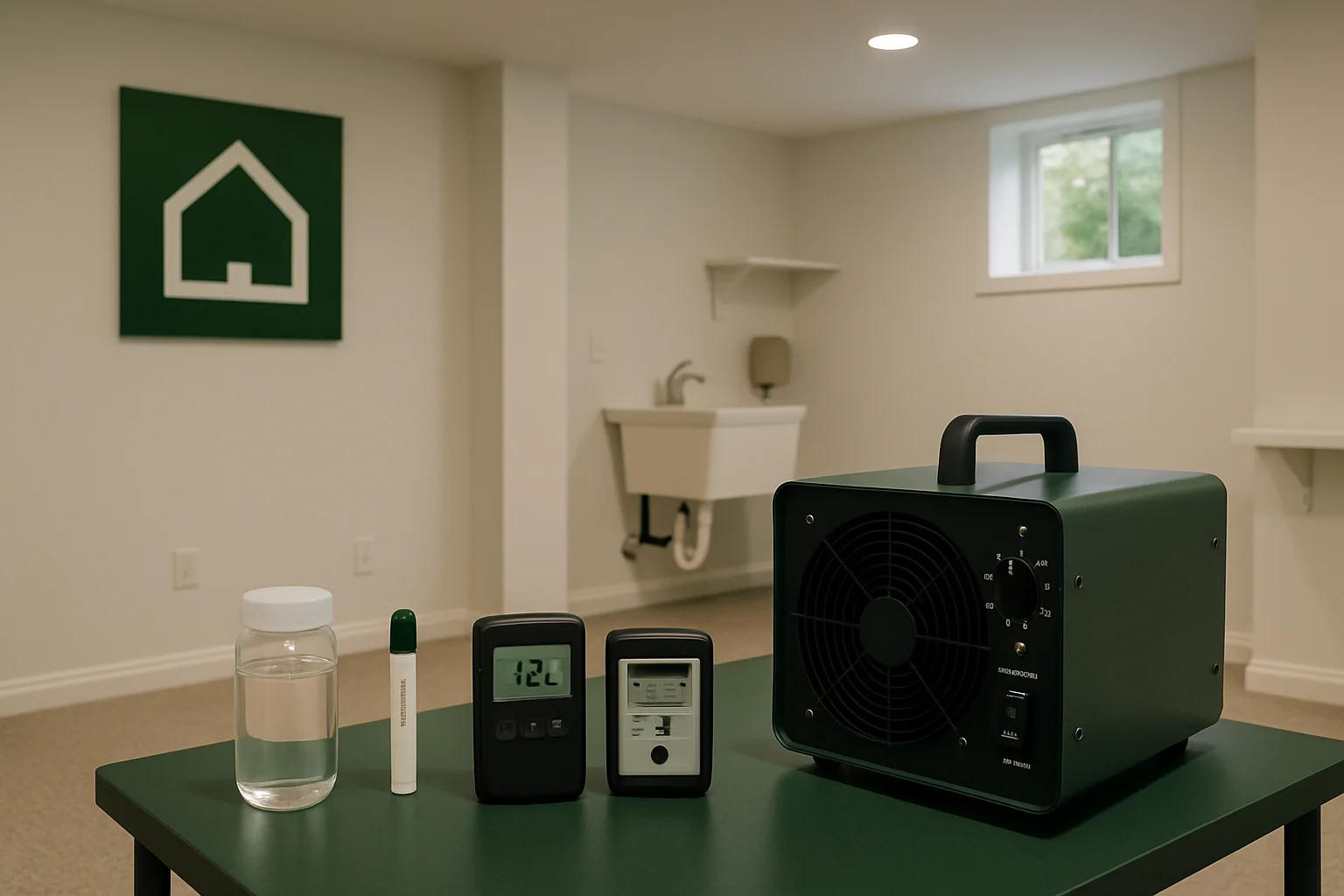
Many homeowners don’t need to own an ozone machine. They need a short, controlled window of use—done correctly—then they want their home back. A rental can be a practical option when you want access to professional-grade equipment without guessing at quality online.
A1 House Prep provides Professional Ozone Machine Rentals for Pennsylvania homeowners and property professionals who value clear guidance and practical outcomes. If you’re coordinating a turnover, pre-listing prep, or a post-event odor issue, a rental can fit neatly into a broader plan.
Need an odor plan that’s practical—not dramatic?
If you’re considering an ozone odor tool used correctly for a home in Montgomery County or Bucks County, A1 House Prep can help you choose a sensible next step and coordinate the right service.
- Explore Professional Ozone Machine Rentals
- Request Service online
- Call A1 House Prep: 215.853.8226
Whether you’re a homeowner, buyer, seller, landlord, or real estate professional, we’ll help you move from “What is that smell?” to a clear, step-by-step plan.
FAQ: Ozone odor tools, correct use, and smarter home decisions
Is an ozone machine the same as an air purifier?
Not typically. Many air purifiers are designed to operate while people are present (following their own instructions). Ozone machines are generally intended for controlled odor treatment in unoccupied spaces. Always follow the specific unit guidance.
Can ozone remove odors permanently?
Ozone may help reduce certain lingering odors, but permanence depends on whether the source has been fully removed and whether conditions (like moisture) are controlled. If the odor source remains, the smell often returns.
How do I know if I’m dealing with an odor issue or an air quality issue?
Odor is one signal, but it doesn’t always map neatly to what’s in the air. If you want an objective snapshot—especially after moving in, renovating, or noticing recurring smells—consider Air Quality Testing to replace assumptions with data.
What’s the biggest mistake homeowners make with an ozone odor tool used correctly?
Two common mistakes are (1) using it while a space is occupied, and (2) using it before cleaning and source removal. The best results usually come after the basics are done and the treatment can be carefully planned in a vacant area.
Should I run ozone in my HVAC system or with the fan on?
Be cautious. Air movement can spread ozone into adjacent areas and complicate containment. The safest approach is to follow the equipment instructions and keep treatment limited to controlled, unoccupied spaces. If odors seem HVAC-related, it may be better to diagnose airflow and filtration first.
We’re buying a home in Bucks County—what invisible home facts should we verify besides odors?
Many buyers choose to verify items that don’t “announce themselves,” such as Radon Testing, Water Testing, and baseline Air Quality Testing. These can support clearer decisions and fewer surprises.