Before Treating an Odor, Do You Know Where It’s Coming From?
If you’ve ever walked into a room and caught a “mystery smell” you can’t place—musty, smoky, sweet, sour, or just “off”—you’re not alone. In Pennsylvania homes (especially across Montgomery County and Bucks County), odors can change with weather, humidity, renovations, pets, basements, and even how long the house has been closed up. The temptation is to jump straight to treatment: candles, sprays, air fresheners, and sometimes a stronger solution like ozone. But the most reliable way to get lasting results is to find source of odor before treatment.
This article is for homeowners, homebuyers, sellers, and real estate professionals in Harleysville, Lansdale, Hatfield, Souderton, North Wales, Blue Bell, and nearby communities who want practical, calm guidance—without scare tactics. We’ll cover how to narrow down where odors start, when testing is worth it, and how to use odor-treatment tools responsibly (including ozone) once you’ve done the detective work.
Curiosity check: Odors are often “symptoms,” not the root issue. When you focus on the cause first—moisture, ventilation, a hidden source, or indoor air factors—you reduce the odds of spending money on repeated treatments that don’t hold.
Why “treating the air” can miss the real problem
Odor molecules don’t appear out of nowhere. They usually come from a source that’s actively producing them (or that produced them in the past and is still off-gassing). When you cover an odor, you may temporarily change what you smell, but you haven’t necessarily changed what’s happening in the home.
Here’s what “guess-first” odor control often overlooks:
- Hidden moisture: Damp drywall, subflooring, insulation, or stored items can smell musty even if you don’t see visible mold.
- Building pressure and airflow: A home can pull air from basements, crawl spaces, attics, garages, or wall cavities—bringing odors along for the ride.
- Materials that hold odor: Carpets, padding, upholstery, curtains, and unfinished wood can absorb odors and release them later.
- Intermittent sources: Sump pits, floor drains, laundry areas, or HVAC components might smell only at certain times (after rain, when the AC runs, or when the home is closed up).
In other words, the “where” matters. If you want a premium, professional outcome—especially for a sale, a move-in, or a rental turnover—start by finding the source.
Odor clues: what you smell (and when) can point to where it started
Think like a homeowner-detective. Keep notes for 3–7 days. The goal isn’t to self-diagnose perfectly; it’s to build a useful pattern you can act on.
1) Timing and triggers
- After rain or high humidity: basements, crawl spaces, foundation seepage, or damp materials.
- When HVAC turns on: ducts, coils, drain lines, filters, or return-air pathways pulling from odor zones.
- After cooking: lingering grease in cabinetry, range hood performance, or porous finishes holding odor.
- When the house is closed up: stale air, limited ventilation, or accumulated VOCs/off-gassing.
- When certain rooms are used: bathrooms, laundry rooms, mudrooms, pet areas.
2) Location patterns
- One room only: a localized source (carpet, closet, wall cavity, adjacent bathroom, or a specific drain).
- Whole-house odor: HVAC distribution, crawl space/basement influence, or a broad absorbed odor (smoke, cooking, pets).
- Strongest near a vent or return: HVAC involvement or airflow drawing from a specific zone.
3) “Odor types” that often have common sources
- Musty/earthy: moisture and materials (basements, closets on exterior walls, stored fabrics).
- Sour: damp textiles, certain bacteria-prone areas, trash/recycling, or plumbing issues.
- Smoky: past smoking, fireplace/backdraft issues, or absorbed odor in porous materials.
- Ammonia-like: pet urine residues, some cleaning products, or certain materials off-gassing.
- Rotten-egg/sewer-like: drain traps, venting issues, or localized plumbing concerns (always take persistent sewer-gas smells seriously and consult a qualified plumber).
These aren’t diagnoses—just practical clues. If the pattern points to air or environmental conditions, testing is a smart next step.
Testing replaces guessing: the “invisible home facts” approach
Odors are sensory. But the conditions that create or amplify them can be invisible. That’s why testing and measurement are such valuable tools: they help you confirm what’s happening instead of chasing guesses.
Depending on what you’re noticing, here are homeowner-focused testing options that support a more confident plan:
- Indoor air quality testing: Useful when the home feels stuffy, odors feel persistent, or you want a clearer picture before choosing remediation or treatment steps. Explore Air Quality Testing.
- Water testing: Helpful if you suspect odor at faucets, from well water, or from fixtures and drains (for example, “sulfur” smells). See Water Testing.
- Radon testing: Radon is odorless—so it won’t explain a smell. But it’s a classic example of why Pennsylvania homeowners benefit from verifying invisible conditions with data, especially in real estate transactions. Learn about Radon Testing.
For many homes in Montgomery County and Bucks County, a calm, step-by-step process works best: gather clues, measure what’s measurable, address sources, then consider odor-treatment tools for the remaining “residual” smell.
A practical, room-by-room process to find the source before treatment
Use the checklist below as a structured walkthrough. You don’t need to do everything at once—start with the areas most likely to produce or hold odors.
Step 1: Start with the simplest, highest-impact checks
- Trash and recycling: Clean bins; check lids and surrounding floor areas.
- Fridge and pantry: Look for spills, old items, or drip trays.
- Pet zones: Check under rugs, near baseboards, on upholstery, and around litter boxes.
- Soft goods: Curtains, carpets, and cushions can hold odor even after the original source is gone.
Step 2: Check moisture-prone areas (odor’s best friend)
- Basements: Look for damp cardboard, stored fabric, foundation edges, sump pits, and dehumidifier performance.
- Bathrooms: Inspect fans (do they vent outdoors?), caulk lines, and areas around toilets and tubs.
- Laundry rooms: Check washer seals, drains, and any standing water.
- Under sinks: Look for slow leaks or damp cabinet floors.
Step 3: Don’t forget airflow and HVAC pathways
- Filters: A neglected filter can contribute to persistent “stale” air.
- Returns near odor zones: Returns can pull in odor from basements, pet areas, or kitchens.
- Ductwork and drain pans: HVAC components can harbor odors, especially if moisture is present.
Step 4: Identify “absorbed odor” materials
Even after a source is removed, absorbed odors can remain in:
- Carpet and padding
- Upholstery and mattresses
- Unfinished wood (subfloors, framing, shelving)
- Drywall and paint (especially after smoke exposure)
This is often where homeowners reach for stronger odor treatment. The key is timing: treatment is most effective after source control.
Where ozone fits: effective tool, but only when used correctly
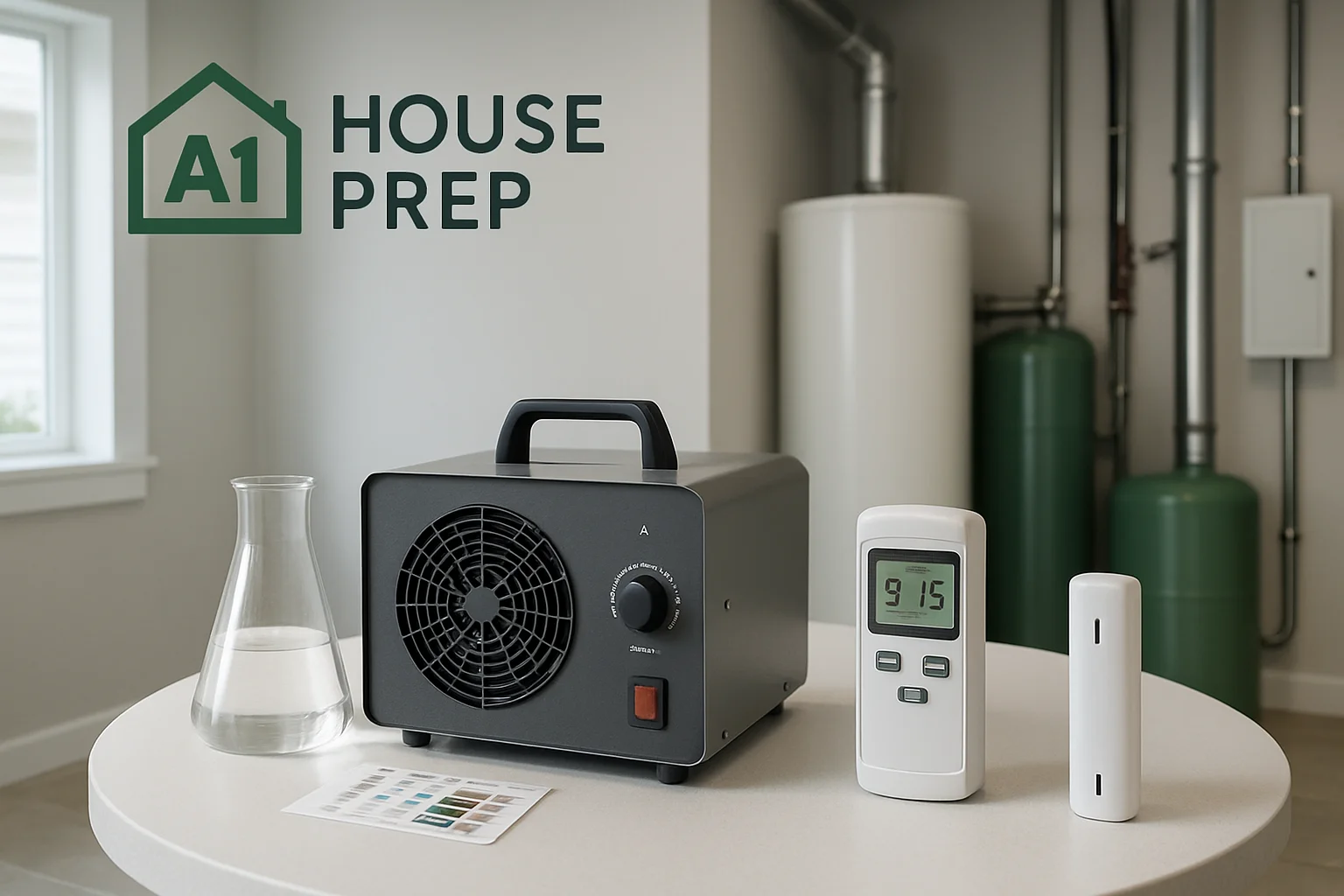
Professional-grade ozone machines are sometimes used to address stubborn odor molecules in unoccupied spaces. In real estate, they’re often considered during:
- Move-out and turnover situations
- Post-renovation odor cleanup
- After smoke, cooking, or pet odor events (once source areas are cleaned)
- Rooms that held strong odors for years and need a “reset” before painting or staging
Important: ozone is not a “set it and forget it” air freshener. It should be used only with careful procedures in spaces that are unoccupied—no people, no pets, and no plants during treatment. Ventilation and re-entry timing matter. Always follow the specific rental instructions and safety guidance provided with the machine.
If you’re considering this approach in Harleysville, Lansdale, Hatfield, Souderton, North Wales, Blue Bell, or nearby areas, A1 House Prep offers Professional Ozone Machine Rentals with homeowner-focused guidance so you can use the equipment responsibly.
Safe-use principles for ozone (high-level)
- Treat only unoccupied areas: plan to be out of the space during operation.
- Remove pets and plants: relocate living things entirely out of the treatment area.
- Seal and stage the space: close doors/windows as directed; place the machine per instructions for best circulation.
- After treatment, ventilate: air out the space thoroughly before re-entry.
- Don’t treat a problem you haven’t identified: if moisture or a hidden source remains, odors can return.
Used appropriately, ozone may help reduce residual odor after cleaning and source removal—especially in hard-to-deodorize materials or rooms that have held odors for a long time.
Common odor scenarios in Pennsylvania homes (and smarter next steps)
Musty basement smell that comes and goes
- Often linked to: humidity swings, damp storage, foundation seepage, or airflow pulling basement air upward.
- Smarter next step: confirm moisture control (dehumidification, drainage, storage practices), then consider targeted odor treatment if residual smell remains.
“Stale house” odor before showings
- Often linked to: a closed-up home, soft goods holding odor, or HVAC circulation patterns.
- Smarter next step: ventilate, deep clean soft surfaces, replace filters, and use odor treatment only after the baseline is improved.
Pet odor that returns after cleaning
- Often linked to: urine in carpet pad/subfloor or absorbed odor in porous materials.
- Smarter next step: locate and address impacted materials first; then consider odor-neutralization steps for the remaining smell.
Kitchen odor that lingers for days
- Often linked to: grease films, an underperforming range hood, cabinet absorption, or trash/recycling sources.
- Smarter next step: degrease surfaces, verify ventilation, and evaluate whether the odor is material-based or airflow-based.
Hot water smell or odd odor at faucets
- Often linked to: water quality factors, fixture issues, or water heater conditions.
- Smarter next step: consider Water Testing for clarity, and if maintenance is due, review Water Heater Flushing as a practical home-care step.
For real estate: why odor source clarity protects timelines
Odors can complicate inspections, appraisals, showings, and buyer confidence—especially when the source is unclear. For agents, sellers, and buyers, a “source-first” approach helps keep decisions grounded:
- Sellers: reduce repeated last-minute masking efforts; improve the showing experience.
- Buyers: separate “cleanable/residual” odor from issues that may require deeper attention.
- Agents: support smoother negotiations by focusing on documented conditions and practical next steps.
Whether the home is in Blue Bell, North Wales, Hatfield, Lansdale, Souderton, or Harleysville, the best outcome is calm clarity: identify sources, confirm key conditions with testing where appropriate, then use odor treatment tools responsibly.
Need help narrowing down an odor—and choosing the right next step?
A1 House Prep helps Pennsylvania homeowners and real estate professionals replace guesswork with practical information. If you’re planning an odor reset for a vacant room or property, explore our Professional Ozone Machine Rentals and request service when you’re ready.
Call: 215.853.8226
Request online: /request-service/
FAQ: Finding the source of an odor before treatment
1) Why is it important to find source of odor before treatment?
Because many treatments focus on the air, not the cause. If the source (like moisture, absorbed odor in materials, or airflow pulling odors from another area) isn’t addressed, smells often return—sometimes after you’ve spent time and money on repeat efforts.
2) Can ozone remove odors permanently?
Ozone can help reduce stubborn residual odors in unoccupied spaces when used correctly, but results depend on whether the original source has been removed or controlled. If moisture, contamination, or an ongoing odor source remains, the odor may come back.
3) Is ozone safe to use in my home?
Ozone machines should be used only in unoccupied spaces and according to the provided instructions, with appropriate ventilation and re-entry timing. Plan ahead, keep people/pets/plants out during treatment, and follow the rental guidance closely.
4) What’s the fastest way to narrow down where an odor is coming from?
Start with a simple log: when you smell it, where it’s strongest, and what was happening (rain, HVAC running, cooking, doors/windows closed). Then check common sources (trash, pets, drains, damp storage) and pay attention to airflow pathways like returns and basements.
5) Should I get air quality testing if the problem is “just a smell”?
If the odor is persistent, hard to localize, or part of a broader “stuffy” or lingering indoor environment, air quality testing can add clarity and help you make more confident decisions—especially during real estate timelines.
6) Could my water be causing an odor in the house?
Yes—some odors are linked to water at fixtures, drains, or hot water systems. If you suspect the smell is tied to running water, consider water testing and practical maintenance steps such as water heater flushing, depending on your situation.
7) I’m selling a home in Montgomery or Bucks County. When is ozone rental a good idea?
Ozone is often considered when a property is vacant (or can be made vacant for treatment), the source has been cleaned or removed, and you need help addressing lingering absorbed odors before showings. For guidance and availability, visit /services/ozone-machine-rentals/ or request service.
Bottom line: curiosity beats cover-ups
When you treat an odor without understanding it, you’re often treating the symptom—not the story. A better approach is to stay curious: note patterns, check common sources, confirm invisible conditions with testing when appropriate, and then choose an odor-treatment method that matches what you’ve learned.
If you’re ready for a practical plan—whether you’re preparing a home for sale, moving in, or managing a rental—A1 House Prep is here to help across Pennsylvania, including Montgomery County and Bucks County. For unoccupied odor treatment support, explore Professional Ozone Machine Rentals or request service. You can also call 215.853.8226.