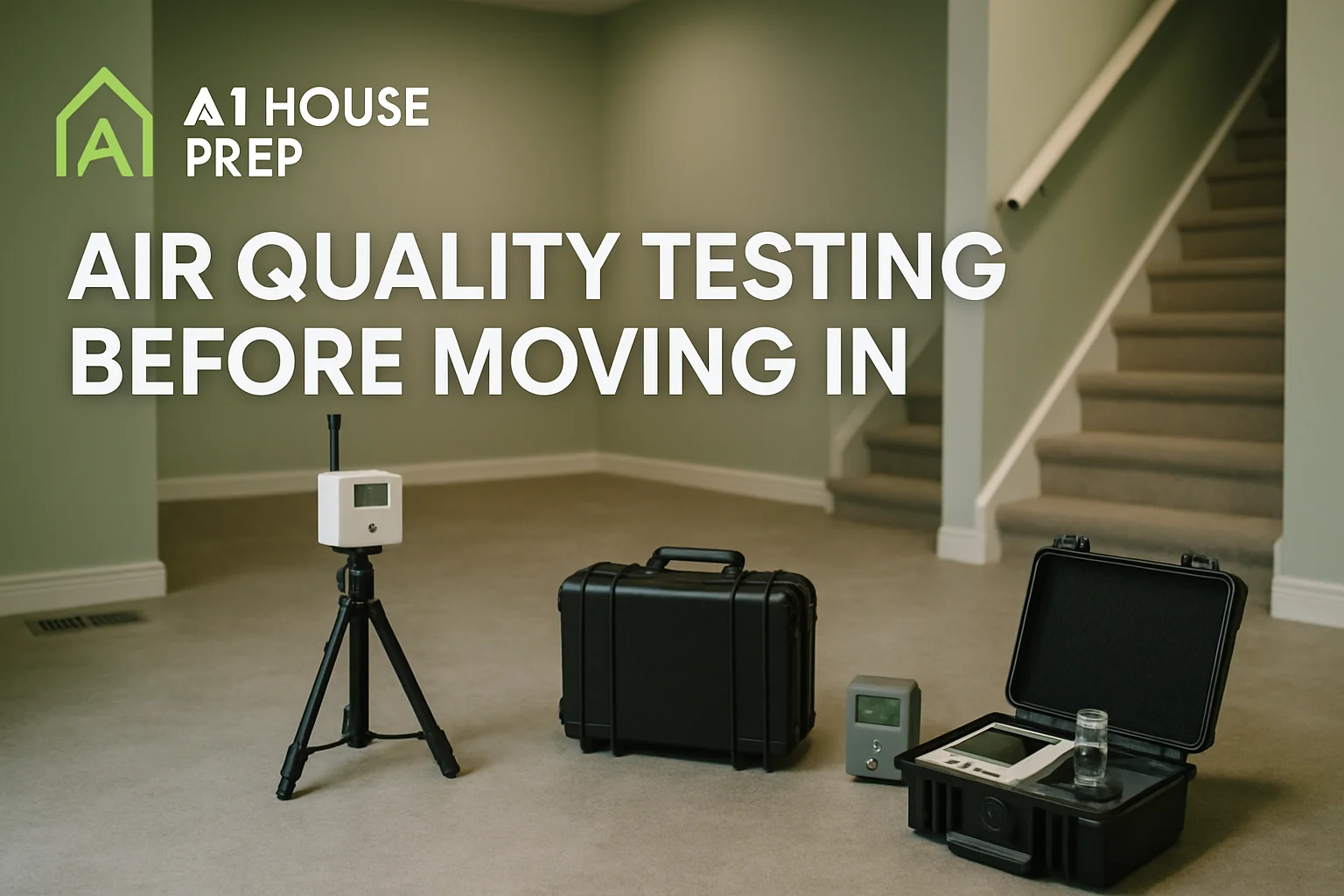
Air Quality Testing Before Moving Into a Home
Buying a home is exciting—but it also comes with a long checklist of details that affect how the home will feel day to day. One of the most overlooked items is indoor air. Even a house that looks spotless can have hidden air issues from moisture, past leaks, renovations, pets, smoking, seasonal pollen, or simply being closed up between showings.
If you’re searching for air quality testing before moving in, you’re already thinking like a prepared homeowner. A move-in ready air test can help you understand what’s in the air before furniture, rugs, and daily routines go in—and before small concerns turn into costly surprises. At A1 House Prep, we provide practical, homeowner-focused testing across Harleysville, Lansdale, Hatfield, Souderton, North Wales, Blue Bell, Ambler, and Collegeville, supporting buyers, sellers, and real estate professionals with clear next steps.
This article explains what “home air quality before closing” really means, when testing makes sense, what to expect, and how to use results to plan smart improvements—without the stress or guesswork.
Why Indoor Air Matters Before Move-In (Even in a “Clean” House)
Indoor air quality can shift quickly depending on the home’s condition and how it has been used. Many buyers don’t notice air-related issues during a 20-minute showing, especially when windows are open or scents are used to mask odors. After move-in—when the house is closed up and HVAC runs regularly—problems may become more noticeable.
Common reasons homeowners schedule real estate air testing include:
- History of moisture (basement dampness, past roof leak, musty odor)
- Recent renovations (new paint, flooring, cabinetry, adhesives)
- Long vacancy (home sat empty between tenants or listings)
- Visible dust or persistent odors that linger after cleaning
- HVAC concerns (older system, unknown maintenance, dirty returns)
- Allergy-sensitive households looking for a baseline before unpacking
Testing doesn’t replace a full home inspection, but it can add targeted insight into the environment you’ll actually be living in—especially if the property has a basement, older construction, or signs of water intrusion.
What “Air Quality Testing Before Moving In” Typically Covers
Air quality is not one single measurement. A good plan focuses on the most relevant concerns for the home and season, and it ties results to practical actions (like ventilation, dehumidification, filtration, or further evaluation).
When you book with A1 House Prep, our goal is to help you understand the indoor environment clearly and confidently. Learn more about our process on the Air Quality Testing service page.
Common indoor air concerns in Montgomery County-area homes
- Moisture-related issues that can contribute to odors and unwanted growth
- Particulates (dust, debris, and airborne particles that affect overall cleanliness)
- Ventilation and airflow limitations (especially in finished basements and tight homes)
- Combustion byproducts and general indoor pollutants (varies by home)
- Property-specific factors like pets, past smoking, hobby spaces, or attached garages
Because every home is different, the most valuable “move-in ready air test” is the one tailored to what you’re seeing (and smelling), the home’s layout, and the timing of your closing.
Premium Tip: Test Before You Unpack
If you’re choosing between testing before closing or after move-in, earlier is usually easier. A clear home provides better access to vents, returns, basements, and utility areas—and if results suggest improvements, you can address them before furniture, rugs, and stored items complicate airflow and cleaning.
When to Schedule Home Air Quality Before Closing
Timing matters. If you’re under agreement and want air testing as part of due diligence, coordinate it like any other inspection-related service. If you’re a seller, testing can be a proactive step to reduce uncertainty and strengthen buyer confidence.
Ideal moments to schedule testing
- During the inspection window so results can inform negotiations or planning
- Right after renovations (allowing time for ventilation and material off-gassing to stabilize)
- After a known leak repair to confirm conditions are trending in the right direction
- Before listing if you want to document the home’s condition for buyers
- Before final walkthrough if you noticed new odors or humidity changes
For buyers in Harleysville, Lansdale, Hatfield, Souderton, North Wales, Blue Bell, Ambler, and Collegeville, planning ahead can help avoid last-minute scheduling pressure. If you’re on a tight timeline, it’s best to request service as soon as the contract is signed.
What to Expect From Real Estate Air Testing (Process Overview)
Homeowners often worry that air testing will be complicated. In reality, the process is straightforward when it’s managed professionally and explained clearly.
- Initial conversation: You share the home’s age, layout, recent updates, and any concerns (odors, dampness, allergies, visible staining, etc.).
- Site visit and setup: We evaluate key areas (often including basement/lower level, main living areas, and HVAC-related zones).
- Sampling/measurement: The specific approach depends on the testing plan and property conditions.
- Results and guidance: You receive clear findings and practical recommendations for next steps (improve ventilation, address moisture, consider additional evaluation, etc.).
Our role is to help you make informed decisions. Testing provides data; your next steps depend on the home, your priorities, and what the results indicate.
Common “Red Flags” That Suggest an Air Test Is Worth It
Not every home needs the same level of testing. But certain signs make air quality testing before moving in a smart, risk-reducing step.
- Musty smell in basements, closets, or lower-level bedrooms
- Condensation on windows or persistent high humidity
- Recently finished basement with limited supply/return airflow
- Staining on ceiling corners, around skylights, or near bathroom fans
- Heavy fragrance use during showings (candles, plug-ins, diffusers) that may mask odors
- Old carpeting or evidence of past pet use
- Home was vacant for a long period with minimal ventilation
If you’re seeing any of the above in a home in Blue Bell, Ambler, or Collegeville—where many properties have basements and varied construction eras—testing can provide clarity and help you plan improvements with confidence.
How Air Testing Fits Into a “Move-In Ready” Plan
Air quality is part of a bigger move-in readiness picture. Many buyers focus on paint colors and furniture placement, but the most comfortable homes are the ones that are dry, clean, and well-ventilated.
Consider pairing air testing with other smart, preventive services:
- Water Testing to better understand your home’s drinking water quality (especially with private wells or older plumbing)
- Radon Testing for an additional environmental baseline (common in Pennsylvania and often tested during real estate transactions)
- Professional Ozone Machine Rentals for stubborn odors (used appropriately and safely, with clear guidance)
Bundling services can simplify scheduling and help you establish a clear “home baseline” shortly before closing or move-in.
Local Considerations in Harleysville, Lansdale, Hatfield & Nearby Areas
Across Montgomery County and surrounding communities, homes range from older housing stock with basements to newer builds with tighter envelopes and higher reliance on mechanical ventilation. Both scenarios can lead to indoor air concerns—just in different ways.
- Older homes: sometimes have legacy moisture pathways, older ventilation habits, and hidden areas where humidity can collect.
- Newer/tighter homes: can trap indoor pollutants if ventilation isn’t balanced or if HVAC filtration is minimal.
- Finished basements: are common and can be comfortable—if humidity and airflow are managed.
Local testing helps you make decisions based on the home’s real conditions, not assumptions. It’s a practical step whether you’re buying in North Wales, selling in Souderton, or preparing a rental property in Lansdale.
For Buyers, Sellers, and Realtors: How to Use Results Constructively
One reason “home air quality before closing” can feel intimidating is uncertainty about what results mean. The goal isn’t to create alarm; it’s to reduce unknowns and support a smoother transaction.
Buyers
- Use results to prioritize move-in improvements (dehumidifier sizing, filtration upgrades, cleaning targets, ventilation adjustments).
- Decide whether you want additional evaluation in a specific area (for example, moisture-related follow-up).
- Plan budgets realistically before furniture and renovations begin.
Sellers
- Address preventable issues before listing (like humidity control) and reduce buyer concerns.
- Provide documentation that supports transparency and confidence.
- Differentiate your home in competitive neighborhoods.
Real estate professionals
- Offer clients a reputable local resource for real estate air testing.
- Help avoid last-minute surprises by encouraging early, schedule-friendly testing.
- Support smoother transactions with clear, practical reporting.
When results indicate improvements, think of them as a roadmap. Most homes benefit from better airflow, moisture control, and maintenance—especially during seasonal transitions in Pennsylvania.
FAQ: Air Quality Testing Before Moving In
1) Is air quality testing before moving in worth it if the home looks clean?
Often, yes—because “clean” is mostly visual. Air issues can come from humidity, ventilation, past leaks, or renovation materials that aren’t obvious during a walkthrough. Testing helps establish a baseline so you can plan smart improvements.
2) What’s the difference between a move-in ready air test and a standard home inspection?
A home inspection is broad and evaluates visible systems and components. A move-in air test focuses specifically on indoor air-related conditions and indicators, helping you understand the home’s environment and prioritize next steps.
3) Should I schedule home air quality before closing or after closing?
If you want results to inform decisions during the transaction, schedule during your inspection window. If timing is tight, testing soon after closing can still be valuable—especially before you fully unpack and occupy the space.
4) Will air testing tell me exactly what to fix?
Testing can provide clear findings and direction, but the “fix” depends on the cause. Sometimes the next step is improving ventilation or humidity control; other times it’s further evaluation of a specific area. A1 House Prep focuses on clear, practical guidance based on the home’s conditions.
5) How long does real estate air testing take?
Timing varies based on the type of testing and the size/layout of the home. When you contact us, we’ll walk you through what to expect for your property and timeline.
6) Can air testing help with odors from pets, cooking, or a previously occupied home?
It can help identify contributing factors like ventilation issues or moisture. For persistent odors, some homeowners also consider targeted odor-removal strategies, such as appropriate use of Professional Ozone Machine Rentals, along with thorough cleaning and airflow improvements.
Schedule Air Quality Testing in Montgomery County & Nearby
If you’re buying, selling, or preparing a property in Harleysville, Lansdale, Hatfield, Souderton, North Wales, Blue Bell, Ambler, or Collegeville, A1 House Prep can help you get clear answers with professional, homeowner-focused testing.
- Explore our process: Air Quality Testing
- Request an appointment: Request Service
- Call us: 215.853.8226
Whether you’re aiming for peace of mind before move-in or want better documentation before closing, air quality testing before moving in is a practical step toward a more comfortable home. With a clear baseline and a straightforward plan, you can spend less time guessing—and more time enjoying your new space.