Air Quality Testing After Water Damage or Moisture Problems
When a basement takes on water, a bathroom fan fails, or a slow leak goes unnoticed, the visible mess is only part of the story. Moisture can affect the air inside your home—sometimes quickly, sometimes weeks later—through musty odors, lingering humidity, or concerns about mold-related particles. If you’re searching for air quality testing after water damage, you’re likely looking for practical answers: What should you test, when should you test, and how do you interpret the results?
This guide is written for homeowners, buyers, sellers, and real estate professionals across Harleysville, Lansdale, Hatfield, Souderton, North Wales, Blue Bell, Ambler, and Collegeville. It explains how moisture can impact indoor air, what professional testing can (and can’t) tell you, and how A1 House Prep supports smart next steps through local, homeowner-focused Air Quality Testing.
Why Water Damage Can Become an Indoor Air Issue
Moisture changes the conditions inside building materials. Drywall, carpet padding, insulation, and wood can hold water long after surfaces look “dry.” If materials stay damp, they can support odor-producing bacteria or mold growth, and disturbed dust can move through the home via air currents and HVAC circulation. Even without visible growth, you may notice:
- A persistent musty smell that returns after cleaning
- Humidity that won’t stabilize, especially in basements or lower levels
- Staining, bubbling paint, or soft drywall
- Condensation on windows or cold surfaces
- Odors that intensify when HVAC runs or after rain
Because water-damage indoor air concerns can develop beyond the original wet area, targeted testing can help you understand whether the air in affected spaces differs from the rest of the home.
When to Consider Air Quality Testing After Water Damage
Not every spill or short-term leak requires comprehensive testing. However, professional testing is often worth considering when you have a moisture event plus uncertainty—about drying, hidden dampness, or the source of odors. Common scenarios include:
- Basement seepage or stormwater intrusion with damp carpets, stored items, or unfinished framing
- Plumbing leaks under sinks, behind toilets, or inside walls
- Roof leaks that wet attic insulation or ceiling drywall
- HVAC or condensate issues (clogged drains, wet air handlers, or duct condensation)
- Post-remediation verification when you want objective data after cleanup
- Real estate transactions where moisture history is known or suspected
If the main concern is an odor, you may be looking specifically for moisture odor air testing—a way to gather data rather than guessing (or masking) the problem with fragrance products.
What “Air Quality Testing” Can Include After Moisture Problems
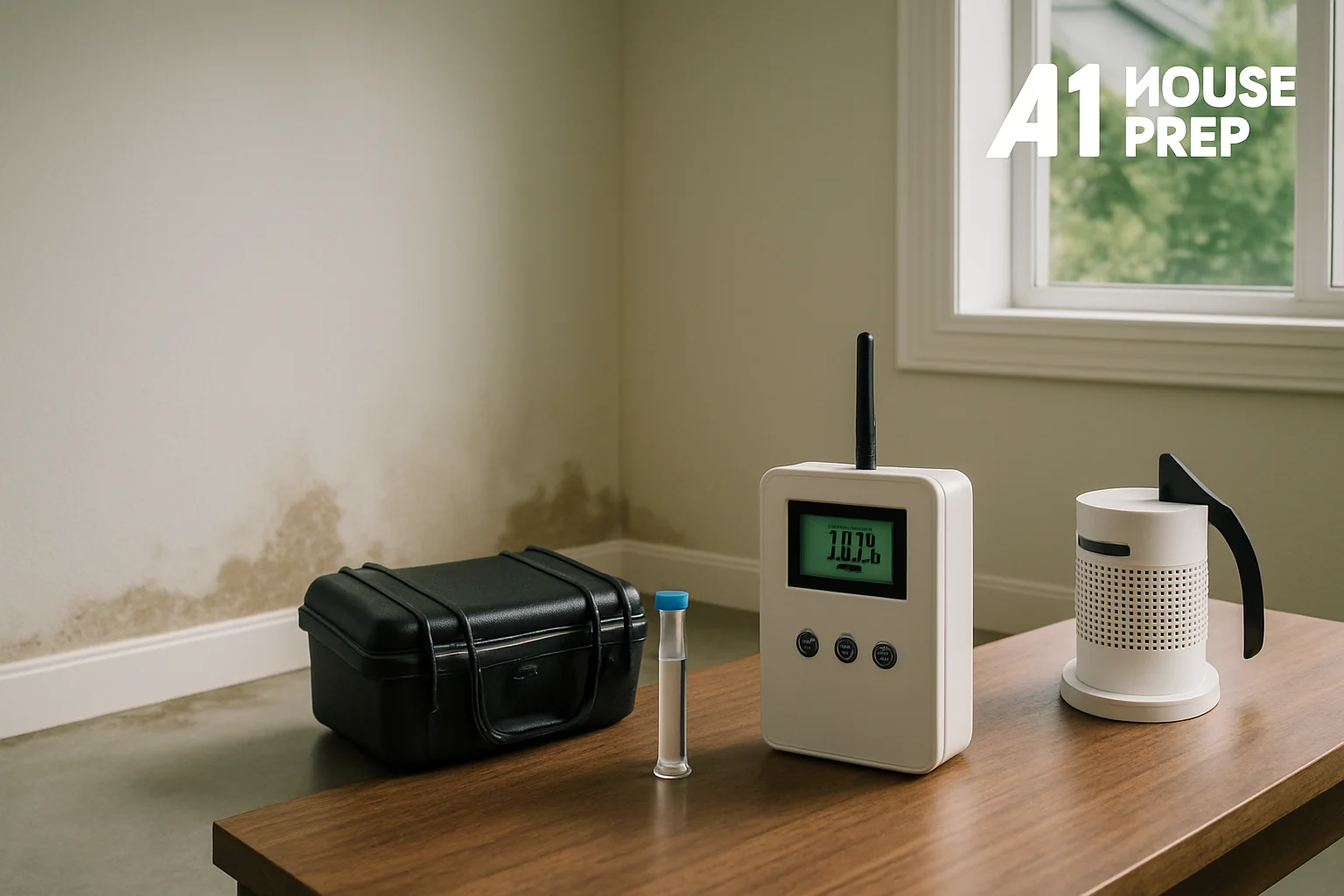
Indoor air quality is a broad category. After water damage, testing is typically designed to answer a focused question: Is there evidence in the air that suggests moisture-related contamination is present or returning? Depending on the situation, an air quality assessment may include:
- Visual observations and moisture context (where the water traveled, what was removed, what remains)
- Air sampling strategies that compare suspect areas to control areas
- Surface or dust sampling in targeted locations, when appropriate
- Humidity/ventilation considerations that influence comfort, odor, and recurring dampness
A1 House Prep focuses on practical, homeowner-usable results—especially when you’re deciding whether additional drying, targeted cleanup, or further investigation is warranted. Learn more about our local approach on our Air Quality Testing service page.
Premium Tip for Moisture Events in SE Pennsylvania
If your home in Harleysville, Lansdale, Hatfield, Souderton, North Wales, Blue Bell, Ambler, or Collegeville has a history of basement dampness, keep in mind that timing matters. Testing immediately after a drying project can be useful, but so can testing after the space returns to normal use (HVAC running, doors closed, typical traffic). A well-planned sampling strategy is often more valuable than rushing to test “as soon as possible.”
Moisture Odor Air Testing: What a Musty Smell Can (and Can’t) Tell You
A musty smell often indicates microbial activity or damp materials, but it doesn’t pinpoint the location. Odor can travel through wall cavities, floor assemblies, and ductwork—especially in homes with finished basements or additions. Homeowners commonly report:
- Odor strongest in the morning or after the HVAC cycles
- Odor that spikes after rain, snowmelt, or humid days
- One room that smells “earthy” even after cleaning
- Odor that seems trapped in carpeting, curtains, or stored belongings
Moisture odor air testing can help you determine whether the air in the problem area differs from a reference area and whether the pattern suggests an indoor source. Results are most useful when paired with the home’s moisture story (what happened, what was removed, what remains, and what is still damp).
“Mold Concern” Air Testing: How to Approach It Sensibly
It’s normal to worry about mold after water damage—especially if the leak lasted days or weeks. Still, “mold concern air testing” works best when the goal is clarity, not panic. A practical approach often includes:
- Confirm the moisture source is controlled (leak repaired, intrusion addressed)
- Document what was removed (drywall cuts, carpet disposal, insulation replacement)
- Identify remaining risk materials (wood framing, subfloor, finished areas that may have stayed damp)
- Test with comparison in mind (affected area vs. an unaffected area)
- Use results to guide next actions (additional drying, targeted cleaning, or further evaluation)
Testing doesn’t “prove” a home is perfect, but it can provide meaningful information to support decisions—especially for buyers and sellers who need a clearer picture before closing.
Preparing for Testing: Small Steps That Improve the Value of Results
A few practical steps can help ensure your testing reflects real conditions and avoids skewed results:
- Share the full timeline: when the water event happened, what dried, what was replaced, and what still concerns you.
- Avoid heavy cleaning or deodorizing right beforehand: strong fragrances, foggers, or aggressive cleaning can temporarily mask conditions.
- Run the home normally: typical HVAC settings and closed windows (unless advised otherwise) can provide a representative snapshot.
- Point out “pattern clues”: where the odor starts, when it worsens, and whether it correlates to rain or HVAC cycles.
- List adjacent spaces: closets, crawlspaces, utility rooms, and finished basement corners often matter more than the center of the room.
If you’re also concerned about other home health and safety basics—especially during a purchase—A1 House Prep provides additional testing services that may complement your plan, such as Water Testing and Radon Testing.
After the Results: What to Do Next (Without Overreacting)
Testing results should support decisions, not create confusion. After you receive findings, a sensible next step typically falls into one (or more) of these categories:
- Confirm drying and humidity control: dehumidification, ventilation improvements, or HVAC adjustments to help keep moisture from returning.
- Targeted removal/cleanup: addressing specific materials that likely remained damp or were missed.
- Investigate hidden pathways: behind baseboards, under flooring, around sump pits, or at rim joists where moisture can persist.
- Odor management after the source is controlled: if odors remain after cleanup, strategies like professional odor treatment may be considered.
For certain odor scenarios (for example, lingering smell in an unoccupied space after remediation), A1 House Prep also offers Professional Ozone Machine Rentals. Ozone should be used carefully and only according to instructions—think of it as a specialized tool for odor, not a substitute for fixing moisture problems.
Local Context: Why Moisture Problems Are Common in Montgomery County Homes
Homes in our area often face a mix of older construction, finished basements, and seasonal humidity swings. In communities like Harleysville, Lansdale, Hatfield, Souderton, North Wales, Blue Bell, Ambler, and Collegeville, moisture issues frequently come from:
- Basement seepage after heavy rain events
- High summer humidity and under-sized dehumidification
- Older window wells, grading challenges, or downspout discharge too close to the foundation
- Hidden plumbing leaks in finished areas
- Bathroom and laundry ventilation that doesn’t fully exhaust moisture
Because each home’s construction and usage is different, the most helpful testing plan is one that accounts for your specific layout and the history of the water event.
For Buyers, Sellers, and Real Estate Professionals
Moisture and odor questions can complicate inspections and negotiations. Air quality testing after water damage can be a useful tool when you need objective information to support next steps and documentation.
Buyers
- Clarify whether a past water incident appears to be resolved or still influencing indoor air
- Identify areas to monitor or improve after closing
- Reduce uncertainty before making a major investment
Sellers
- Support transparency when a past event was repaired
- Address odor concerns proactively before showings
- Provide clear information that helps the transaction stay on track
Agents
- Offer clients a practical path forward when a “musty smell” becomes a sticking point
- Help distinguish between typical basement conditions and signs that need attention
- Keep the conversation evidence-based and calm
Schedule Air Quality Testing with A1 House Prep
If you’re dealing with a musty smell, a recent leak, or a past water incident and you want clearer answers, A1 House Prep provides professional Air Quality Testing for homeowners and real estate transactions across Harleysville, Lansdale, Hatfield, Souderton, North Wales, Blue Bell, Ambler, and Collegeville.
Call: 215.853.8226
Request online: Request Service
FAQ: Air Quality Testing After Water Damage
1) How soon should I do air quality testing after water damage?
It depends on the goal. If you’re confirming whether an active issue remains, testing after initial drying and cleanup can be helpful. If you’re chasing a returning odor, testing once the space is back to normal living conditions (HVAC running, typical use) may provide a more representative snapshot.
2) Can air testing tell me exactly where the moisture problem is?
Air testing can suggest whether an indoor source may be affecting the air in a specific area, especially when results are compared to a reference area. Pinpointing the exact location usually requires combining results with building observations, moisture clues, and sometimes further investigation in likely pathways.
3) What if I don’t see visible mold but I still smell mustiness?
That’s common with hidden dampness (behind baseboards, under flooring, inside wall cavities, or in HVAC components). Moisture odor air testing can help determine whether conditions in the air support the concern, even when the source isn’t obvious.
4) Should I run dehumidifiers before testing?
Use the home in a typical way unless you’re given specific preparation instructions. If you normally run a dehumidifier in summer, keep doing so. The key is to avoid unusual, last-minute changes—like turning equipment off or on solely to influence results.
5) Is air quality testing useful after professional remediation?
It can be. Post-remediation testing may help confirm whether the affected area’s air looks consistent with other areas of the home after cleanup. It’s also useful when buyers or sellers want additional documentation for peace of mind during a transaction.
6) Could the problem be something other than mold?
Yes. Water-damage indoor air issues can involve damp building materials, bacterial odors, soiled insulation, or HVAC-related moisture. A thoughtful testing approach and a good moisture history often clarify which direction to investigate.
7) Do you serve my area near Harleysville or Lansdale?
A1 House Prep serves homeowners and real estate professionals throughout the region, including Harleysville, Lansdale, Hatfield, Souderton, North Wales, Blue Bell, Ambler, and Collegeville. To schedule, call 215.853.8226 or use our Request Service form.