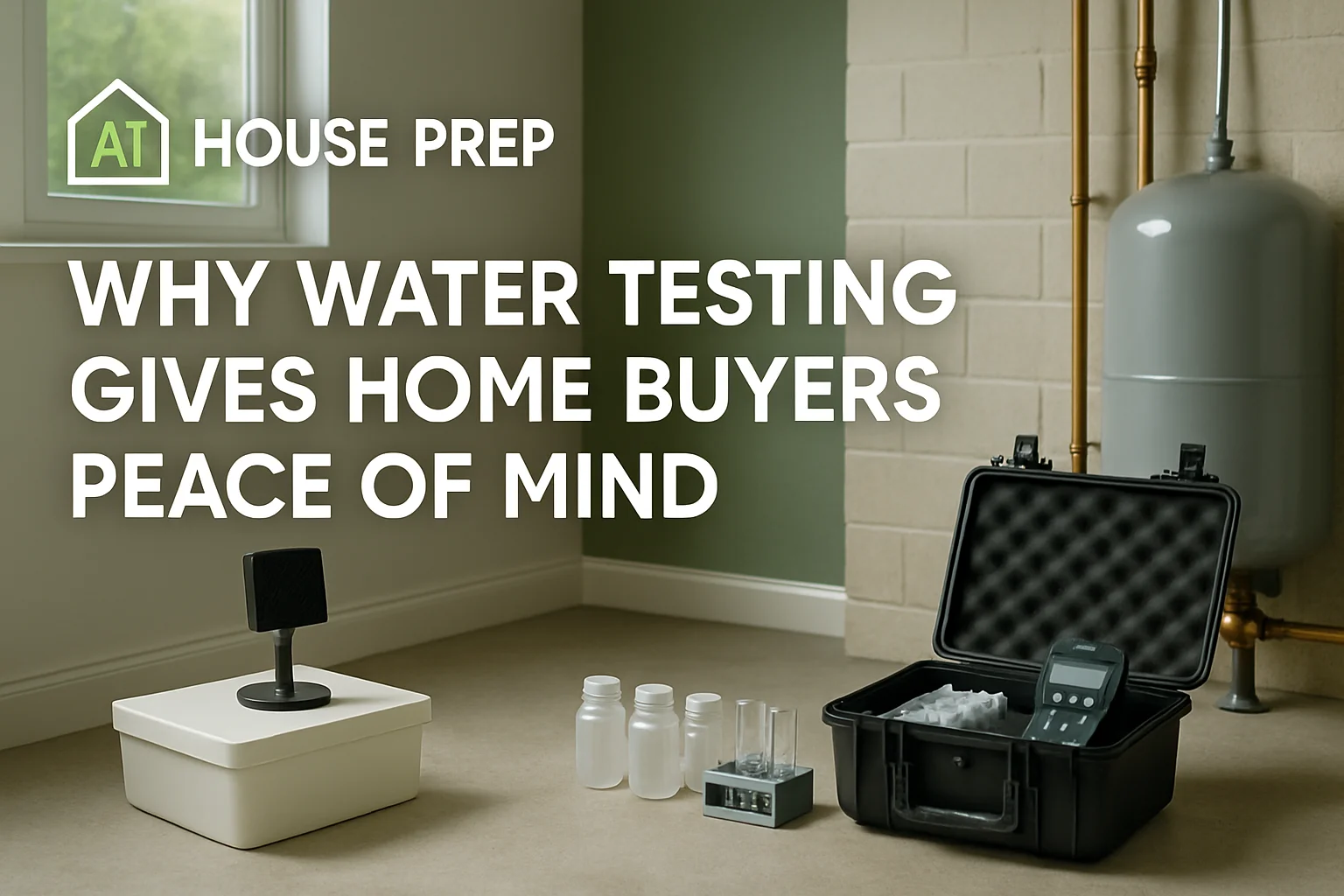
Why Water Testing Gives Home Buyers Peace of Mind
Buying a home in Pennsylvania is exciting—and a little mysterious. You can see the floors, the roofline, and the view from the kitchen window. But some of the most important “home facts” are invisible: what’s in the water you’ll drink, cook with, bathe in, and serve to your family and guests. That’s where water testing home buyers peace of mind becomes more than a phrase—it becomes a practical way to replace guessing with clarity.
In Montgomery County and Bucks County communities like Harleysville, Lansdale, Hatfield, Souderton, North Wales, and Blue Bell, water sources can vary widely from one street to the next. A home may be on a public water system, a private well, or a blend of community and private infrastructure. Water can taste and look “fine” while still having characteristics worth understanding. Water testing isn’t about scare tactics—it’s about homeowner curiosity and confident decision-making.
This guide explains what water testing can reveal, when to schedule it during a real estate transaction, and how A1 House Prep helps buyers, sellers, and real estate professionals gain calm, useful insight. If you’re ready to schedule testing, visit Water Testing or Request Service. You can also call A1 House Prep at 215.853.8226.
Peace of mind is often just “knowing what you’re working with”
Home inspections cover a lot—but water quality typically requires separate sampling and lab analysis. The reason is simple: many water characteristics can’t be confirmed by sight, smell, or taste alone. Testing turns uncertainty into a practical plan.
- It replaces assumptions with data. “It’s probably fine” becomes “here’s what the results show.”
- It helps you budget responsibly. If results suggest a treatment option is worth considering, you can plan ahead instead of reacting later.
- It supports smoother negotiations. Clear documentation can reduce back-and-forth and keep the focus on solutions.
- It builds confidence for everyday living. You’ll know more about your water for drinking, cooking, ice makers, humidifiers, and appliances.
For many buyers, the best feeling isn’t “nothing is wrong.” It’s “we understand the home better than we did yesterday.” That’s the heart of curiosity-driven home prep.
Why Pennsylvania buyers should pay attention to water—especially with private wells
Pennsylvania has a mix of municipal water systems and private wells. In parts of Montgomery County and Bucks County, private wells are common—particularly as you move into more rural or semi-rural pockets around Harleysville, Hatfield, and Souderton. With a well, you’re not just buying a home; you’re inheriting a small water system that benefits from informed ownership.
Even with public water, it can still be valuable to test. Homes may have older plumbing materials, water softeners or filters installed by previous owners, or localized issues affecting taste, staining, or appliance performance. Testing helps clarify whether you’re seeing a plumbing-related issue, a source-water characteristic, or something else entirely.
A1 House Prep perspective: The most premium home purchases are often the ones with the fewest “unknowns.” Water testing is a straightforward way to learn more about the home you’re investing in—without jumping to conclusions or assuming the worst.
What water testing can tell you (without the drama)
Water testing can be tailored to your home and your concerns. The goal is not to overwhelm you with technical jargon; it’s to provide usable information. Depending on the property and water source, a water test may help identify:
- General water quality indicators (helpful for understanding baseline water characteristics)
- Bacteria indicators (often a priority for private wells)
- Nitrates/nitrites (commonly considered in agricultural or septic-influenced areas)
- Metals and minerals (which can affect taste, staining, scaling, and appliance longevity)
- Water hardness (useful for buyers who care about showers, laundry, and scaling)
- pH and corrosivity clues (relevant to plumbing performance and potential pipe interactions)
Not every home needs every test. A thoughtful approach—based on whether the home is on a well, the age of the home, visible clues (like staining), and your household priorities—keeps the process efficient and buyer-friendly.
“Invisible home facts”: how water affects the house beyond drinking
Peace of mind isn’t only about what’s in your glass. Water quality can influence daily comfort and long-term maintenance:
- Appliances and efficiency: Scaling and mineral buildup can affect water heaters, dishwashers, and washing machines.
- Plumbing fixtures: Certain minerals can leave spotting, discoloration, or buildup on faucets and showerheads.
- Laundry and bathing: Hardness and mineral content can influence how soaps lather and how fabrics feel.
- Ice makers and humidifiers: Mineral-heavy water can leave deposits over time.
For buyers comparing multiple homes, these “invisible facts” can quietly shape the real cost of ownership. Testing helps you understand what’s normal for the area and what might deserve attention.
When to schedule water testing in the buying process
Timing matters. Most buyers schedule water testing during the inspection contingency window, but the best schedule depends on access, occupancy, and the source of water.
Common timing options
- During the home inspection window: Efficient, and keeps decision-making aligned with other findings.
- As soon as you’re under contract (especially for wells): Gives you time for lab processing and follow-up questions.
- Before listing (for sellers): A proactive test can help reduce surprises and support smoother negotiations.
If you’re an agent coordinating multiple vendors, water testing is often a low-friction add-on that can prevent high-friction uncertainty later.
What buyers and agents should know about sampling (so results are meaningful)
Water testing isn’t just “fill a bottle.” Sampling method, location, and handling all matter—especially when you’re using the results to make a purchase decision.
- Choose the right tap: Some tests should be taken at a kitchen sink (point-of-use), others at a pressure tank or specific location (point-of-entry), depending on the question you’re answering.
- Consider filtration/softening equipment: If a home has a filter or softener, you may want to understand results both before and after treatment—or at least document what’s installed.
- Avoid “best-case” sampling: Testing should reflect real-life use, not a curated moment. Your testing provider can guide best practices.
- Document context: Well vs. public water, visible staining, odors, and any existing treatment devices help interpret results.
A1 House Prep focuses on clear, practical guidance so homeowners and professionals can interpret results without feeling buried in technical language. Explore Water Testing to see how the process works in your area.
How results can guide smart next steps (without overreacting)
Water testing is information. What you do with that information depends on your goals, budget, and risk tolerance. In many cases, results lead to straightforward decisions like:
- Monitoring: Establish a baseline now and retest on a reasonable schedule.
- Maintenance: Addressing a neglected system component (for example, a well cap or plumbing maintenance item) may be recommended by a qualified professional.
- Water treatment considerations: If certain characteristics are present, you may choose to consult a water treatment provider about options that match your household needs.
- Negotiation clarity: Instead of vague concerns, you have a defined scope for discussion.
Premium peace of mind is not panic—it’s an informed plan.
Water testing and the “whole-home confidence” approach
Many buyers like to pair water testing with other home-health and comfort checks—again, not to alarm anyone, but to reduce unknowns. Depending on the property, you might consider:
- Air Quality Testing to better understand indoor comfort factors
- Radon Testing for additional environmental insight
These services work well together because they focus on the parts of a home you can’t reliably evaluate with a walkthrough. Testing helps you ask better questions and make more confident choices.
A note on odors during the buying process (and safe ozone use)
Sometimes the “peace of mind” conversation includes odors—musty basements, pet odors, or lingering cooking smells. Odors can be emotionally loud, even when the underlying issue is manageable. If odor treatment becomes part of your property preparation plan, A1 House Prep offers Professional Ozone Machine Rentals with clear guidance.
Important: Ozone should only be used in unoccupied spaces. People and pets must be out of the area during treatment, and the space should be allowed to ventilate thoroughly afterward. Ozone is not a “set it and forget it” tool; it requires careful, responsible use and adherence to provided instructions. For buyers and sellers, it can be a practical option for certain odor scenarios when used correctly.
Local perspective: what’s common in Montgomery & Bucks County transactions
In communities like Lansdale, North Wales, and Blue Bell, buyers often want a smooth path from offer to closing—especially in competitive markets. Water testing supports that by turning “I wonder…” into a documented answer.
In Harleysville, Hatfield, and Souderton, where private wells and varied property types are more common, water testing can be a particularly valuable part of due diligence. It also helps second-time buyers who are used to municipal water understand what it means to maintain a well system over time.
No two homes are identical, even in the same neighborhood. Testing is how you learn the difference—calmly and clearly.
Ready to replace guessing with clarity?
Schedule professional water testing with A1 House Prep and get practical insight you can use during your purchase, sale, or ownership planning.
FAQ: Water testing for home buyers
1) What does “water testing” typically include for home buyers?
It depends on whether the home uses a private well or public water and what concerns you want to address. Many buyer-focused tests look at baseline water characteristics and, for wells, common health-related indicators such as bacteria and nitrates. The best approach is a practical panel aligned with the property and your priorities.
2) Should I test water even if the home is on public water?
Often, yes—especially if the home is older, has noticeable staining, unusual taste/odor, or has point-of-use filtration devices you want to understand. Public water quality may be managed at the system level, but what reaches the tap can still be influenced by the home’s plumbing and fixtures.
3) How long does water testing take during a real estate transaction?
Sampling is typically quick. Lab processing time varies by the type of analysis. If you’re under a tight inspection window, it’s smart to schedule early so results have time to come back and be reviewed before deadlines.
4) If a result is “outside range,” does that automatically mean the deal is off?
Not necessarily. Results are information that can guide next steps—such as follow-up testing, maintenance considerations, or exploring treatment options. Many findings are manageable once you understand the source and the appropriate response.
5) Can I rely on the seller’s previous water test results?
Previous results can be helpful context, but buyers often prefer current testing because water conditions can change over time, and sampling method matters. If you do review past results, confirm when the sample was taken, where it was taken from, and whether any equipment or conditions have changed since then.
6) How often should homeowners retest water after they move in?
Retesting frequency depends on the water source and what your initial results show. Many well owners choose a routine schedule for certain indicators, and additional testing after major plumbing work, well service, or noticeable changes in taste/odor/appearance can be prudent.
7) Can A1 House Prep help with other “invisible” home checks?
Yes. Many clients combine water testing with Air Quality Testing and Radon Testing to build a more complete picture of the home’s environment and comfort factors.
Closing thought: peace of mind is a premium upgrade you can schedule
Home buying will always involve a few unknowns—but your water doesn’t have to be one of them. Water testing is a calm, practical step that turns curiosity into confidence and helps everyone involved—buyers, sellers, and agents—make decisions with clearer information.
To schedule service in Montgomery County, Bucks County, or nearby areas including Harleysville, Lansdale, Hatfield, Souderton, North Wales, and Blue Bell, contact A1 House Prep at 215.853.8226 or Request Service. Learn more about the process on our Water Testing page.