Testing Replaces Guessing With Home Water Quality
Water is the most-used “ingredient” in a home: you drink it, cook with it, shower in it, wash dishes, run the laundry, water pets, and fill humidifiers. Yet most homeowners only notice water when something looks off—an odd smell, a cloudy glass, a stubborn mineral ring, a new appliance that clogs sooner than expected. For everything else, we guess.
That’s where the idea behind home water testing replaces guessing becomes powerful. It’s not about panic or worst-case assumptions. It’s about satisfying a practical curiosity: What is actually in my water right now? In Pennsylvania—especially in Montgomery County and Bucks County—water quality can vary widely by neighborhood, by source (public vs. private well), by plumbing age, and even by season. The only reliable way to understand your home’s water is to test it.
A1 House Prep provides professional, homeowner-friendly testing and property preparation services across Harleysville, Lansdale, Hatfield, Souderton, North Wales, Blue Bell, and surrounding areas. If you want clear answers and straightforward next steps, explore Water Testing or Request Service to schedule a visit. You can also call 215.853.8226.
Why “looks fine” isn’t a water quality plan
Water can be completely clear and still create real-world problems for a home. Most water issues aren’t dramatic; they’re subtle, gradual, and easy to misdiagnose. Common examples homeowners in Pennsylvania run into include:
- Mineral scale that builds slowly in water heaters, fixtures, and appliances (often felt as reduced performance over time).
- Metallic taste or staining that might be misattributed to a single fixture—when the cause is broader.
- Intermittent odors that appear seasonally or after water sits in pipes, leading to “weird but inconsistent” reports.
- Changes after plumbing work that make homeowners wonder whether it’s the water source or the home’s piping.
- Home purchase uncertainty when a house has a well, older plumbing, or unknown maintenance history.
In other words: your senses are useful, but they’re not measurement tools. Testing replaces guessing by translating observations into data you can act on—without jumping to conclusions.
What changes water from “fine” to “questionable” in Montgomery & Bucks County
Pennsylvania water quality is shaped by local conditions and infrastructure. Even within the same ZIP code, two homes can have different water experiences. A few common variables:
- Water source: municipal water vs. private well water, each with different typical concerns and maintenance responsibilities.
- Plumbing materials and age: older homes may have different pipe materials, fittings, or fixture components affecting taste, color, or sediment.
- Seasonal shifts: rainfall, temperature changes, and water usage patterns can influence how water behaves in a home.
- Point-of-use devices: filters, softeners, and treatment units can improve certain conditions but can also be overdue for service or set up incorrectly.
- Renovations: new fixtures and new piping can reveal issues that were previously hidden (or create questions you’d rather answer than ignore).
This is why the most useful water decisions begin with testing. It gives you a baseline and helps avoid spending money on the wrong solution.
Premium homeowner mindset: be curious, not alarmed
Think of water testing like a home inspection for an invisible system you use every day. The goal isn’t to “find something wrong.” It’s to understand what’s true so you can make confident, practical choices—especially before a purchase, before installing filtration, or when you’re simply tired of guessing.
What home water testing can tell you (and why it matters)
A professional water test can help confirm or rule out common concerns that affect comfort, appliance performance, and overall confidence in the home. Depending on your home and goals, testing may address items such as:
- General water characteristics (like hardness and other indicators that can relate to scale and soap performance).
- Metals that may relate to taste, staining, or corrosion concerns.
- Other indicators that help explain odors, discoloration, or sediment complaints.
- Private well considerations where ongoing testing can be part of responsible homeownership.
Results are only helpful when they’re interpreted in context. A1 House Prep’s approach is homeowner-focused: clear sampling, clear reporting, and a practical explanation of what the results mean for your specific property.
“Home water testing replaces guessing” in real-life scenarios
Here are common situations where testing turns uncertainty into a plan—without drama or scare tactics:
1) You’re buying a home (or advising a buyer)
Buyers often fall in love with the kitchen, the floors, the backyard—and forget that water is part of daily life from day one. Testing helps establish a baseline, especially for homes with well water or older plumbing. For real estate professionals, it’s a calm, objective tool that supports informed decisions and smoother negotiations.
2) You’re selling and want fewer surprises
Pre-listing testing can be a confidence move. Even if a buyer orders their own tests, knowing what to expect helps sellers respond calmly and avoid last-minute scrambling. It also helps you decide whether any simple maintenance should be done prior to listing.
3) You’re noticing scale, spots, or reduced appliance performance
Hardness and mineral content often show up as:
- white crust at faucets and showerheads
- cloudy glassware after dishwashing
- shorter-than-expected performance from water-using appliances
Testing can confirm whether minerals are likely contributing, so you can avoid guessing whether the culprit is “bad soap,” a single fixture, or something broader.
4) You’re planning filtration, a softener, or other treatment
Many homeowners start with a product and hope it solves the issue. Testing flips that: you identify the actual water conditions first, then choose the appropriate equipment (or confirm you don’t need it). This is one of the simplest ways to avoid unnecessary purchases.
5) You have a smell you can’t quite describe
Odors are frustrating because they come and go. Testing can help narrow down what’s likely happening—and equally important, what’s not. If odor is actually in the air (not the water), A1 can also help with targeted odor projects through Professional Ozone Machine Rentals when appropriate for unoccupied spaces only and with careful safe-use steps.
How professional sampling is different from “DIY guessing”
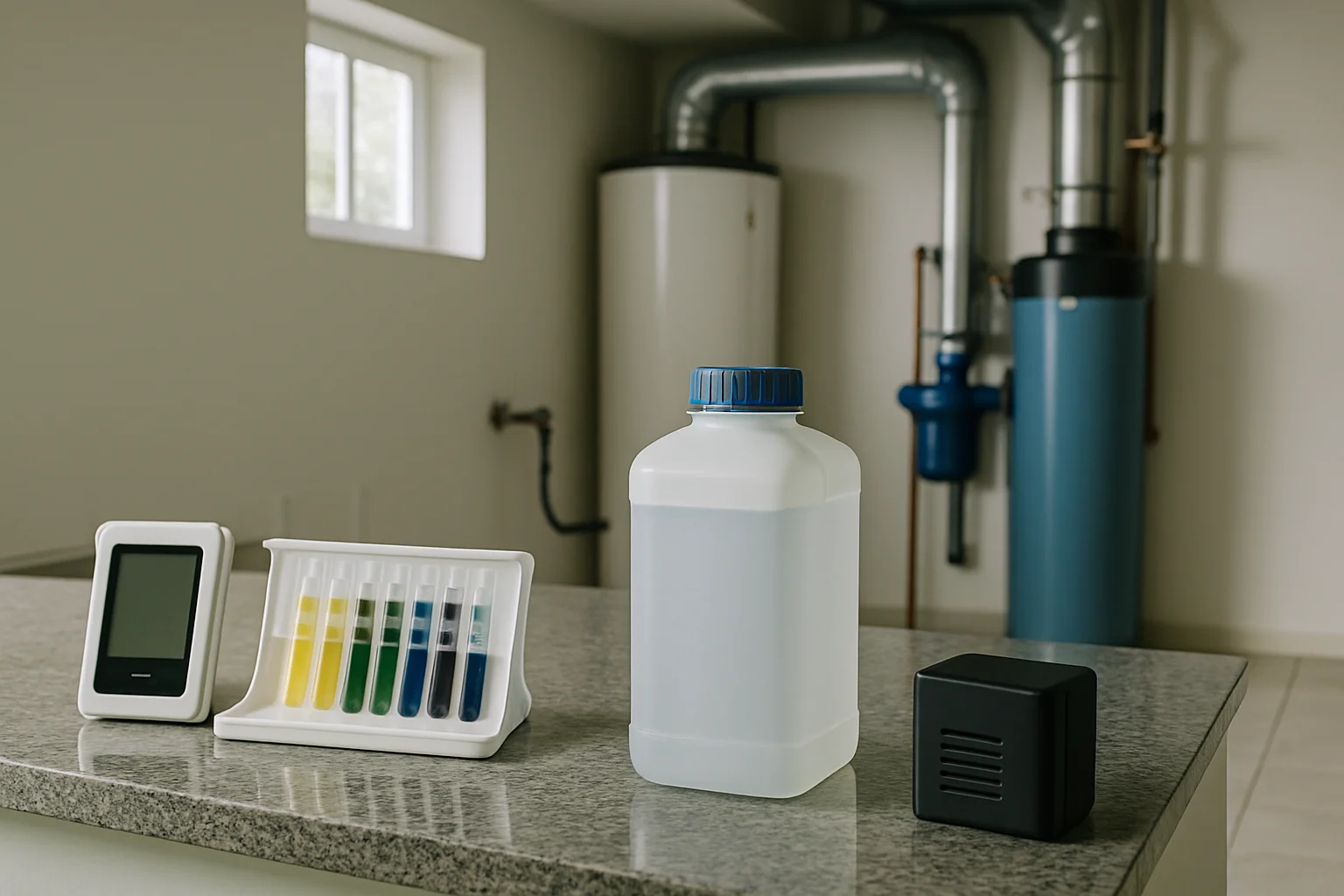
Homeowner test kits can be useful for curiosity, but they often create more questions than answers: inconsistent sampling, confusing color charts, and no clarity on what a result means for a particular home. Professional testing focuses on:
- Correct sampling locations: kitchen, bathroom, or other points depending on what you’re investigating.
- Proper collection methods: reducing the chance that sampling technique skews results.
- Context: a result matters differently for a home on a well vs. a municipal supply, and differently for newer vs. older plumbing.
- Actionable interpretation: knowing what the next sensible step is, if any.
If your goal is confidence—not just numbers—professional testing is the most straightforward path.
Water quality and the rest of the home: a smart “whole-house” check-in
Many homeowners prefer to handle home health and maintenance in one organized sweep rather than in reaction mode. If you’re already thinking about the invisible facts of your home, it’s often helpful to consider other testing services as part of a single plan:
- Air Quality Testing for indoor comfort questions and general home awareness.
- Radon Testing as a common real estate and homeowner data point in Pennsylvania.
- Water Testing to replace guesswork with clear results at the tap.
And for water system upkeep that supports consistent performance, consider routine maintenance like Water Heater Flushing. While flushing isn’t a “test,” it’s a practical step that can help manage sediment buildup and maintain efficiency—especially in homes that see mineral scale.
Curiosity check: questions worth asking about your water
If you’re not sure whether testing is “for you,” start with curiosity. These are the types of questions that lead to the most helpful testing conversations:
- Has our water changed since we moved in?
- Do our neighbors complain about similar water issues?
- Are spots and scale simply normal here—or signs we should measure hardness?
- If we install filtration, what problem are we actually trying to solve?
- If we have a well, when was the last time water was tested and documented?
- Are we seeing a whole-house pattern or just one fixture?
When you approach water quality this way, testing feels less like a reaction and more like responsible ownership.
Ozone rentals and odors: when “it’s not the water”
Some “water smells” are actually air or surface odors that become noticeable in kitchens, basements, or laundry areas—especially after a vacancy, renovation, or a period of closed-up windows. When odor treatment is appropriate, ozone can be a tool, but it must be used carefully.
A1 House Prep offers Professional Ozone Machine Rentals with guidance. Key safety principles include:
- Unoccupied spaces only: people and pets must be out of the treated area during operation.
- Follow time and ventilation instructions: allow adequate treatment time, then ventilate thoroughly before re-entry.
- Remove or protect sensitive items when advised: certain materials can be affected by ozone exposure.
- Use it for odors, not as a substitute for fixing moisture issues: if there’s an underlying source, address that first.
If you’re unsure whether an odor is water-related or environmental, start with water testing to confirm or rule out the water as the source—and then choose the right next step.
Ready to stop guessing about your water?
If you’re in Montgomery County or Bucks County—Harleysville, Lansdale, Hatfield, Souderton, North Wales, Blue Bell, and nearby—A1 House Prep can help you get clear answers with professional Water Testing.
Call: 215.853.8226
Schedule online: Request Service
FAQ: Home water testing in Pennsylvania
1) How often should a homeowner test water?
It depends on your water source and your goals. Many homeowners test when they move in, before installing filtration, or when something changes (taste, odor, staining, sediment). Well owners often choose a regular schedule for peace of mind and documentation. A1 can help you choose a sensible testing cadence based on your property.
2) Should I test if I’m on public (municipal) water?
Yes, testing can still be useful. Municipal supplies are treated, but what reaches your glass can be influenced by your home’s plumbing, fixture condition, and local distribution factors. If you’re noticing taste, odor, staining, or you simply want a baseline, professional testing replaces speculation with real data.
3) What’s the difference between testing my well water and testing city water?
With a private well, the homeowner is typically responsible for monitoring and understanding water conditions over time. With municipal water, the supply is managed publicly, but home-level factors may still affect your day-to-day experience. The sampling plan and interpretation can differ depending on the source and property context.
4) We have hard water symptoms—does that automatically mean we need a softener?
Not automatically. Hardness is measurable, and testing helps confirm whether minerals are the main driver of scale and spots—or whether other factors are at play. Once you know the numbers, it’s much easier to decide whether a softener, filtration, maintenance, or a smaller adjustment makes sense.
5) Can water testing help with “rotten egg” or musty smells?
Testing can be a helpful step in narrowing down likely causes and ruling others out, especially when the odor appears at specific taps or after water sits. Odors can come from different sources (water, plumbing, drains, or the air in a closed-up space), so the most efficient approach is to test and diagnose rather than guess.
6) Is water testing useful for real estate transactions?
Yes. Buyers appreciate clarity, sellers benefit from fewer surprises, and agents value documentation and smoother communication. Testing supports informed decisions without turning the process into a guessing game.
7) If my home has multiple issues (water, air, radon), can I bundle services?
Many homeowners prefer a coordinated approach. A1 House Prep offers Water Testing and can also support broader property awareness through Air Quality Testing and Radon Testing. Use Request Service to describe your goals and schedule efficiently.
Bring clarity to the water you use every day
The best home decisions are the ones based on facts. Water testing is a simple, practical way to replace assumptions with confidence—whether you’re a long-time homeowner in Blue Bell, a buyer looking in North Wales, or a seller preparing a property in Lansdale or Hatfield.
If you’re ready to turn curiosity into clear answers, A1 House Prep is here to help. Visit /services/water-testing/, submit a request through /request-service/, or call 215.853.8226.