Before You Worry About Indoor Air, Know What You’re Dealing With
Indoor air is a little like plumbing behind the walls: you don’t think about it until something feels “off.” A room that always smells musty. A lingering odor after a renovation. A basement that feels heavy. Or a home inspection report that mentions ventilation, moisture, or combustion appliances—without clearly explaining what’s actually happening.
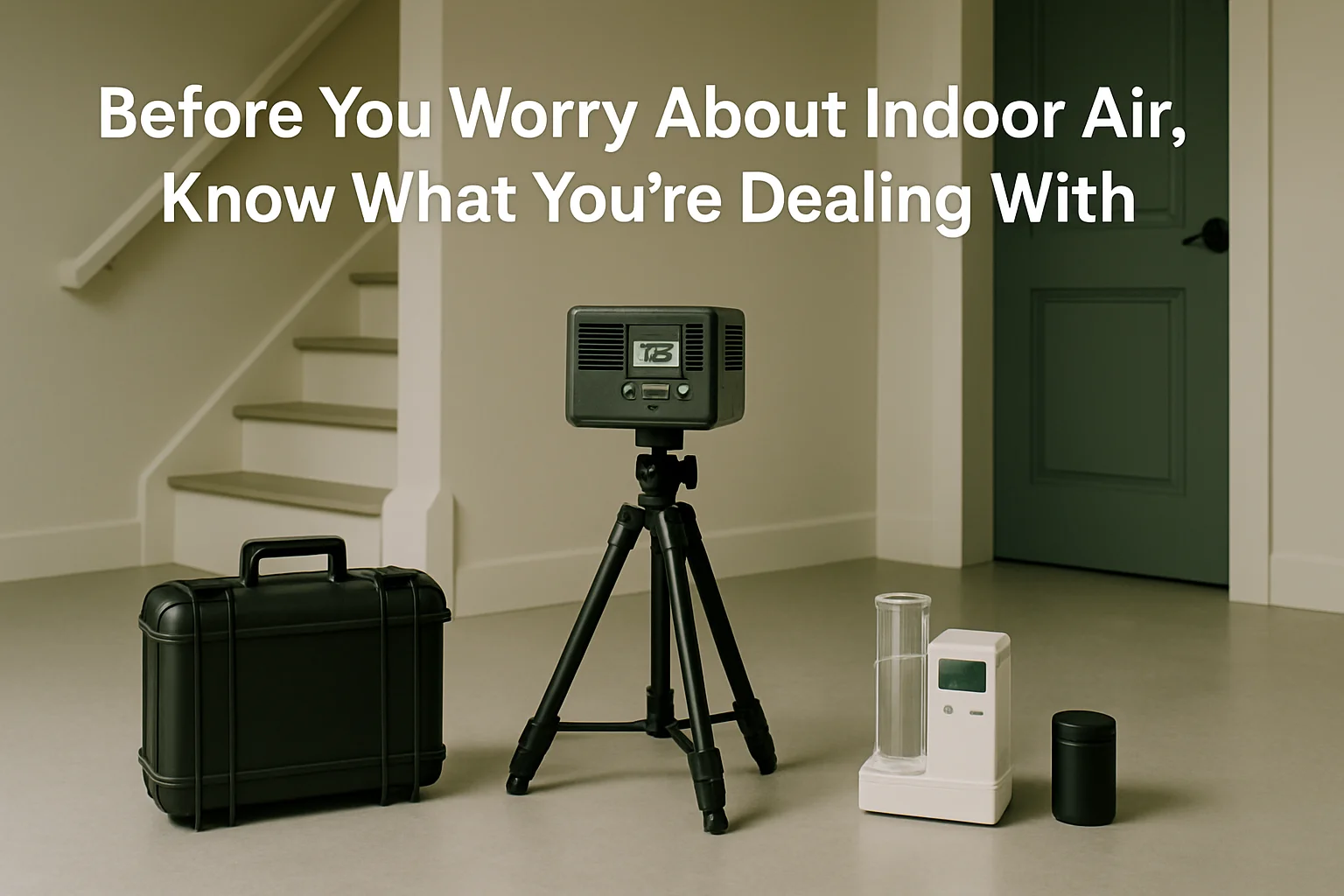
Here’s the calmer, more useful approach: before you worry about indoor air, know what you’re dealing with. When homeowners ask how to know what indoor air quality problem is affecting their home, the best first step usually isn’t a product, a purifier, or a guess. It’s testing—so you’re making decisions based on real information in Pennsylvania homes with our region’s weather, basements, building styles, and seasonal patterns.
A1 House Prep helps homeowners, buyers, sellers, and real estate professionals across Montgomery County and Bucks County—including Harleysville, Lansdale, Hatfield, Souderton, North Wales, and Blue Bell—get clear answers about what’s in the air, what’s worth addressing, and what’s simply a normal part of a lived-in home.
A1 Curiosity Check: If you’re noticing “something” but can’t name it (odor, stale air, headaches, humidity swings, visible dust, a damp basement vibe), that’s not a reason to panic—it’s a reason to measure. Testing turns the invisible into actionable information, so you can stop guessing and start prioritizing.
Why guessing feels tempting—and why it usually costs more
Most indoor air concerns come with uncertainty. You might read about mold, VOCs, allergens, radon, humidity, carbon monoxide, or “toxic air” and feel like everything could be the cause. That uncertainty often leads to common (and expensive) mistakes:
- Buying equipment before confirming the problem: Air cleaners, dehumidifiers, and “miracle sprays” may help some situations, but they can also miss the real source.
- Over-correcting: Running fans nonstop, sealing up the home too tightly, or using strong fragrance products can make the air feel worse.
- Under-correcting: Ignoring patterns like seasonal mustiness or basement dampness until it becomes a bigger repair.
- Getting conflicting advice: One person says “it’s mold,” another says “it’s just old-house smell,” and no one has data.
Testing doesn’t need to be dramatic. Think of it like checking the oil light with a gauge instead of guessing based on engine noise. When you know what indoor air quality problem is present (and what isn’t), you can choose the simplest next step—with confidence.
What “indoor air quality” really includes in Pennsylvania homes
Indoor air quality isn’t one thing. In our area, the most common contributors often fall into a few categories:
- Moisture and humidity patterns: Basements, crawl spaces, and older foundations can create conditions for musty odors and surface growth.
- Ventilation and pressure: Tight homes, bathroom fans that aren’t effective, or uneven air return paths can create stagnant rooms.
- Combustion byproducts: Fuel-burning appliances, attached garages, and fireplaces add variables that should be evaluated carefully.
- Particles and dust: Renovations, duct conditions, pets, and outdoor pollen loads can all affect particulate levels.
- Gases and chemicals (VOCs): New flooring, paint, cabinets, cleaning products, and stored items can contribute to “chemical” or “new home” odors.
- Soil gas (radon): Common in parts of Pennsylvania and often undetectable without testing.
Because many of these overlap, symptoms alone rarely pinpoint the cause. That’s why A1 focuses on measured data and practical interpretation—especially during real estate transactions, renovations, or seasonal changes.
How to know what indoor air quality problem is: a practical “start here” checklist
Before scheduling any service, you can gather a few low-effort details that make testing and interpretation more useful:
- Where is the issue strongest? Basement, a specific bedroom, near the garage, or throughout the home?
- When does it happen? After rain, during humid weeks, when HVAC runs, after cooking, or only in winter?
- What changed recently? New carpet, paint, water heater replacement, roof leak, bathroom remodel, new furniture, or a sump pump issue?
- What do you notice? Musty smell, chemical smell, visible condensation, dust accumulation, stale air, irritation while cleaning, etc.
- What’s the home profile? Age of home, basement type, HVAC type, number of occupants/pets, attached garage, and any known water history.
These notes help you and your testing provider avoid “testing everything” and instead target the most likely contributors first.
Testing replaces guessing: what A1 can measure and why it matters
When you’re trying to know what indoor air quality problem is present, testing should answer two questions: What are we measuring? and What decision will this support? A1 House Prep provides homeowner-focused testing services that bring clarity without scare tactics.
Professional Air Quality Testing (the most direct next step)
If you want an evidence-based starting point, begin with Air Quality Testing. Air testing can help identify patterns and indicators that point toward next steps—whether that’s ventilation improvements, humidity control, cleaning protocols, filtration adjustments, or follow-up investigations.
Air testing is especially helpful when:
- You’re preparing to buy or sell and want documentation and clarity.
- You notice persistent odors and want to rule in/rule out common causes.
- You’ve had a leak or water event and want to understand current conditions.
- You’ve renovated and the home now “smells new” longer than expected.
- You’re troubleshooting a basement or lower-level living space.
Radon Testing (because you can’t “sense” it)
Radon has no reliable smell or visual clue, which is why it often belongs in the “invisible facts” category for Pennsylvania homes. If you’re buying, selling, finishing a basement, or simply haven’t tested in a while, schedule Radon Testing to get clear data. Radon decisions should be based on measurement—never assumptions.
Water Testing (when the “air problem” might actually start at the tap)
Not every “air” complaint is strictly air—sometimes it’s water-related. For example, certain odors that seem like they’re in the home can originate from water quality, drains, or hot water usage. If you’re noticing sulfur-like smells, metallic odors, or issues around sinks/showers, Water Testing can be a smart companion to air testing—especially for well water or older plumbing scenarios.
Water Heater Flushing (a simple step that can reduce odor and performance issues)
If odor concerns seem strongest during hot water use—or if a water heater hasn’t been maintained—water heater flushing can be a practical, non-invasive home maintenance step. It won’t “solve” every indoor air concern, but it can remove sediment buildup that contributes to operational issues and, in some cases, unpleasant smells.
Common indoor-air scenarios in Montgomery & Bucks County—and what data helps most
Below are real-world patterns we often see across Harleysville, Lansdale, Hatfield, Souderton, North Wales, and Blue Bell. These aren’t diagnoses—just examples of how testing helps you stop guessing.
1) “Basement air” or musty odor
- Often linked to: humidity, minor seepage history, porous materials, stored items, or limited air movement.
- Data that helps: targeted air quality testing, humidity readings, and a room-by-room comparison.
- Decisions it supports: dehumidification strategy, storage changes, sealing/insulation improvements, or targeted remediation planning if warranted.
2) “New renovation smell” that won’t fade
- Often linked to: VOCs from paint, adhesives, flooring, cabinetry, or new furniture—especially if windows stay closed.
- Data that helps: air testing to understand overall indoor conditions and whether ventilation changes are likely to help.
- Decisions it supports: ventilation schedule, filtration upgrades, and material off-gassing management.
3) One room feels stale or irritates occupants more than others
- Often linked to: airflow imbalance, return air limitations, closed doors, or isolated moisture sources.
- Data that helps: room-to-room comparisons and a practical walkthrough of how air moves in the home.
- Decisions it supports: HVAC balancing, fan improvements, or localized humidity control.
4) “We want peace of mind before listing/buying”
- Often linked to: real estate timelines and the need for objective documentation.
- Data that helps: professional air quality testing and radon testing, plus clear reporting.
- Decisions it supports: negotiation clarity, prioritizing repairs, and reducing last-minute surprises.
Where ozone fits (and where it doesn’t): odor treatment with safe-use boundaries
Ozone can be a helpful tool for certain odor treatment situations—but it’s not an air quality testing substitute, and it’s not appropriate for occupied spaces. If you’re exploring odor removal after smoke, pets, cooking, or musty smells, A1 offers Professional Ozone Machine Rentals with guidance for responsible use.
Important safe-use basics (non-negotiable):
- Use ozone only in unoccupied spaces. People and pets should not be present during treatment.
- Follow all instructions for timing and re-entry. Allow adequate time for ozone to dissipate before returning.
- Remove or protect sensitive items when advised. Certain materials may be affected by ozone exposure.
- Address the source when possible. Ozone may reduce odor, but underlying moisture or contamination sources should still be handled appropriately.
When used properly, ozone can be part of a practical “reset” plan for stubborn odors—especially in vacant homes, unoccupied rooms, or between tenants. The key is to use it thoughtfully, not as a blanket solution.
For buyers, sellers, and agents: make the invisible measurable
Indoor air concerns often show up at the worst possible time—during showings, inspections, or final walkthroughs. The fastest way to lower stress is to replace opinions with documentation.
- Buyers: Testing helps you understand what you’re inheriting and what’s simply normal for a home’s age and construction.
- Sellers: Pre-listing testing can reduce surprises, support disclosures, and help you prioritize improvements that matter.
- Agents: Clear testing and reporting helps keep transactions moving with fewer “mystery problem” delays.
If you’re coordinating timelines in Montgomery or Bucks County, A1 can help you choose the right scope so you’re not over-testing—or missing the key data point that changes the conversation.
Ready to stop guessing and get clear answers?
If you’re trying to know what indoor air quality problem is affecting a home in Pennsylvania, start with measured information and a calm plan. A1 House Prep provides homeowner-focused testing and practical support across Montgomery County and Bucks County.
FAQ: indoor air testing, next steps, and what to expect
1) What’s the fastest way to know what indoor air quality problem is in my home?
The fastest reliable path is professional air quality testing paired with basic context (where/when you notice the issue, recent changes, and any moisture history). That combination helps turn a vague concern into a short list of likely contributors and practical next steps.
2) Should I test the air or test for mold specifically?
If you’re not sure what you’re dealing with, general air quality testing is often a smart first step because it can reveal patterns that point toward moisture, ventilation, or other contributors. If you have visible growth or a known water event, testing can be used more strategically to support decision-making and documentation.
3) Can odors alone tell me what the problem is?
Odors are useful clues, but they’re rarely definitive. Musty smells can relate to humidity and porous materials; “chemical” smells can relate to VOCs from new products; and some concerns (like radon) can’t be identified by smell at all. Testing helps confirm what’s actually present.
4) How often should homes in Pennsylvania test for radon?
Many homeowners choose to test when buying/selling, after major renovations (especially basement finishing), or periodically as conditions change. Since radon can’t be reliably detected without measurement, radon testing is the best way to make informed decisions.
5) Is an ozone machine a good idea if the home smells musty?
Ozone can help reduce certain odors, but it’s not a substitute for identifying and addressing moisture sources. It should be used only in unoccupied spaces with careful adherence to instructions. If mustiness is recurring, consider testing first, then decide whether odor treatment is appropriate. A1 offers professional ozone machine rentals with guidance.
6) What if I’m a seller and I’m worried testing will “create” a problem?
Testing doesn’t create conditions—it reveals them. Many sellers find that calm, documented information reduces buyer anxiety and prevents last-minute negotiation surprises. It can also help you prioritize simple improvements (like ventilation or humidity control) that make the home show better.
7) Can water issues affect how my home smells or feels?
Yes. Water quality, drains, and hot water systems can contribute to odor concerns that seem like “air” problems. If you notice smells around sinks, showers, laundry, or hot water usage, water testing and maintenance such as water heater flushing may be helpful parts of a broader plan.
One last thought: curiosity beats worry
Most homeowners don’t need a dramatic overhaul—they need clarity. When you replace assumptions with measured information, you can make smaller, smarter decisions and feel more confident in your home.
If you’re in Harleysville, Lansdale, Hatfield, Souderton, North Wales, Blue Bell, or anywhere in Montgomery County or Bucks County, A1 House Prep is here to help you understand what’s going on—calmly, professionally, and with practical next steps.
Request Service or call 215.853.8226.