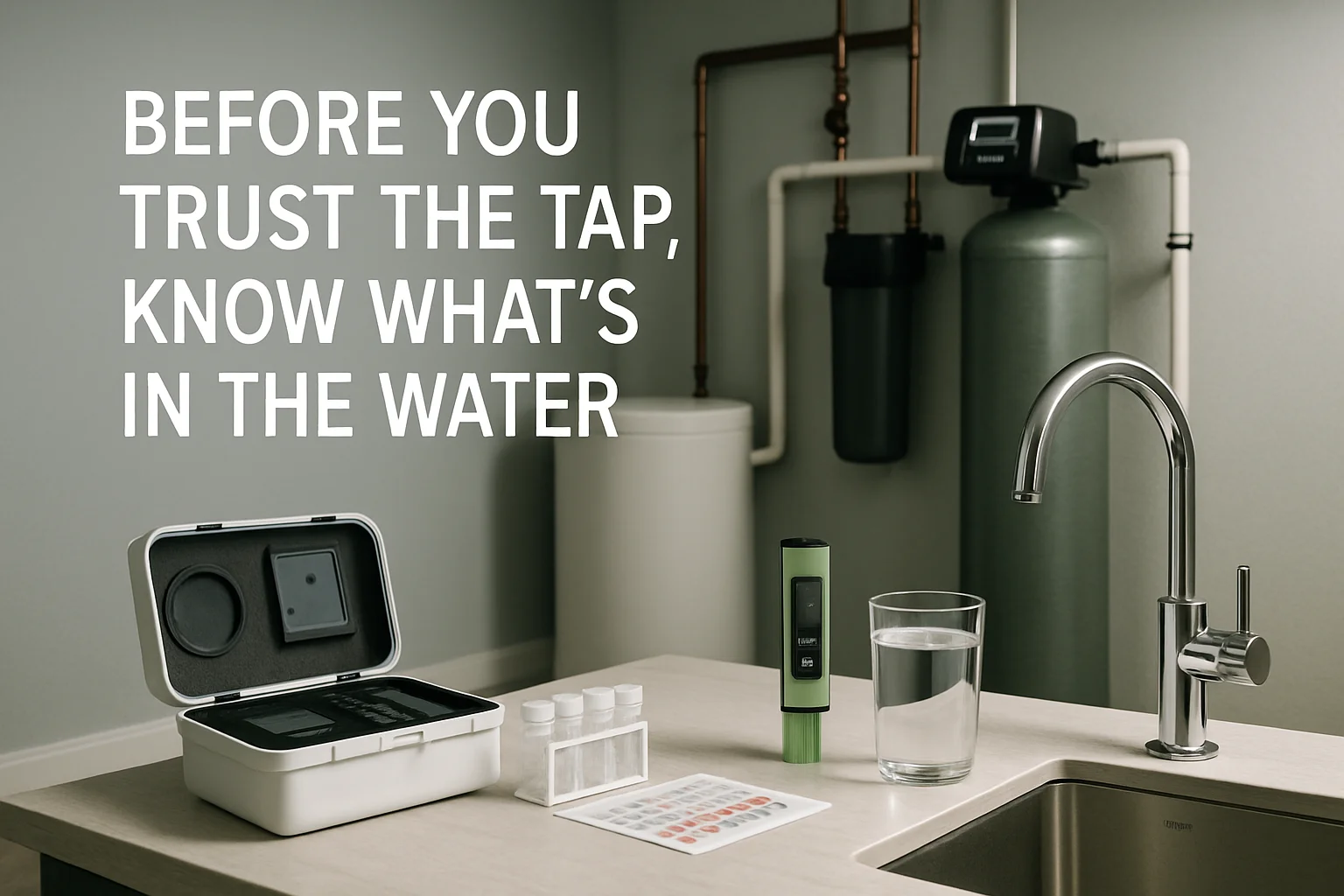
Before You Trust the Tap, Know What’s in the Water
You shouldn’t have to guess about something you use every day. Whether you’re filling a pasta pot, making coffee, mixing a baby bottle, or topping off the dog’s bowl, it’s normal to wonder—and to want clarity—about what’s flowing from the kitchen faucet.
In Pennsylvania, water can come from different sources (public systems, private wells, shared community wells), and those sources can change over time. Add in older plumbing, seasonal shifts, construction nearby, or a home that’s been sitting vacant, and it becomes easy to feel unsure. That’s why more homeowners and real estate professionals are choosing to test rather than assume.
This guide is designed to help you know what is in tap water without alarmism. You’ll learn what can influence water quality, when testing is a smart move, what results typically mean, and how A1 House Prep supports homeowners across Montgomery County and Bucks County—from Harleysville and Lansdale to Hatfield, Souderton, North Wales, and Blue Bell.
Why “Looks Fine” Isn’t a Water Quality Standard
Water can be clear, cold, and “normal-tasting” and still raise questions you can’t answer without data. Many common water issues are invisible. Others are subtle—like a slight metallic aftertaste or a faint chlorine smell that comes and goes.
Testing isn’t about panic. It’s about replacing guessing with informed decision-making. If you’ve ever asked any of these questions, you’re already thinking like a careful homeowner:
- Why does the water taste different at certain times of year?
- Is the cloudiness in my glass air bubbles—or something else?
- Is that rusty tint from the municipality, my plumbing, or the water heater?
- Should we test before buying this home (or listing it)?
- Our neighbors are on a well—should we be testing too?
The goal is simple: know what is in tap water in your home, at your tap, with practical results you can act on.
Premium Homeowner Mindset: Test the Invisible
Paint colors are visible. Curb appeal is visible. But some of the most important “home facts” are invisible—air quality, radon levels, and what’s in the water. Testing turns uncertainty into a clear next step, whether you’re planning renovations, settling into a new home, or preparing a property for sale.
What Influences Tap Water in Pennsylvania Homes?
In Montgomery County, Bucks County, and surrounding communities, your tap water quality can be influenced by a combination of source water, treatment, and the “last mile” of plumbing inside and around your home.
1) Public water vs. private well water
Public water is treated and monitored at the system level. It can be dependable, but conditions can still vary based on distribution lines, local maintenance, and your home’s plumbing. Private wells are the homeowner’s responsibility—meaning testing is the best way to understand what’s present and how it changes season to season.
2) Plumbing age and materials
Older homes in towns like Lansdale, Hatfield, Souderton, and North Wales may have plumbing components that have been updated in stages over decades. Different pipes and fittings can affect taste, color, and sediment. Testing helps you separate “water source” questions from “plumbing” questions.
3) Water heaters and home systems
A surprising number of water complaints trace back to the water heater. Sediment can accumulate, and hot water can show issues that cold water doesn’t. For maintenance-minded homeowners, water heater flushing can be a practical complement to water testing—especially if you notice grit, reduced efficiency, or inconsistent hot water quality.
4) Seasonal changes and local activity
Heavy rains, drought periods, road construction, and neighborhood water main work can all influence water characteristics temporarily. If your water changes “all of a sudden,” that’s a reasonable time to gather information rather than rely on assumptions.
Common “Curiosity Triggers” That Make Testing Worth It
You don’t need a crisis to justify testing. Many clients call A1 House Prep simply because they want confidence. Here are common, non-alarmist reasons homeowners in Blue Bell, Harleysville, and nearby areas decide to test:
- Taste or odor changes (chlorine, metallic, earthy, “pool-like,” or musty notes)
- Staining in sinks, tubs, toilets, or on laundry
- Sediment or particles in faucet aerators
- Cloudy water that clears after sitting
- Buying or selling a home and wanting documentation and clarity
- New baby or household changes and a desire to be proactive
- Well ownership or a shared well agreement
- A home that’s been vacant (stale odors, stagnant plumbing, unknown maintenance)
Testing doesn’t tell you what to worry about—it tells you what’s actually there, so you can make practical decisions.
What Does Water Testing Typically Look For?
Water testing can be tailored to your situation. A1 House Prep helps Pennsylvania homeowners choose a testing approach that fits the property type, water source, and the questions you’re trying to answer.
While specific panels vary, testing commonly explores categories like:
- General water characteristics (such as pH, hardness, and indicators of scale/corrosion tendencies)
- Minerals and metals (helpful when there’s staining, metallic taste, or older plumbing)
- Microbiological indicators (especially important for private wells)
- Nuisance issues tied to odor, discoloration, or sediment
The real value isn’t just the numbers—it’s understanding what the results mean for everyday use and property planning.
If you’re ready to move from curiosity to clarity, start with A1’s Water Testing service page and request an appointment based on your location and water source.
Home Buying & Selling: Water Testing as a Confidence Builder
In real estate, uncertainty can create friction. Water testing can reduce “unknowns” during a transaction, especially for properties with wells, older plumbing, or a history of intermittent water concerns.
For buyers
- Helps you understand what you’re inheriting—before closing.
- Supports informed budgeting (filters, maintenance, system improvements) based on data, not hunches.
- Creates a clearer conversation with inspectors and contractors if follow-up is needed.
For sellers
- Provides transparency and documentation that can ease buyer concerns.
- Helps avoid surprises late in negotiations.
- Allows time to address maintenance items (like sediment-related issues) proactively.
For agents and property managers
- Creates a smoother process with a practical, homeowner-friendly explanation of results.
- Helps set expectations on timelines and follow-up steps without overreacting.
And if a property has been closed up for a while, it’s also common to address odor concerns as part of turnover. For those situations, A1 offers professional ozone machine rentals—used only in unoccupied spaces and with clear safe-use instructions—when odor treatment is appropriate for a vacant home.
Testing Replaces Guessing: A Practical Interpretation Mindset
Water results can feel technical at first. A good approach is to treat testing like a home “baseline.” From there, you can decide whether you want to:
- Monitor (keep an eye on trends, especially with wells or seasonal shifts)
- Maintain (flush the water heater, service the system, replace filters on schedule)
- Improve (consider filtration options based on confirmed findings and your goals)
It’s also worth remembering that water questions often overlap with other “invisible” home factors. For example, a musty smell may not be water at all—it could be indoor air quality, humidity, or a property that’s been shut up. If you’re trying to understand the full indoor environment, A1 also provides Air Quality Testing and Radon Testing for homeowners who want a more complete picture.
Local Perspective: Montgomery & Bucks County Homes Aren’t One-Size-Fits-All
Even within a few miles, homes can differ dramatically in water source, plumbing age, and household usage. A twin in Lansdale may have a different infrastructure story than a single-family home in Blue Bell. A property in Harleysville may have different considerations than a home in Hatfield—even if the tap water “seems fine.”
That’s why the best question isn’t “Is Pennsylvania tap water good?” The better question is: What’s in the water at this specific property?
If your goal is to know what is in tap water for your home, a local testing partner matters—someone who understands how homeowners actually use the information (during a sale, a renovation, or normal day-to-day living).
Quick Tips: How to Get the Most Useful Testing Results
- Identify the concern clearly. Is it taste, odor, staining, sediment, or a real estate requirement?
- Note whether it’s hot, cold, or both. Differences can point to plumbing or the water heater.
- Track timing. Does it happen after rain, after a vacation, or at certain times of day?
- Don’t “pre-treat” right before sampling. Avoid unusual flushing, heavy filter changes, or other one-off actions unless instructed.
- Bring context to the appointment. Well details, recent plumbing work, or neighborhood maintenance history can all help.
When Odors Aren’t Coming From the Water: A Note on Ozone (Safe Use Only)
Some homeowners start with “water smells weird,” but discover the odor is actually coming from a vacant home, musty soft materials, or trapped odors after a tenant move-out. When odor treatment is needed in a completely unoccupied space, A1 offers ozone machine rentals as a professional-grade option.
- Ozone machines should be used only when people and pets are not present.
- Follow all provided instructions for run times, sealing rooms, and full ventilation before re-entry.
- Ozone is for odor treatment and should be handled with care and clear boundaries.
If you’re unsure whether an odor is water-related or environmental, testing helps you narrow the possibilities so you’re not treating the wrong problem.
Ready to Stop Guessing About Your Tap?
If you want to know what is in tap water at your property—whether you’re in Montgomery County, Bucks County, Harleysville, Lansdale, Hatfield, Souderton, North Wales, or Blue Bell—A1 House Prep can help you get clear, practical answers.
- Explore Water Testing
- Request an appointment: Request Service
- Call A1 House Prep: 215.853.8226
FAQ: Water Testing for Pennsylvania Homeowners
1) How often should I test my home’s water?
It depends on your water source and your goals. Private well owners often choose routine testing on a schedule, while public-water homeowners may test when something changes (taste, odor, staining) or during a real estate transaction. A1 House Prep can help you choose a sensible baseline plan based on your property.
2) If my water tastes fine, do I still need to test?
Not always—but taste alone can’t confirm what’s present. Many homeowners test simply to establish peace of mind and a reference point for the future. If your goal is to know what is in tap water, testing is the direct way to get that clarity.
3) Should I test hot water, cold water, or both?
Cold water is commonly sampled because it reflects the source more directly, but comparing hot vs. cold can be useful if you suspect the water heater, sediment, or plumbing-related issues. Share your specific concern when you request service so the right approach is selected.
4) What if my results show something I didn’t expect?
Unexpected results don’t automatically mean an emergency. They mean you have information you can act on—whether that’s maintenance, additional confirmation testing, or discussing filtration options with a qualified professional. A1 House Prep focuses on clear explanations so you can make practical next steps without guesswork.
5) Is water testing useful during a home inspection?
Yes. For buyers, it can add confidence and reduce uncertainty. For sellers, it can help prevent late-stage surprises. Agents and property managers also appreciate having objective data to support straightforward conversations.
6) Can water issues be caused by the water heater?
They can. Sediment buildup and aging components may affect hot water clarity and performance. If testing and symptoms point in that direction, routine maintenance like water heater flushing may be worth discussing as part of overall home care.
7) Do you serve my area in Montgomery or Bucks County?
A1 House Prep serves homeowners and property professionals across Montgomery County and Bucks County, including Harleysville, Lansdale, Hatfield, Souderton, North Wales, and Blue Bell. If you’re nearby and unsure, call 215.853.8226 or use the Request Service form.
Closing Thought: Curiosity Is a Smart Homeowner Skill
In premium homeownership, the best decisions are rarely made from assumptions. They’re made from good information. If you’ve been wondering about your water—no scare tactics, no drama—just a practical desire to understand your home better, that’s a smart reason to test.
When you’re ready, A1 House Prep is here to help you get clear answers and a calmer sense of confidence about the water you use every day. Start with Water Testing, or schedule directly through Request Service.